






Buy Alumina Sol Binder for Pure Alumina Refractory Castable Online
If you are buying Alumina Sol Binder for Pure Alumina Refractory Castable online, please treat the order as a technical purchase. First, define your service temperature, castable formulation, and quantity. Then ask for a data sheet, a certificate of analysis, and a sample from a firm with its own factory and documented quality control. Test the sample in your own mix before buying in bulk. Alumina sol is a colloidal alumina binder that substitutes calcium aluminate cement in cement-free castables, thus removing calcium oxide from the matrix. This tutorial lets you compare binders, do trials, and submit a clear request.
What Is Alumina Sol Binder for Pure Alumina Refractory Castable?
How Alumina Sol Works as a Binder
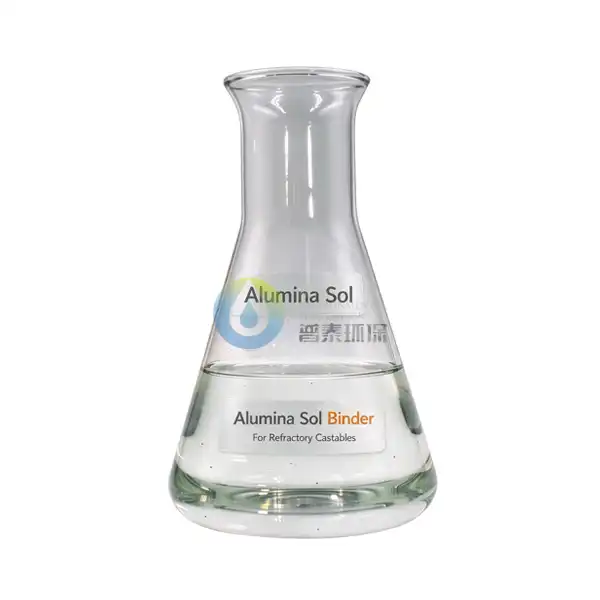
Very small, wet alumina particles are mixed with water to make alumina sol. The name for these tiny particles is boehmite. Particles stay in the air because electric charges push them away from each other. When the castable dries out, the smaller pieces stick together to hold the whole thing together. When the clay gets hot, all of those little pieces stick together to make strong links. But cement is not like that; when it gets wet, it gets hard. Calcium oxide is not added by alumina sol. There is a bridge phase that is high in alumina that helps engineers start making castables that can be used at very high temperatures. This is because alumina melts at about 2,070°C.
Key Specifications to Check
The amount of Al2O3 in most colloidal alumina binders is between 20% and 30% by weight. The pressure stays below 50 cP, and the particles are smaller than 50 nm. The pH level is between 3.5 and 4.5, which means it is acidic. The particles have to stay put and charged because of this. The amount of NaOH should always be very low, below 0.05%, because it moves things around. There are different grades, so you should always look at the seller's technical data sheet. Check out how much it weighs, how stable it is, and how long it will last. If you keep it between 5°C and 35°C, it should last longer than 12 months. The mixture will break, and crystals will form on the alumina if you let the binder freeze.
How It Differs from Colloidal Silica and Conventional Alumina Suspensions
Colloidal silica also joins and gels, but it also adds silica to the mix. Mullite can be made when a lot of silica and alumina mix together. The phase is no longer made up of pure alumina in this case. The particles in normal alumina solutions are bigger, so they don't have a lot of surface area. This is what makes the gelling and sintering processes go faster. Matter and chemistry stay clean when you use alumina sol. When the pH changes, simple aggregates like magnesia need extra care because they can gel right away. In these recipes, the deflocculant and the order in which they are mixed are very important. Make sure they work well together before you make a bigger batch.
Benefits of Alumina Sol Bonded Castables and How They Compare
Main Benefits in Service
Phases that don't melt easily are formed when you mix calcium oxide with alumina and silica. These are called anorthite and gehlenite. When these phases are added to a load, they make the hot modulus of rupture and refractoriness less strong. This doesn't happen as often when alumina sol is used to bond Alumina Sol Binder for Pure Alumina Refractory Castables. They can take higher service temperatures, stop slag rust better, and stop creep better if they have a good aggregate system. Alumina that is loose does not bond as quickly with the ceramic when the nanoparticles are present. Gel lets a lot of water through because of how it is made. This makes it dry faster and safer. Still, the result depends on how the particles are arranged, how much is used, how porous the material is, how well it was put together, and how it was heated.
Properties to Validate in the Lab
I think you should test every new recipe, not just rely on a datasheet. For better understanding, it is helpful to know the thickness, the number of pores that can be seen, the modulus of breakage, the constant linear change, the strength retention after fire, and the temperature cycle. There are rules for strength tests, like ASTM C133. The green strength will be weaker than in cement castables because dried gel networks are not as strong as hydraulic ties. Most pottery sticks together better after it has been fired. Some people put in a little something to help it dry. This makes it easier to handle when they take off the molds. Keep track of your results for each batch so you can quickly find drift.
Binder Comparison Table
Here is a practical side-by-side view of the four binder types buyers compare most often.
| Binder | Bonding mechanism | Main strength | Main watch-out |
|---|---|---|---|
| Alumina sol | Gelation, then ceramic bonding | Low calcium, high purity | Lower green strength; must not freeze |
| Calcium aluminate cement | Hydraulic setting, then ceramic bonding | High green strength, familiar installation | CaO forms low-melting phases with silica and alumina |
| Phosphate | Chemical setting, then high-temperature reactions | Different curing path | Curing and reactions must match the system |
| Colloidal silica | Gelation | Cement-free gel bonding | Silica may form mullite in alumina systems |
This table shows why there is not always a clear winner. The choice you make should be based on the temperature it will be used at, the amount of trash or air contact, the chemistry of the raw materials, and how they will be put together.
How to Choose and Use Alumina Sol Binder for Pure Alumina Refractory Castable
Selection Criteria
Fill out the form first. Write down the temperature of the oven, the materials that will be in contact with it, the thickness of the covering, the heat cycles, how the parts will be put together, and how they will be dried. Next, compare the grades based on their number of alumina particles, solids concentration, particle size, pH, viscosity, impurity profile, and shelf life. You need to test it with the mixed fused, tabular, and reacting alumina. Next, check the lab to see how much there is. It changes how much water is needed, how the material moves, how much it shrinks, how it sticks together, and how strong it is when it comes off the mold if there is too much or too little binder. Finally, you should choose whether you need samples, regular production, bulk supplies, orders from distributors, or a formulation that is specially made for you. How long you have to wait and pack will depend on what you need.
Mixing and Curing
Before you mix, check the pH, viscosity, batch number, particle size, moisture, and pH of the raw materials. Clean the tools as well. Do what the seller tells you to do and put the binder in the right order. Check to see how thick it is and then add more water. Be careful when you mix flash set and magnesia. The piece will not come apart or have weak spots as long as you prepare the mold and shake it well. After that, the piece is kept safe by conditions that allow it to dry slowly. Thixotropy is useful in this case. When it is not moving, the mix can be stiff. When it is, it can be soft. It is good for making hard shapes out of concrete because of this.
Drying and Heat-Up
A lot of bad things happen when things dry out. A lot of steam is made when you heat something quickly. It might crack or blow up because of this. Most of the time, gel-bonded castables let more air through than cement-bonded ones, but you should still have a step-by-step plan. Plan that schedule based on the shape of the furnace, the amount of airflow, the liner's width, and the amount of binder. Keep an eye on more than just the furnace's set points. In large buildings, put thermocouples in the walls to find out what the real temperatures are. If the first step goes more slowly, it can save hours of work and money on relining.
Applications and Qualification of Alumina Sol Bonded Castables
Where These Castables Fit
For work that needs to be clean, will not rust, and stay stable, Alumina Sol Binder for Pure Alumina Refractory Castables that are bound with alumina sol are good. Burner blocks, hearth parts, kiln furniture, hot metal contact zones, glass processing tools, ceramic sintering systems, and precast forms are just some of the things that it is used for. Having pure alumina helps keep silica out of ultra-low carbon steel in ladles and tundishes. Getting rid of CaO also makes it less likely that the steel itself will have flaws. Parts of fluid catalytic cracking units do not move around quickly because they have a thick mesh with few holes. Besides OEMs and companies that make refractories, other groups that need to keep an eye on the science also use alumina sol.
Shotcreting and Repair Work
Colloidal alumina binders behave in a way that makes them easier to pump and shotcrete. That can speed up demand and lower the amount of money lost on returns. Some places, like cement kilns and incinerators, need to get the job done quickly and let the glue dry quickly afterward. These bonds work well to connect high walls or ceilings in those places. If you want to see how it sets, spray a test area first. Setting depends on gelation, not water. Before the shut-down time, tests let you see how the mix works with your tools, water source, and room temperature.
Qualification Before Full Production
Everyone is safe as long as the buyer and seller are qualified. You should check the material's green strength, bulk density, how porous it seems, cold crushing strength, modulus of rupture, how well it resists temperature shock, and how well it fights rust. After that, drill a test hole and let the soil dry out slowly. The binder is also tested by quality teams. You can see grit or caking if you spin it or watch it for a long time. Different types of light can be used to show how big the particles are. Many times, when the zeta potential is above ±30 mV, the particles do not stick together because they are repelling each other electrically. Another test called the Brookfield viscosity test checks how well the mixture moves and flows. The XRF or ICP-OES test checks for Al2O3 and other impurities.
Buying Online and Working with a Technical Supplier
How to Write a Strong RFQ
If you have to purchase anything online for work, it is more like a job than merely looking for deals. In your RFQ, you need to say what the refractory is for, how pure you want the alumina, how much you need, how it will be packaged, where and when it will be transported, what documents you need, and if you need any assistance with formulation. The more you tell providers about yourself, the quicker they can inform you what grade to obtain. If you already have a formulation draft, add one that can be cast. Then you may evaluate whether the merchant can work with you before you purchase. Now you don’t have to conduct a test run.
Documents and Total Cost
We need to know the technical data sheet, safety data sheet, batch report, analysis certificate, storage instructions, origin certificate, and how to load the items. Compare service providers on lab testing, expertise in delivery, quality of product packaging, and helpfulness of customer support. They should be able to manufacture refractory-grade items. Look at the entire cost, not the unit price. Adding freight, insurance, duties, handling, and technical support is a fantastic idea. Think about the expense of receiving products that don’t live up to your expectations. In this manner, these goods may take longer to manufacture. If you wish to deliver in the US, you need to additionally plan for time for port clearance and warehousing lead time.
Why Yiwei as Your Technical Supplier
Utilizing the latest technology and equipment, Yiwei manufactures products in its own plant with a quality control system to ensure the quality of each stage in the process. They help ensure each batch is consistent and the quality is good. This is what the market demands, and we have a group from the university that helps us improve our products. They know the best binder, how to combine it, how much water to use, and how well the gravel will function with it in the plant or lab. Samples, regular orders, containers, customized packaging, or offers on supplies that last long-term — it does not matter. We’re here to assist you. When a seller backs every attempt with facts and answers, it doesn’t take long to go from assessment to consistent procurement.
Conclusion
If you use Alumina Sol Binder for Pure Alumina Refractory Castables, you get an alumina sol. This sol gels and sinters the castables together instead of cementing. That is, it does not contribute much calcium oxide. It is stronger at high temperatures and against slag and creep. It inhibits low-melting phases. Cement castables are usually stronger than green castables. Also, glue should never be frozen. Lime, phosphate, and colloidal silica are all pretty much the same as far as binder goes. Heat, corrosion, the atmosphere, and how the pieces fit together create the match. First, determine whether the combination is enough to suit the demands. Then go to the lab and see how much you have. Then dry it in stages and test and fix it in a sample area. Send a detailed RFQ. Review the documents to ensure that each lot is identical. Get feedback from a technical expert. This means you will be less likely to acquire goods that are not right for your requirements.
FAQ
1. How much alumina sol binder should I add?
How much is used depends on the grade of the material, how much alumina is reacting, and how much water is needed. Do not use a set amount. Instead, test it in the lab and follow the seller's instructions.
2. Is alumina sol better than calcium aluminate cement?
Not all the time. It works well when there is a lot of pure material and not much calcium. It is simple to use, and it is stronger when it is still green.
3. Why does heating rate matter?
The water does not leave the walls right away. Something can crack or flake if you heat it quickly and steam builds up. Use a staged dry-out that is right for the thickness of the lining to avoid this.
4. What should I request before a bulk purchase?
Along with the sample, you should ask for a scientific data sheet, a safety data sheet, and this report. Check the package's arrival time, how it was packed, and where it is going.
Request a Quote for Alumina Sol Binder for Pure Alumina Refractory Castable from Yiwei
Yiwei is a manufacturer of Alumina Sol Binder for Pure Alumina Refractory Castable, backed by its own factory, full-process quality control, and a university research partnership. Send your application, quantity, destination, and delivery date to sales@ywputai.com to request a quote, sample, or technical data sheet.
References
1. Refractories Handbook, 2004
2. Castable Refractory Concretes, International Materials Reviews, 2001
3. Handbook of Refractory Materials: Design, Properties, Testing, 2012
4. Colloidal Silica as a Nanostructured Binder for Refractory Castables, Refractories Applications and News, 2006
5. Evolution of In Situ Refractories in the 20th Century, Journal of the American Ceramic Society, 1998
6. Standard Classification of Alumina and Alumina-Silicate Castable Refractories (ASTM C401), ASTM International, 2012
RECOMMENDATIONS
 VIEW MOREAlkaline Alumina Sol Used for Coating Material
 VIEW MOREalumina sol for surface insulating coating
 VIEW MOREAlumina Sol Binder for Refractory Castables
 VIEW MOREalumina sol for FCC catalyst binder
 VIEW MOREAlumina Sol for Fire-Resistant Coatings and Fire Extinguishing Formulations
 VIEW MOREsol gel alumina coatings
 VIEW MOREalumina synthesis sol-gel
 VIEW MOREColloidal hydrous alumina