






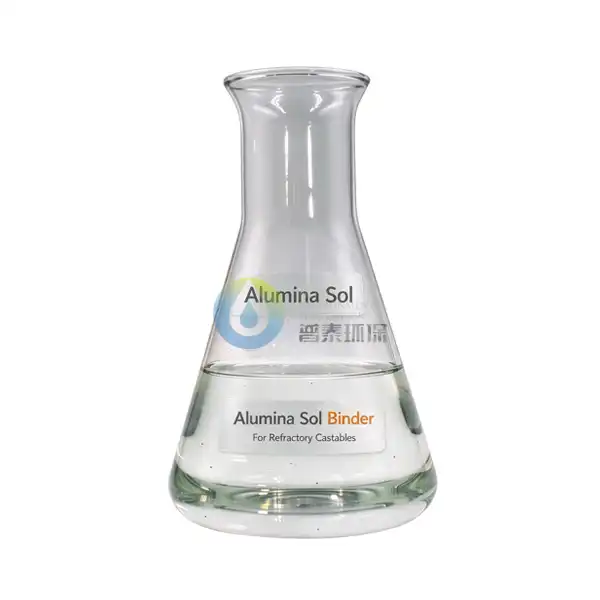
Alumina Sol for Fire-Resistant Coatings and Fire Extinguishing Formulations
1. Used directly as a component of the fire extinguishing agent
2. As the film-forming material of fireproof coatings
3. As a flame-retardant additive or as a base material
- Product Description
Alumina Sol for Fire-Resistant Coatings and Fire Extinguishing Formulations: Ceramic-Forming Binder
Alumina Sol is a binder and film-forming substance offered by Xi'an PUTAI Environmental Protection Co., Ltd. Alumina Sol for Fire-Resistant Coatings and Fire Extinguishing Formulations. The sol loses its water at high temperature and becomes an alumina ceramic layer that reduces heat transmission, restricts oxygen interaction at the surface and helps to prevent re-ignition. It binds without introducing CaO or SiO2, two contaminants that might degrade the performance at high temperatures. It is suitable for fireproof coatings, extinguishing agents and flame retardant systems. The specs and processing comments below will help you determine whether it is a good match before you begin trials.
What Alumina Sol Is?
Alumina sol is a colloidal dispersion of aluminium oxide (Al₂O₃). It is prepared using sol-gel methods, based on hydrolysis and polycondensation of aluminium alkoxide precursors.
After the solvent has evaporated, the sol forms a porous gel network. The layers are tiny, usually just 0.5-1.0 µm thick at most, such that the dimensions of the portion are not altered much.
How It Protects Against Fire?
At high temperature the sol becomes dehydrated and changes to an alumina ceramic coating. This layer does three things:
- Heat insulation: retards heat arrival to the substrate.
- Oxygen isolation : restricts contact with air at surface.
- Re-ignition resistance: assists to avoid the re-starting of burning.
Three Ways to Use It in Fire Protection
- Component of fire-extinguishing agent. Use it as is, part of the extinguishing formulation.
- Material creating films for fireproof coatings. It develops the ceramic film when the coating warms up.
- Base substance or flame-retardant additive. Add to a flame retardant system or use as the basis.
Alumina Sol for Fire-Resistant Coatings and Fire Extinguishing Formulations Specifications
| Parameter | Typical Reference Value |
|---|---|
| Product form | Colloidal alumina sol |
| Cured composition | Aluminum oxide (Al₂O₃) |
| Synthesis route | Hydrolysis and polycondensation of aluminum alkoxides |
| Maximum thickness per layer | 0.5–1.0 µm |
| Drying temperature | 100 °C |
| Densification starts | 500 °C (500–600 °C for amorphous or gamma barriers) |
| Fully crystalline α-alumina | Above 1100 °C, unless seed layers are used |
| Crystalline phases | Amorphous, γ, θ, α (set by calcination temperature) |
| Phase stability | Up to 1000 °C and above |
| Vickers hardness | 6–15 GPa (phase-dependent) |
| Chemical resistance | Inert to HCl, H₂SO₄ and alkalis |
| Pore structure | Mesoporous to fully dense, controllable |
| Optical transparency | High in visible and UV range |
| Shelf life (stabilized sol) | 3–6 months at 4 °C |
These are typical reference values for sol-gel alumina systems, not a certificate of analysis for a specific batch. Final results depend on your formulation and heat treatment. Values not listed above, such as solid content, pH, viscosity or particle size, are not provided on this page. Please request them from the sales team before you specify the material.
Core Advantages
Alumina Sol for Fire-Resistant Coatings and Fire Extinguishing Formulations enables bonding without adding CaO or SiO2. These contaminants reduce the high-temperature performance and typical calcium aluminate cement binders bring them in the system. Alumina sol does not.
- Surface chemistry for adhesion: Surface hydroxyl (-OH) groups on an adequately prepared substrate may form covalent bonds with the alumina layer.
- Complex forms Internal channels and 3D pieces may be coated using dip, spin or spray application that line-of-sight processes such as PVD and CVD may miss.
- Lower-temperature densification. Densification begins at 500 °C, and thick amorphous or gamma barriers are formed at 500–600 °C. At temperatures over 1100 °C, fully crystalline α-alumina is required in general.
Typical Applications
Alumina sol is a solution to the problems of non-effective organic paints and unworkable bulk ceramics.
- Fire-resistant coatings for glass, ceramics and metals
- Binder for refractories
- Oxidation barrier layers at high temperature
- Transparent protective films for glass
Formulation and Application Guidelines
It is important to test Alumina Sol for Fire-Resistant Coatings and Fire Extinguishing Formulations in the same way that you would use it in your final product. The following notes talk about processing with thin films of sol-gel. You will need to do your own tests to find out the right dosage and fit for fire-fighting or flame-retardant products.
- Each layer should be between 0.5 and 1 µm thick. When the solvent evaporates, thicker layers cause capillary stress and cracking. To make the coatings thicker, do the coating and calcination cycle again.
- Cleaning the surface: First, remove any oil from the base. Activate it with plasma treatment or chemical cutting to make the hydroxyl (-OH) groups on the surface higher so that they can bond with other things.
- Curing: Let it dry at 100 °C and begin to densify it at 500 °C. Unless seed layers are used, α-alumina needs to be heated above 1100 °C to become fully crystalline.
- Sols change as they age and get wet. Keep it at a fixed temperature, like 4 °C, and check the texture before each use.
Quality Control and Purchasing Checks
Clear standards must be set for sol-gel coatings to be accepted. You might want to include these checks in your buy standards and agree with the seller on the pass levels:
- XRD shows that the material has changed from boehmite to gamma or alpha alumina.
- SEM finds tiny cracks, holes, and "mud-cracking" caused by drying stress that isn't under control.
- ASTM D3359 cross-hatch is used for thin films and ASTM D4541 pull-off is used for thicker layers.
- Barrier against corrosion: EIS for pore resistance and ASTM B117 salt spray for long-term use.
This page doesn't have any fire-test results. Use the fire standard that applies to your product to test the sol in your own recipe.
Supply and Customization
The research and development, production, sales, and service are all done by Xi'an PUTAI Environmental Protection Co., Ltd. The business has been making chemicals since 2008 and is tracked by the stock code 839410. It has production sites that are more than 30,000 m² and 100,000 m² in size. Its new 2.0 project is expected to produce 200,000 tonnes of goods every year and cost RMB 400 million to build. Talk to the sales team about the product's specific capacity, packaging, and lead time. Northwest China also gets coagulants and other chemicals used to clean water from PUTAI.
The team can talk about a good way to get products if you tell them about your base, drying temperature, and film thickness.
FAQ
Q1: What limits the thickness of each layer?
A: Each layer is usually limited to 0.5–1.0 µm. Thicker layers crack during solvent evaporation. Build thickness with multiple coating and calcination cycles.
Q2: What curing temperature is needed?
A: Drying occurs at 100 °C and densification starts at 500 °C. Fully crystalline α-alumina generally needs above 1100 °C, unless seed layers are used.
Q3: How long is the shelf life?
A: A stabilized sol typically lasts 3–6 months at 4 °C. Check viscosity before use.
Q4: How does surface preparation affect performance?
A: The substrate must be degreased and often activated. This raises surface -OH groups, which the sol needs to bond covalently.
Q5: How does it differ from calcium aluminate cement binders?
A: It provides bonding without adding CaO or SiO₂. These impurities reduce high-temperature performance in cement-bonded systems.
Q6: Does this page include fire-test data?
A: No. Fire-test results are not listed here. Test the sol in your own formulation under the standard that applies to your product.
Contact Us
Do you have more questions about Alumina Sol for Fire-Resistant Coatings and Fire Extinguishing Formulations? Send your substrate, temperature range, film thickness and target application to sales@ywputai.com.

RECOMMENDATIONS
 VIEW MOREAlkaline Alumina Sol Used for Coating Material
 VIEW MOREalumina sol for surface insulating coating
 VIEW MOREAlumina Sol Binder for Refractory Castables
 VIEW MOREalumina sol for FCC catalyst binder
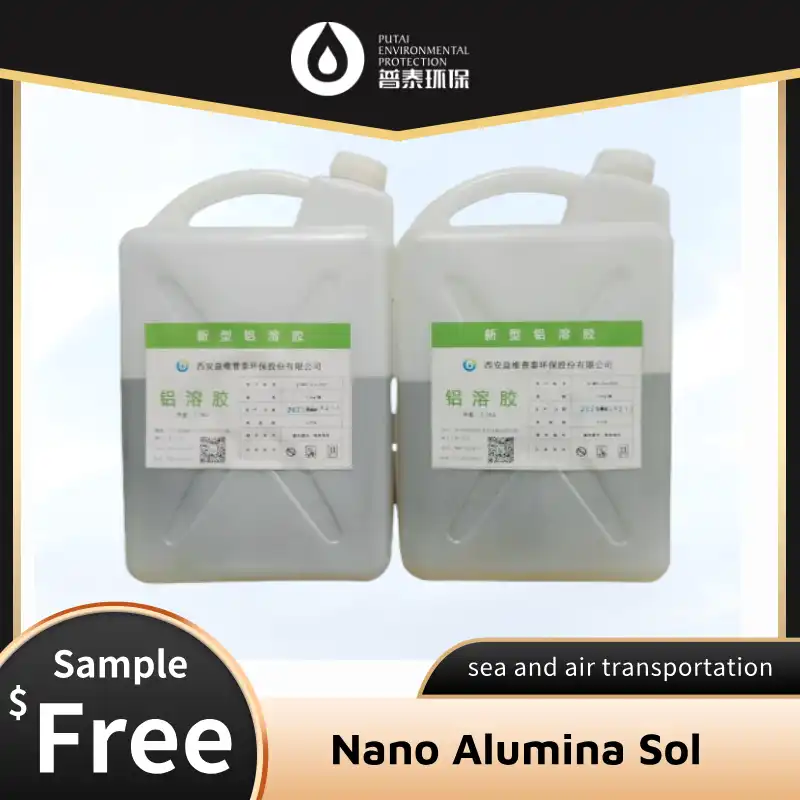 VIEW MOREsol gel alumina coatings
 VIEW MOREalumina synthesis sol-gel
 VIEW MOREcolloidal alumina binder
 VIEW MORENano aluminum sol catalyst carrier bonder