






How to Select Alumina Sol for Fiber Bonding Applications
Alumina sol used for the molding and bonding of fiber products is used to bind fibers. When selecting alumina sol for bonding fibers, begin with the fiber type, molding process, and service temperature. Then, match solids concentration, particle size, viscosity, pH, and purity to those requirements. Try a few grades in the lab and a trial run before you purchase in bulk. The optimal usage of alumina sol for molding and bonding fiber products is when the binder wets the fibers uniformly, gives green strength during drying, and makes an inorganic bond after firing. I also suggest evaluating batch consistency and technical support, since a high grade only helps if each delivery performs the same.
Start with the Application and the Bonding Mechanism
Good selection begins with your product, not with the data sheet.
Define the Fiber Product and Process First
I usually start with the same inquiry to buyers: What are you making? Ceramic fiber boards, vacuum-formed forms, impregnated felts, fiber papers, and spray-coated surfaces all need varied penetration, viscosity, and binder loading. Before you start comparing any grades, note the desired green strength, fired strength, thermal stability, shrinkage limit, erosion resistance, and chemical exposure. Add to it the operating temperature and entire drying and firing profile. Armed with these facts, the provider may offer a fitting grade, instead of guessing. Buyers who don't have it tend to shop by price or nominal solids content, a behavior that may result in cracked boards, weak edges, and expensive retesting.
How Alumina Sol Bonds Ceramic and Inorganic Fibers
Alumina sol is a colloidal dispersion of nanoscale-sized aluminum oxide particles, commonly boehmite or pseudo-boehmite, in water. In the acid grades, the particles are positively charged, which allows them to adhere to the negatively charged surfaces of the fibers. In the mixing or impregnation process, the sol wets the fibers and deposits particles at the crossings of fibers. As water departs, the particles create a gel-like net which provides green strength. Heat then turns boehmite into gamma alumina, and ultimately into alpha alumina, creating an inorganic connection. Organic binders begin to break down above 300°C. Alumina sol maintains a ceramic binding to 1200°C and higher. That difference is significant for high-temperature insulation.
Compare Alumina Sol with Silica Sol, Organic Binders, and Zirconia Sol
Alumina sol is suitable for goods where alumina compatibility, minimal organic residue, and high-temperature performance are required. Silica sol is suitable for silica-based formulations and certain cost-driven applications. Typical silica sol is negatively charged; hence, if mixed directly with a typical alumina sol, it might induce flocculation. Organic binders provide rapid green strength and burn away cleanly, but they contribute nothing to the burnt inorganic structure. Zirconia sol finds use in certain chemical or thermal conditions. Some plants also function in blended systems. I would propose doing side-by-side experiments and assessing whole process outcomes (e.g., yield, scrap, fired strength) rather than binder price alone.
Check the Core Technical Specifications
Once the application is clear, the data sheet becomes useful.
Solids Content and Particle Size
The solids content shows you how much alumina the binder gives you per kilogram. It impacts binder pickup, drying shrinkage, ultimate residue, and transportation efficiency, since a higher solids grade transports more active material in each drum. Particle size affects the depth of sol penetration into the fiber network, uniformity of the coating, and the stability of the suspension. Nanoparticles enter porous preforms more readily than the coarse ones. Neither number should be read on its own as a quality score. A high-solids sol could be good for a thick board, while a lower-solids grade might penetrate a thin felt better. Get typical ranges from your supplier and test the grades on your own fibers.
Viscosity and pH
Viscosity is a key factor in flow, penetration, and drainage and must be measured at a certain temperature and shear rate. A grade that may be impregnated may leak or flow in a spray line, but a thicker grade may not penetrate a dense preform. Many alumina sols used for the molding and bonding of fiber products are thixotropic, i.e., they flow under shear and thicken at rest. This helps to make the coating consistent. Acidic sols are usually in the pH range 3.0–5.0, where the particles are charged and stable. If the pH moves up toward 8 or 9, close to the isoelectric point, the sol may gel. Check pH compatibility with your fibers, additives, process water, and equipment materials before placing your purchase.
Purity and Storage Stability
Purity is critical for electrical, catalytic, and other sensitive applications but also influences burn performance in refractory fibers. Sodium, iron, calcium, and silicon may influence sintering and high-temperature performance; therefore, ask for impurity limits on the certificate of analysis. Storage stability for inventory protection. Freezing may cause damage to the hydration layer of the particles, resulting in persistent precipitation. As a general rule, store barrels sealed and between 5°C and 35°C unless otherwise stated on the data sheet. Contamination, hard process water, and lengthy shelf life may also cause gelation. Ask for shelf life and handling instructions in writing.
Match the Sol to Your Molding Process
Alumina sol used for the molding and bonding of fiber products can behave very differently from plant to plant.
Wet Mixing, Casting, and Vacuum Forming
Wet molding is a slurry of sol mixed with fibers and fillers; the water drains through a mold. The grade must be readily dispersible and stable till formation ceases. Gradually add the sol, stirring constantly, and dilute with clean, suitable process liquid. Look for drainage routes, bends, small channels, and thick parts. Binder may flow with the draining water and form mushy or uneven areas. A good viscosity and stability of a sol may allow a sol to hold more binder at the fiber junctions. Look at a molded board, cut a cross-section, and compare the surface to the core. This simple check will rapidly reveal binder migration.
Impregnation and Spray Coating
For the impregnation of the paper, blanket, felt, and porous preforms, sufficient penetration must be attained to reach the interior fibers without obstructing the pores that offer insulation. Here, lower viscosity and smaller particles generally assist. Spray coating has extra constraints: the sol must go through the nozzle, atomize at your spray pressure, and produce an even layer without runs. Try the sol on your real spray apparatus, not just in a beaker. For each procedure, note pickup weight, drying time, and surface appearance for each experiment. Those records enable you to change the grade or dilution based on data rather than guessing and to specify repeat orders more easily.
Set Dosage, Drying, and Firing Conditions
Wet volume alone will not tell you the proper dose; find it via controlled experiments. Binder needs depend on fiber type, surface area, product density, green strength goal, firing temperature, and flexibility demands. Too much binder results in increased shrinkage, stiffness, density, and cracking. Too little binder results in poor handling strength. Dry thick or complicated forms evenly, since quick surface drying might pull binder out and trap moisture within. Fire with regulated heating rates and holding phases. Then evaluate strength at actual firing or service temperatures, since room temperature findings might mask deficiencies. Alumina sol is similarly water-based and gives off mostly water vapor upon drying, with no solvent VOCs.
Troubleshoot Problems and Qualify the Grade
Most bonding defects trace back to a mismatch between formulation and process.
Cracking, Low Green Strength, and Uneven Bonding
Drying cracks are usually a sign of excess binder, fast drying, thick portions, inadequate distribution, or an aggressive firing schedule. Reduce binder loading in modest stages and slow down the drying ramp. Low green strength. Weak wetting, over - dilution , low binder uptake, or poor network formation. Check dilution records and mixing time. Where the sol and the fiber surface are not chemically compatible, uneven bonding and poor fiber adhesion are commonly seen. • Maintain process records for each problem lot. • Measure viscosity and pH. • Sectioning inspection. Change one variable at a time. That discipline distinguishes true causes from coincidence, and saves material.
Binder Migration and Storage Gelation
Binder migration generally occurs due to excess liquid, low viscosity, inadequate drainage, or an unstable solution. Dilution, drainage design, or a slightly higher viscosity grade. Storage gelation may be caused by heat, pollution, incompatible water, pH changes, or lengthy storage times. Do not combine standard alumina sol used for the molding and bonding of fiber products with silica sol or alkaline additions without first testing for compatibility. Gelling may be initiated by opposing charges or a pH change near the isoelectric point. Use clean tools, sealed containers, and stock rotation on a first-in, first-out basis. If a drum thickens, check pH and viscosity to determine whether it is fit for use or should be discarded.
Laboratory Screening and Pilot Trials
A staged certification approach reduces technical and supply risk before bulk purchasing. In the lab, test multiple grades or concentrations for wetting, dispersion, viscosity, green strength, drying behavior, and obvious flaws. Then a pilot trial using genuine fibers, molds, equipment, and production sequence will be carried out to validate density, moisture distribution, demolding, dimensional stability, and local flaws. Evaluate burned samples for strength, shrinkage, weight loss, porosity, thermal stability, delamination, powdering, and thermal cycling as appropriate. Upon approval, establish acceptability criteria for solids, pH, viscosity, particle size, and purity. Require batch-release data and written notification of any modification.
Evaluate Suppliers and Make the Final Choice
A strong technical match still needs a dependable source.
Documents and Data to Request
Request a technical data sheet, safety data sheet, and certificate of analysis from each source. These papers should include solids content, particle size, pH, viscosity, purity, shelf life, storage instructions, and packaging. Then inquire about expertise with ceramic fiber molding, refractory boards and shaped products, and whether the team can help with your process questions. A supplier asking about my fiber kind, molding procedure, and target temperature? That’s a positive indication. Those parameters define grade fit. If the seller merely provides a price per kg, you are left to handle the technical risk yourself.
Commercial Factors and Total Cost
Evaluate manufacturing capacity, lead time, minimum order quantity, export documents, batch traceability, bulk packaging choices, and continuity planning. These elements safeguard your manufacturing schedule as much as the chemistry does. Total cost includes freight, dilution, effective alumina solids, process output, scrap, qualification work, and technical assistance. A cheaper drum with fewer active solids or heavier scrap may cost more per good board. OEMs and distributors should also make sure that the supplier will notify them before altering raw materials or manufacturing processes, since a silent change might upset a qualified process and need you to redo testing.
How Yiwei Supports Alumina Sol Selection
Our own factory is located in Yiwei, and it is equipped with contemporary production equipment, sophisticated production methods, and a full-process quality control system, which guarantees high quality and consistency batch after batch. We also collaborate with a university team to further improve our goods and suit market demand. Upon receiving the fiber type, molding process, target temperature, and present faults from a client, our technical staff examines acceptable solutions for alumina sol for molding and bonding of fiber goods. We are happy to discuss samples, data sheets and customization of solids content, viscosity, pH, particle size, purity or packaging. We propose to validate each grade on your own line before manufacturing.
Conclusion
The alumina sol used for the molding and bonding of fiber products, considering the compatibility of the binder with the product, the molding procedure, and the firing schedule. Alumina sol links fibers via a gel network, which will be an inorganic ceramic phase later. It maintains its binding at temperatures where organic binders break down. Solids concentration, particle size, viscosity, pH, purity, and storage stability all affect penetration, green strength, and flaws. The molding process determines whether values are suitable for a plant. Controlled dose, consistent drying, and phased firing decrease cracking and migration of binder. Lab screening and pilot trials validate performance, and supplier documentation, batch traceability, and total cost finalize the selection. The top grade is repeatedly performed on your own line.
FAQ
1. Does one solids concentration suit every process?
No. Wet molding, impregnation, and spray coating need different viscosity and binder pickup, so test several concentrations on your own fibers and equipment.
2. Can I mix alumina sol with silica sol?
Usually not. Standard alumina sol is positively charged, and silica sol is negatively charged, so direct mixing can cause flocculation. Run a compatibility test first.
3. How do I reduce cracking?
Lower binder loading in small steps, dry thick sections evenly, and use controlled heating rates during firing. Record each change so you can see what worked.
4. What documents should I request?
Request a technical data sheet, safety data sheet, and certificate of analysis. You can also ask Yiwei about customized solids content, viscosity, pH, particle size, purity, and packaging.
Contact Yiwei for Alumina Sol Samples and Application Support
Yiwei runs its own factory with modern production equipment, advanced processes, and full-process quality control, and we work with a university team to improve our products. If you need a supplier of alumina sol used for the molding and bonding of fiber products, email your fiber type, molding method, and target temperature to sales@ywputai.com.
References
1. Sol-Gel Science: The Physics and Chemistry of Sol-Gel Processing, 1990
2. Handbook of Sol-Gel Science and Technology, 2005
3. Refractories Handbook, 2004
4. Ceramic Processing and Sintering, 2003
5. Principles of Colloid and Surface Chemistry, 1997
6. Introduction to Ceramics, 1976
RECOMMENDATIONS
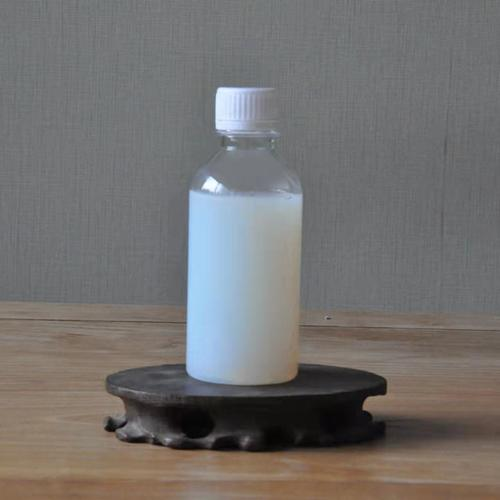 VIEW MOREcolloidal alumina dispersion
 VIEW MOREAlkaline Alumina Sol Used for Coating Material
 VIEW MOREalumina sol for surface insulating coating
 VIEW MOREalumina sol for FCC catalyst binder
 VIEW MOREsol gel alumina coatings
 VIEW MOREalumina synthesis sol-gel
 VIEW MOREAlumina Sol Gel
 VIEW MOREColloidal hydrous alumina