






Alumina Dispersion for Industrial Coatings and Ceramics
Alumina dispersion for industrial coatings and ceramics is a stabilized liquid with tiny aluminum oxide particles uniformly spaced from each other. It provides coating and ceramic manufacturers with a ready-to-use source of hardness, heat resistance, and electrical insulation, free from the dust and hard agglomerates of dry powder. Performance relies on particle size, solids loading, pH, viscosity, carrier type, and storage stability. I prepared this guide for procurement teams, process engineers, OEMs, and R&D experts who need to examine specs, suppliers, and overall prices before they choose an industrial-grade product.
Alumina Dispersion Properties That Influence Industrial Performance
Six properties decide how a product behaves on your line. I review them in the order below.
Particle Size and Solids Loading
Particle size distribution influences practically all of the next steps. Nano-scale alumina provides large surface area, smooth coatings, and high sintering activity. Micron-sized alumina is simpler to process and cheaper on average. Don’t only ask for an average; ask for D50 and D90 values, since a few large particles may damage a polished surface or create faults in a thin coating. The second lever is the solids loading. Higher loading increases the coating thickness more quickly and reduces the transportation cost per kilogram of active alumina. But too much solid increases viscosity and may decrease stability. I would propose comparing goods on the basis of active alumina concentration and not drum weight.
pH, Surface Charge, and Rheology
Alumina particles have a surface charge that fluctuates with pH. The isoelectric point of alumina is typically neutral to weakly basic, such that the particles in acidic dispersions are positively charged and repel each other. This repulsion separates them. Colloidal grades that have a significant positive zeta potential also tend to adhere effectively to negatively charged surfaces such as glass and many metal oxides. Rheology is the study of the movement of liquids. Low shear viscosity is required for spray coating. Shear-thinning behavior that resists sagging is frequently superior for dip coating and ceramic casting. Request the viscosity for certain shear rates and pH.
Purity and Crystal Phase
The most important thing in electronics and catalysts is purity. Sodium and iron may diminish dielectric strength and produce flaws; thus, request trace-metal data. Crystal phase matters also. Boehmite (AlOOH) has great surface area and strong binding strength. When burnt, it passes through the transition aluminas to the alpha-alumina, which develops at around 1,100 °C and above. Alpha-alumina is the hardest phase (9 on the Mohs scale); hence, it is suitable for polishing and wear-resistant coatings. Match phase to your firing schedule and hardness goal. Verify on the certificate of analysis.
Alumina Dispersion Preparation, Stability, and Viscosity Control
A good dispersion starts with process discipline. The three topics below show where problems usually begin.
How to Prepare a Stable Formulation
A stable formulation needs control of powder selection, liquid carrier, pH, dispersant chemistry, mixing energy, filtering, and deaeration. Mixing, high-speed mixing, ball milling, and ultrasonication all function but may also provide unequal outcomes if wetting is inadequate or agglomerates persist. I suggest adding the alumina dispersion slowly, keeping temperature and shear constant, and then measuring particle size, solids content, viscosity, pH, sedimentation, and redispersibility. Rather, many manufacturers purchase a previously built dispersion. The specification is previously specified, which eliminates formulation risk, shortens scale-up and increases batch consistency.
Why Dispersions Lose Stability
Loss of stability may be due to sedimentation, hard agglomeration, flocculation, phase separation, viscosity drift, foaming, or microbiological development. This is partly physics. Settling speed is proportional to the square of particle diameter under Stokes' equation. Large particles and clusters sink quickly. And charge matters. As the pH approaches the isoelectric point, repulsion is weak, and the particles cling together. Freezing poses an additional problem, as ice crystals press ordinary atoms closer and may lead to permanent coagulation of colloidal products. Combining a cationic dispersion with an anionic binder may also induce gelation; thus, you must test every addition before scale-up.
Practical Stability Controls
Select proper pH range and screening dispersant dose. More is not always better, and too much might lead to increased viscosity or foaming. Standardize mixing sequence, shear rate, temperature, deaeration, filtration, and storage conditions throughout scale-up. Then qualify each batch using room temperature aging, accelerated aging, freeze-thaw tests when applicable, transport simulation, and redispersibility checks. Establish acceptability standards for: particle size, solids content, viscosity, pH, sedimentation, shelf life, and condition of packing. Generally, soft sediment which may be resuspended by mild agitation is appropriate. Hard cake in the bottom of the container is not.
Alumina Dispersion vs. Related Material Systems
Suppliers use many names for similar products, and the names can mislead. Here is how I separate them.
Dispersion Versus Slurry
Dispersion is the homogeneous stability of alumina particles in a liquid. A slurry frequently contains binders, plasticizers, and other processing additives so that it is closer to a completed process material. Neither phrase has one single, defined meaning in the business. That's why I tell buyers: Read the data sheet, don't believe the label. Compare particle size, solids content, carrier, additive package, viscosity, and stability data. If you want to add your own binder system, a clean dispersion will provide you greater control. Slurry could save time if you want a ready mix to cast with.
Colloidal Alumina and Nano Dispersions
A colloidal alumina dispersion typically consists of particles of 10 to 200 nanometers in size, stabilized by surface charge in water or a moderately acidic solution. These compounds dry to thin homogeneous sheets which might be transparent. They are inorganic binders that establish strong ceramic bonding at high temperature and do not introduce low-melting impurities such as sodium present in certain silica sols. The nano alumina dispersion may have the same size range, but a different stabilizer. Working with a liquid also lowers exposure to particles from the dry nanopowder.
Water-Based Versus Solvent-Based Carriers
Products based on water emit fewer VOCs, are easier to clean up, and have fewer fire issues. Solvent-based compounds may dry quicker and wet better on certain substrates or resins, but they need more stringent safety measures. The selection should include substrate compatibility, drying behavior, and restrictions. U.S. customers should examine the VOC limits and worker-safety regulations that apply to their location. Many ceramic and polishing procedures operate well in water. Some moisture-sensitive resins may need a solvent carrier.
Industrial Applications of Alumina Dispersion
Alumina provides hardness, thermal stability, electrical insulation, chemical resistance, and controlled sintering. “Every industry uses a different part of that profile.
Protective and Functional Coatings
In paints, the dispersion must provide strong adherence, consistent coverage, and resistance to abrasion. Fine particles may provide scratch resistance to clear or colored films. Particles below 100 nm scatter little light and may allow films to be transparent or translucent. Stable atomization and minimum foaming are required for spraying. Dip coating demands a viscosity that will maintain the wet film in place without drooping. Always test on the genuine substrate, since adherence is as much a function of the surface chemistry as it is of the alumina itself.
Ceramics, Membranes, and Refractories
In ceramic processes, rheology affects casting, dip forming, and green-body density. Ceramic membranes need predictable holes, and this requires steady dispersion. Alumina is used in refractories, and investment casting for its heat resistance and colloidal alumina dispersion may be fired to bind standard atoms together. Moisture, drying rate, and bonding strength are all aspects to pay attention to in these procedures. Its melting point is higher than 2,000 °C, meaning alpha-alumina is stable at extremely high temperatures.
Polishing, Electronics, and Batteries
Polishing systems need regulated particle size and minimal agglomerate content to achieve a balance between removal rate and scratching. One such use is chemical mechanical planarization. Alumina is an electrical insulator, but a heat conductor; therefore, electronic packaging and thermal interface materials require excellent purity and compatibility with resin. Coatings for batteries must be closely controlled for moisture and contaminants. Each of them has its own acceptance tests, so share your specifics on the procedure before selecting a grade.
Choosing, Qualifying, and Buying Alumina Dispersion
The final step turns technical knowledge into a purchasing decision. These three topics cover it.
How to Choose the Right Grade
Consider the full process: substrate, how applied, exposure to temperature, surface polish, electrical or thermal demands and restrictions of environment. Then specify purity, particle size, solids loading, carrier, pH, viscosity, phase, and additives. Different processes have different levels of priority. Spray coating requires steady atomization and minimum foaming. Low agglomeration is needed for polishing. “The rheology has to be right for ceramic casting. Electronics and batteries seek purity and compatibility. Evaluate providers based on active alumina cost per kg, logistics, shelf life, paperwork, technical support, and pilot testing.
Working with an Alumina Dispersion Manufacturer or Supplier
“A good partner can provide stable production and has application knowledge. Consider the supplier's expertise in your business, the availability of aqueous and solvent grades, particle-size control, capacity, batch traceability, packaging, and delivery. Yiwei has its own factory, with excellent manufacturing equipment, advanced production processes, and a complete quality control system to ensure high quality and batch consistency. We also work with a team of academic researchers to continually enhance our goods as market demands evolve. Buyers are invited to ask for technical and safety data sheets, certificates of analysis, regulatory information, shelf-life data, samples, and minimum order details. Custom formulation is a no-brainer if your viscosity, solids, carrier, or purity aim is outside of the regular grades.
A Testing Plan for Qualification
A defined strategy reduces the technical and buying risk. Incoming testing should include appearance, solids content, pH, viscosity, density, particle size distribution, moisture, alumina purity, and contaminants. Stability testing should include sedimentation, phase separation, redispersibility, accelerated aging, freeze-thaw resistance, and compatibility with packaging. The tests for the application should be suitable for your usage e.g., coating thickness and adherence, polishing quality, sintered density, thermal conductivity, membrane permeability, dielectric strength, battery-coating performance. Conclude with a pilot run comparing lab, pilot, and production data and establish batch-release and change-control policies.
Conclusion
The best alumina dispersions for coatings and ceramics are the ones that fit the process, not the ones with the greatest alumina content or the lowest price. Coating quality, polishing outcomes, and ceramic processing behavior are determined by particle size, solids loading, pH, viscosity, purity, crystal phase, and carrier. Surface charge, dispersant dose, mixing, and storage conditions are critical for stability. Dispersion, slurry, colloidal alumina — these are names of various systems. More important than nomenclature is data-sheet comparison. Electronics and batteries have distinct priorities from coatings and refractories. Testing strategy in place. Price comparison based on active alumina concentration. Consistent manufacturing from a supplier with good documentation and quality control.
FAQ
1. What is the difference between a dispersion and a slurry?
A dispersion stabilizes alumina particles in a liquid. A slurry often adds binders and processing additives.
2. Should I choose water-based or solvent-based?
Water-based grades offer lower VOC levels and easier cleanup. Solvent-based grades suit moisture-sensitive resins or faster drying.
3. How do I reduce agglomeration?
Control pH, screen dispersant dosage, add alumina gradually, and keep mixing and storage conditions steady. Avoid freezing.
4. How should I compare prices?
Compare cost per kilogram of active alumina, not drum weight.
5. Can Yiwei customize a formulation?
Contact us to discuss custom formulations, packaging, and technical documentation for your process.
Request an Alumina Dispersion Quote from Yiwei
Looking for an alumina dispersion supplier you can talk to directly? Yiwei runs its own factory with modern equipment and full-process quality control, and we work with a university team to keep improving our products. Send your application, substrate, particle size, solids content, packaging, and order volume to sales@ywputai.com.
References
1. Reed, J. S., Principles of Ceramics Processing, Wiley, 1995.
2. Rahaman, M. N., Ceramic Processing and Sintering, CRC Press, 2003.
3. Lewis, J. A., "Colloidal Processing of Ceramics," Journal of the American Ceramic Society, 2000.
4. Hunter, R. J., Zeta Potential in Colloid Science, Academic Press, 1981.
5. Levin, I., and Brandon, D., "Metastable Alumina Polymorphs: Crystal Structures and Transition Sequences," Journal of the American Ceramic Society, 1998.
6. Sigmund, W. M., Bell, N. S., and Bergström, L., "Novel Powder-Processing Methods for Advanced Ceramics," Journal of the American Ceramic Society, 2000.
RECOMMENDATIONS
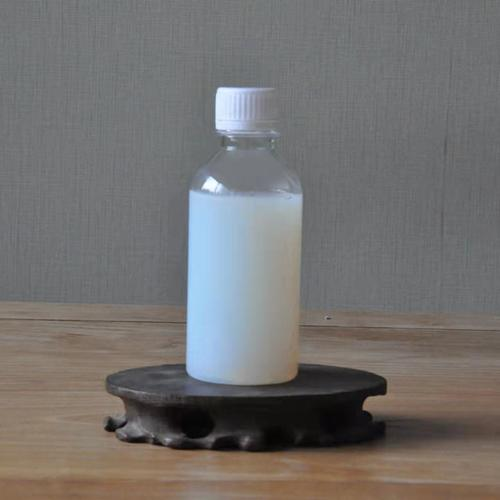 VIEW MOREcolloidal alumina dispersion
 VIEW MOREAlkaline Alumina Sol Used for Coating Material
 VIEW MOREalumina sol for surface insulating coating
 VIEW MOREalumina sol for FCC catalyst binder
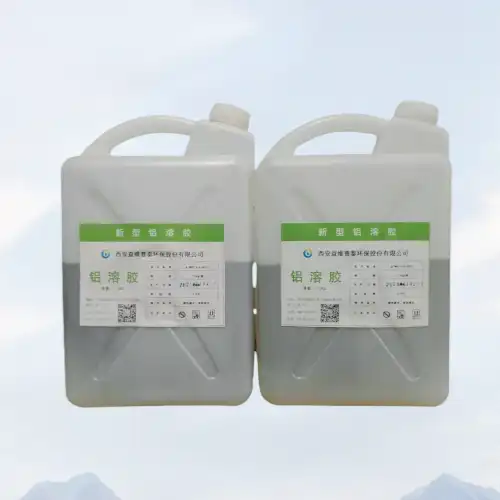 VIEW MOREcolloidal alumina binder
 VIEW MOREcolloidal alumina suspension
 VIEW MORENano aluminum sol catalyst carrier bonder
 VIEW MOREColloidal hydrous alumina