






Alumina Sol for Refractory Coatings: Mixing, Binding, and Applications
Alumina Sol Gel is a colloidal dispersion of nano-sized hydrated alumina particles, often boehmite or pseudo-boehmite, in a liquid. It is used as an inorganic binder in refractory coatings. You combine it with refractory particles, apply the coating, dry, and fire. The liquid exits, and the particles pack together to create a continuous alumina network bonding the grains and sealing the surface pores. Good results are a function of proper mixing sequence, regulated drying, and a firing schedule appropriate for your substrate. This article takes you through each step to help you pick a provider with confidence.
Understanding Alumina Sol Gel as a Refractory Binder
What Alumina Sol Gel Is and How It Differs from Other Binders
Alumina sol is a stable colloid. Alumina base in fine particles remains in suspension in water or a moderate acid solution and does not settle out readily. Sol-gel is the term for the process when the sol transforms into a gel, a linked solid network, as the liquid evaporates or circumstances change. Many purchasers use "Alumina sol" and "Alumina Sol Gel" interchangeably, and I will do the same here.
The substance is different from alumina slurry, with its bigger, more rapidly settling particles. It also varies from aluminum hydroxide powder, which is a precursor or filler and not a ready-to-use colloid. Organic binders will burn away and may leave carbon residue or smoke. The inorganic link of alumina sol is still present in the coating.
How the Binding Mechanism Works
The first stage of the binding action is dispersion stability. Particle size, surface charge, pH, ionic strength, and solids loading dictate how stable the sol is, how thick it flows, and how deep it penetrates a porous substrate. When the surface charge decreases, particles may stick together, and the sol can gel prematurely.
As drying proceeds, liquid evaporates, and particles come closer together to create a continuous inorganic network. Calcination then enhances the interaction between particles. Boehmite dehydrates on heating and transforms into transition aluminas. These phases may transition to alpha-alumina at about 1,100 °C or more depending on impurities and seeding (Levin & Brandon, 1998). Chemistry establishes the potential; process management determines the outcome.
Where Alumina Sol Is Used
Alumina Sol Gel is most often used in refractory bricks, castables, kiln furnishings, foundry molds, furnace parts, and high-purity ceramic systems. In each instance, it unites particles, generates a thin protective layer, or alters the surface of a porous substance.
The same chemical also seems to be outside refractories. Sol-gel alumina is used as a binder for catalyst washcoats on honeycomb supports, and as a precursor for thin protective coatings on metals and glass. The fundamental interest of refractory work is in a fine inorganic bond that is appropriate for alumina-rich materials, and that leaves minimal organic residue after burning.
Mixing, Applying, Drying, and Firing Alumina Sol Coatings
The Mixing Sequence That Protects Stability
I examine the substrate, the target coating, and the powders at the beginning of each run. Clean tanks and mixers are important, as stray salts or residues might destabilize the sol. Then I go in a certain order:
- Add the Alumina Sol Gel to the vessel first.
- Start slow, controlled agitation.
- Add the refractory powder gradually.
- Adjust pH and viscosity.
- Remove any air that may be trapped before use.
The outcome is affected by mixing speed, shear, powder addition rate, batch temperature, solids-to-liquid ratio, and mixing duration. Too much shear may create foaming or agglomeration. Test a small quantity initially since excessively acidic or alkaline powders might drive the sol toward early gelation.
Choosing an Application Method
Each way of application is good for a distinct task. Spraying produces thin, uniform layers but requires a lower viscosity to prevent clogging the nozzle. Dipping fully submerges intricate forms, but drainage must be controlled to minimize drips and uneven thickness. Brushing is good for repairs and tiny areas, but results in less uniform layers.
Flow coating is good for big or heavy pieces that are hard to dip. The sol is impregnated into a porous body, so that it bonds from within, which means smaller particles and lower solids content. Select the process that fits your part size, porosity, and thickness requirements, and validate your decision with a pilot run on your real equipment.
Drying and Calcination Temperature
Many coatings fail in the drying stage. Cracking, blistering, pinholes, and delamination may be caused by rapid drying. I control temperature, humidity, airflow, coating thickness, and porosity of the substrate all at the same time. A single heavy layer will normally develop more internal tension than thin tiered layers.
No universal calcination temperature exists for all systems. The correct value relies on the phase of alumina, particle size, formula, substrate, furnace environment, and desired qualities. A slow heat profile with holding phases allows volatiles and water to escape before the network sets. After firing, I look for adhesion, shrinkage, thermal cycling response, cracking, and phase composition. “Those tests tell how the schedule works.
Performance, Advantages, and Binder Comparison
Practical Advantages of Alumina Sol Coatings
First, the inorganic connection. It may lower smoke, carbon residue, and volatile emissions after burning compared to organic systems. Alumina chemistry also seems to favor high-alumina refractories, so the binder and the base material react in comparable ways at temperature.
Fine colloidal particles are equally dispersed across a surface and may penetrate open pores. This is helpful for sealing a porous body and achieving surface homogeneity. These features are especially helpful when purity, clean firing, or compatibility with alumina-rich materials are important. They don't work the same way for every refractory; therefore, I usually suggest testing on the actual substrate before deciding on a grade.
How to Evaluate Coating Performance
Even a coating that adheres well on day one may fail in service. I measure a number of qualities, looking beyond initial adhesion:
- stability of viscosity and sedimentation
- re-dispersibility after storage
- film thickness and drying time
- thermal shock, abrasion and erosion resistance
- resistance to chemicals
A good validation approach begins with lab screening, then high-temperature exposure and thermal cycling, adds storage testing, and concludes with a pilot run on your own substrate and application equipment. Every step eliminates a danger before bulk buying. Keep track of all results so you can compare grades properly.
Comparing Alumina Sol with Alternative Binders
Alumina sol is suitable for high-purity or alumina-rich solutions. Silica sol is a better match when there is existing silica chemistry, or where it is acceptable. Alumina slurry has a larger bulk solids capacity, while alumina sol has finer colloidal particles with more potential for inorganic bonding.
In its ready form, aluminum hydroxide is used largely as a precursor or filler, not as a colloidal binder. Organic binders may provide you with excellent green strength, but you have to prepare for burnout, contamination potential, and emissions. Not all cases have a winner. The optimum option depends upon the composition of your refractory, firing circumstances, and purity requirements, and a side-by-side test under similar conditions will answer the issue.
Selecting and Buying Alumina Sol Gel
Define Your Application and Key Specifications
Before asking for a price, I jot down the substrate, porosity, service temperature, thermal cycle, chemical exposure, coating thickness, application technique, and storage term. Then I compare them with the product data: Al2O3 or solids concentration, particle size, pH, viscosity, density, stabilization mechanism, shelf life, and packaging.
The connections are handy. Spray coating generally requires a lower viscosity. Fine grains and intermediate solids are favorable to deep penetration in porous bodies. High solids content is typically needed for thick protective coatings. High purity ceramics need rigorous control of contaminants. OEM formulations may need a special grade, so inquire about modifications early on.
Pricing and Procurement Factors
There are a number of aspects involved in moving the price: Alumina Sol Gel purity, concentration, particle size, colloidal processing, stability, customisation, packaging, order volume, certification, and freight. The clearer the request, the more accurate the quote will be. Specify the intended use, target specifications, projected consumption, trial amount, preferred packaging, destination, delivery terms, and paperwork required.
Compare sample, pilot, and bulk prices individually, as unit cost sometimes varies with volume. Also check lead time, minimum order quantity, traceability, and storage needs. Judge overall cost, not just pricing, since a low sticker price might be more expensive if the batch performs badly or spoils on the shelf.
Evaluating a Manufacturer
When I look at a supplier, the first thing I do is look at the paperwork: technical data sheets, safety data sheets, certificates of analysis. “Then I look at quality systems, production capability, experience in exports, and the speed of the technical team’s response.”
Yiwei has its own factory, with contemporary manufacturing equipment, innovative production techniques, and a complete quality control system for the whole process. These assist product quality and lot uniformity. We also have a team from a university working with us to develop our goods and respond to changes in the market.” Test various grades side-by-side under similar test settings after screening suppliers. In the agreement for long-term supply, include specifications, acceptance criteria, batch documentation, change control, traceability, and complaint processes.
From Laboratory Trial to Production Without Costly Mistakes
A Staged Path to Industrial Use
I take an alumina sol coating through three steps. At the laboratory stage, formulation ratios, mixing conditions, viscosity, pH, solids content, coating behavior, drying, and calcination reactions are adjusted.
Pilot trials then assess scale-up factors: mixing energy, powder addition, de-aeration, application equipment, and defect control. The recipe that works in a beaker may not work in a huge tank. Standardize incoming inspection, batch preparation, application, drying, firing, and traceability in production, so each step has documented pass criteria. So an issue comes up early and inexpensively.
Common Problems and How to Avoid Them
Most failures may be attributed to a few factors. Alumina sol is not a universal binder, compatibility being dependent on pH, particle surface chemistry, refractory composition, and fire circumstances.
Poor adhesion: This is mainly caused by poor substrate preparation, so clean and dry the surface beforehand.
Cracking, blistering, delaminating: Often from layers too thick or dried too rapidly. Apply thinner, staged applications.
Agglomeration, foaming, gelation, settling may be caused by using the incorrect powder, applying too much shear, contamination, or incompatible additions.
Most of these problems are avoided by using clean equipment, regulated screening and a consistent mixing technique. If one does, alter one variable at a time to determine the reason.
Recording Results and Setting Long-Term Terms
“A good case history will tell you what substrate, what grade of product, what formulation, what thickness, what processing schedule, how the coating performed, limitations, adjustments you had to make.” I retain these records for all trials, since they allow a one-time success to be turned into a repeatable routine.
Long-term agreements are covered by the same records. They provide explicit bases for specifications, acceptance criteria, and batch documentation for both parties. They also make change control simpler since you can see precisely what a formulation or process change impacts. Share your data with your supplier's technical staff; they may typically offer a grade or change depending on what you measured.
Conclusion
Alumina Sol Gel is a fine inorganic binder for refractory coatings. On drying, its particles form a continuous alumina network and are further strengthened during calcination. There is no universal calcination temperature, and results rely on dispersion stability, sequence of mixing, application technique, thin staged layers, and a fire schedule appropriate to the substrate. Alumina sol is the most suitable for alumina-rich and high-purity systems compared to organic binders, silica sol, alumina slurry, and aluminum hydroxide. The choice of a grade has to be made on precise requirements, side-by-side testing, and a tiered process from laboratory to pilot to production. Unit pricing is as important as supplier paperwork, quality control, and overall cost.
FAQ
1. What does alumina sol do in refractory coatings?
It binds refractory particles with an inorganic alumina network, improves surface uniformity, and can seal pores after drying and firing.
2. Is alumina sol the same as Alumina Sol Gel?
The terms are often used interchangeably. Alumina sol is the colloid, while sol-gel describes the transition from that colloid to a gel network.
3. What calcination temperature should I use?
No fixed value applies. The right temperature depends on the formulation, substrate, particle size, atmosphere, and required properties, so test your own system.
4. How should I store it?
Keep containers sealed and clean, and avoid contamination. Check the shelf life and storage conditions on the supplier's technical data sheet.
Contact Yiwei for Alumina Sol Gel Samples and Quotations
Yiwei supplies Alumina Sol Gel from our own factory, backed by full-process quality control and university-supported product development. If you need an Alumina Sol Gel supplier for refractory coating trials or OEM programs, send your substrate, service temperature, application method, and estimated usage to sales@ywputai.com. We will reply with a sample, technical document, pricing, and shipping details.
References
1. Journal of Materials Science, 1975: Yoldas, B. E., "Alumina Gels That Form Porous Transparent Al₂O₃."
2. Chemical Reviews, 1990: Hench, L. L., and West, J. K., "The Sol-Gel Process."
3. Journal of the American Ceramic Society, 1998: Levin, I., and Brandon, D., "Metastable Alumina Polymorphs: Crystal Structures and Transition Sequences."
4. Sol-Gel Science: The Physics and Chemistry of Sol-Gel Processing, 1990: Brinker, C. J., and Scherer, G. W.
5. Progress in Organic Coatings, 2009: Wang, D., and Bierwagen, G. P., "Sol-Gel Coatings on Metals for Corrosion Protection."
6. Refractories Handbook, 2004: Schacht, C. A. (Ed.), CRC Press.
RECOMMENDATIONS
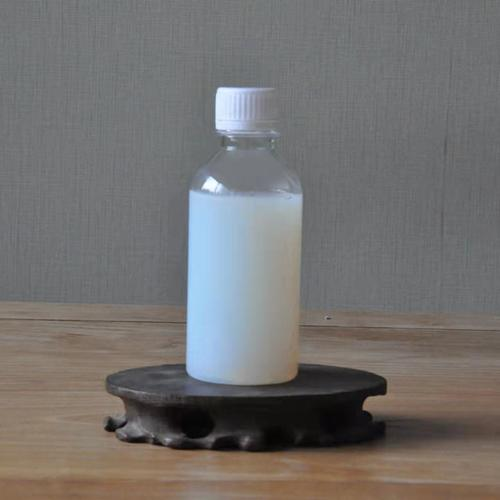 VIEW MOREcolloidal alumina dispersion
 VIEW MOREAlkaline Alumina Sol Used for Coating Material
 VIEW MOREalumina sol for surface insulating coating
 VIEW MOREalumina sol for FCC catalyst binder
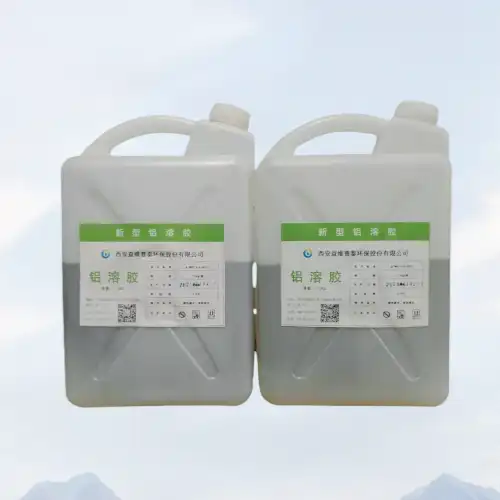 VIEW MOREcolloidal alumina binder
 VIEW MOREcolloidal alumina suspension
 VIEW MORENano aluminum sol catalyst carrier bonder
 VIEW MOREColloidal hydrous alumina