






Alumina Sol Binder for High-Temperature Fiber Products
Alumina sol used for the molding and bonding of fiber products is a water-based, inorganic binder consisting of alumina particles of nanoscale size. It wets the fibers, holding them in place while the product dries and becomes a ceramic bond on fire. Organic binders disintegrate at temperatures around 300°C; however, alumina sol retains its binding strength to 1200°C and greater. That makes it a functional option for ceramic fiber boards, molded refractory forms, and furnace insulation. In this article, I describe how it works, how to apply it, how it compares to other binders, and how to acquire it.
What Is Alumina Sol and How Does It Bond Fiber Products?
Composition and Particle Behavior
Alumina sol is a colloidal suspension of nano-sized particles of aluminum oxide in water, often as boehmite or pseudo-boehmite. Under acidic conditions (usually pH from 3.0 to 5.0), the particles acquire a positive surface charge, which keeps them in suspension and prevents them from settling. Alumina slurries produced from coarse powders react differently. The stability of colloidal alumina is affected by particle size, surface charge, pH, and solids concentration. I think those identical elements are the start of every trial, since they determine how the binder operates on the manufacturing line.
Wetting, Drying, and Green Strength
Bonding begins when the sol wets the surface of the fibers and flows into the interstices between them. When water is removed during the drying process, the particles collect at locations where fibers meet to create tiny bridges. These bridges provide the molded object with green strength, the handling strength before firing. The binder should be distributed evenly. Excessive drainage or migration produces a hard skin on the surface and a weak core. Controlled drying minimizes cracking, warping, and uneven density, particularly in thick boards and intricate designs.
Firing and Ceramic Bond Formation
The residual moisture evaporates during firing, and alumina particles are fused into a ceramic network. On heating, boehmite changes to gamma alumina and at higher temperatures to alpha alumina. The sol contains no volatile organic ingredients, and only water vapor is released upon drying. Before you approve any composition, I propose that you evaluate compression strength, flexural strength, shrinkage, density, and thermal cycling performance on both dry and fired samples.
How to Use Alumina Sol in Fiber Product Manufacturing
Application Methods
Manufacturers use wet mixing, spraying, dipping, vacuum forming, slurry casting, or localized impregnation to apply alumina sol used for the molding and bonding of fiber products sol. Which approach is the appropriate one depending on the product. Vacuum shaping is the usual method for boards and forms. Spraying and dipping are the best for blankets and surface treatment. One high-wear area may be reinforced using impregnation. Check fiber moisture, length, density, and contaminants prior to processing. Then mix the sol carefully so as not to trap air. Bubbles create holes that weaken the completed item.
Setting Solids Content and Process Records
I would recommend establishing a reliable content and adding rate via brief experiments, instead of guesses. For each experiment, consider the green strength, porosity, thickness, and the capacity of your drying apparatus. Too high a binder load will increase density and heat conductivity; too low a binder load will have weak contact points. Document mixing time, drainage, drying conditions, firing temperature, holding time, heating rates, and cooling conditions for each batch. These records allow findings to be repeated and instantly reveal which variable changed and how.
Recommendations by Product Type
Different balance for each product type. Fiber boards need uniform fiber dispersion, regulated drainage, and uniform density from surface to core. Complex refractory forms need strong mold filling, corner penetration, and edge strength. The surface of the blankets should be tough but not stiff. Alumina fiber products need strict control of chemical compatibility and impurities. Thermal conductivity and shrinkage of insulation have to be adjusted with the loading of the binder. Validate each product after drying, firing, installation, and prolonged heat cycling.
Alumina Sol Compared with Other Binders for Ceramic Fiber Products
Alumina Sol and Colloidal Silica
Colloidal silica is a typical refractory binder and is appropriate for various applications. Alumina sol avoids introducing additional silica, and fits into alumina-rich fiber systems more naturally. Charge is also important. The usual alumina sol is positively charged, and the silica sol is negatively charged. If mixed directly, they flocculate. Do not combine the two unless one is surface-changed. In highly hot zones, alumina-based binders are generally selected to prevent shrinkage during sintering, but I would suggest checking this for your specific fiber and firing profile.
Phosphate Binders
Phosphate binders cure and act differently under high temperature. The cure schedule and ultimate strength may vary from an alumina-based bond; therefore, a thorough assessment for compatibility with the fiber chemistry and any additives is needed. If you are using phosphates now and are thinking about changing, do side-by-side experiments using the same fiber lot, the same mold, and the same firing schedule. That comparison gives the genuine difference in green strength, fired strength, and shrinkage that data sheet values alone cannot.
Organic Binders
Organic binders may provide immediate green strength that is useful for handling. The expense shows up as burnout. They break down above around 300°C and may evolve smoke, odor, or carbon residue and cause faults associated with burnout. Alumina sol is water-based and liberates solely water vapor on drying. A fair comparison is made on green strength, fired strength, shrinkage, thermal conductivity, handling durability, contamination, and overall process cost using your real manufacturing materials.
Technical Specifications and Troubleshooting
Specifications to Request
A buy specification should include limitations for alumina concentration, particle size, pH, viscosity, density, appearance, stability, shelf life, packaging, and impurities. Tight limitations on sodium, iron, silica, calcium, and chloride may be required for high-quality operations. Sodium, iron and chloride are typically kept below 0.01% in industrial grade alumina sol. Define each measurement at a defined temperature and shear condition to allow comparability across various laboratories. Grades vary; thus, I usually advise purchasers to refer to the technical data sheet for specific numbers.
Matching Viscosity and Solids to Equipment
The solid content determines the binder loading, drying characteristics, ultimate density, penetration, and green strength. The viscosity has to be appropriate for the equipment, since each of spraying, mixing, coating, and vacuum shaping allows a distinct range. Test the sol with your real fibers, process water, additives, mold-release system, drying process, and fire environment before scale-up. Also test storage and redispersion. Alumina sol used for the molding and bonding of fiber products is thixotropic; it flows when shear is applied and thickens when left alone, which allows it to remain where applied.
Fixing Common Problems
Dispersion, elimination of moisture, compatibility, or fire are the causes of most faults. Bad mixing, excessive viscosity, poor wetting, or migration during drying are all indications of uneven distribution. Cracking and warping are frequently caused by rapid water loss, too much binder, non-uniform density, or poor mold support. If green strength is low, then greater penetration, more solids, closer contact with fibers, or a change in forming pressure may be needed. Incompatible chemistry, excessive porosity, or an improper thermal profile may lead to weak burned parts. Unexpected gelation often occurs when the pH is changed to 8–9, or salts are introduced. Precipitation is irreversible upon freezing. Store sealed containers at 5°- 35°C.
Selecting a Supplier and Buying Alumina Sol
What to Ask a Supplier
A good supplier is one that has consistent production, quality control documentation, application experience, export capabilities, and timely technical assistance. Request the Technical Data Sheet, Safety Data Sheet, Certificate of Analysis for the batch in question, traceability, shelf life, packaging, and storage. Also inquire about sample support, pilot numbers, minimum order volume, lead time, international packing, and OEM or private label solutions. Dealing directly with a manufacturer reduces communication and guarantees consistency of batches as you go from lab experiments to repeated delivery.
Why Buyers Work with Yiwei
The key strengths that support our supply of alumina sol are:
- Our factory. We operate contemporary manufacturing equipment and state-of-the-art production procedures. Direct control of production guarantees consistent output from batch to batch and allows us to meet demands for viscosity, solids, or purity grades without the need for a third party, which also shortens our response times.
- Process-complete quality control. We inspect at every level of manufacturing, so what you test in a pilot batch is exactly what you get in subsequent shipments. This constancy is important if a molding line relies on repeatable viscosity and solids content from batch to batch.
- Cooperation in University Research. We work with a team of university professors to consistently enhance and update our goods so that our grades can keep pace with the changes in market demand and the needs of fiber product producers.
These attributes address the three most common issues purchasers ask: Will the quality be consistent? Will the grade be adjusted? Will technical assistance continue beyond the initial order?
Procurement Steps
Fiber Chemistry, Product Type, Service Temperature, Density, Porosity, Strength Target, Application Method, Equipment, Purity Needs, Annual Volume. Compare quotes by active alumina solids and total landed cost, not just price per kg. Review packaging, shelf life, shipping conditions, Incoterms, customs paperwork, and warehouse storage as well. Submit requirements, examine appropriate grades, test lab compatibility, make molded and fired samples, confirm performance, approve pilot batch, define inspection standards, and allow recurrent supply.
Conclusion
Alumina sol used for the molding and bonding of fiber products works by wetting the fibers, producing particle bridges as the water evaporates, then solidifying into a ceramic bond upon firing. The bond is good at 1200 °C and higher, whilst organic binders degrade at around 300 °C. The results are a function of matching solids content, viscosity, pH, and purity to the fiber chemistry, mode of application, and drying and firing schedule. Alumina sol is more adapted to alumina-rich environments than colloidal silica, although colloidal silica cannot be combined directly with the alumina sol because of the opposing charges. Phosphate and organic binders have compatibility and burnout issues. "Store at 5°C to 35°C. Do not freeze. Freezing may cause damage and gelation." Then supplier documentation, batch consistency, and staged pilot testing demonstrate if a grade is consistent in production.
FAQ
1. Can I mix alumina sol with silica sol?
Generally, no. Standard alumina sol is positively charged, and silica sol is negatively charged, so mixing causes flocculation unless one is surface-modified.
2. How should I store alumina sol?
Keep it sealed between 5°C and 35°C. Freezing causes irreversible precipitation, and evaporation can form a surface crust.
3. Why did my alumina sol gel?
A pH shift toward 8 to 9 or added salts usually triggers gelation. Use clean vessels and additives compatible with cationic systems.
4. Which documents should I request before buying?
Request the TDS, SDS, and a batch-specific COA. Also ask for shelf-life data, packaging details, and sample terms.
Get Alumina Sol Used for the Molding and Bonding of Fiber Products from Yiwei
Yiwei offers a direct alumina sol used for the molding and bonding of fiber products, backed by our own factory, full-process quality control, and a university research partnership. Send your fiber type, molding method, service temperature, and expected volume to sales@ywputai.com, and our team will recommend a suitable grade and discuss samples and a quotation.
References
1. Sol-Gel Science: The Physics and Chemistry of Sol-Gel Processing, 1990
2. Alumina Chemicals: Science and Technology Handbook, 1990
3. Refractories Handbook, 2004
4. Handbook of Sol-Gel Science and Technology, 2018
5. ASTM C892 Standard Specification for High-Temperature Fiber Blanket Thermal Insulation, 2020
6. Introduction to Ceramics, 1976
RECOMMENDATIONS
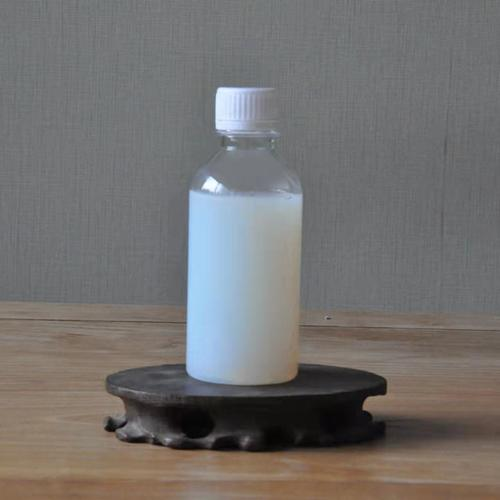 VIEW MOREcolloidal alumina dispersion
 VIEW MOREAlkaline Alumina Sol Used for Coating Material
 VIEW MOREalumina sol for surface insulating coating
 VIEW MOREAlumina Sol Binder for Refractory Castables
 VIEW MOREalumina sol for FCC catalyst binder
 VIEW MOREAlumina Sol for Fire-Resistant Coatings and Fire Extinguishing Formulations
 VIEW MOREcolloidal alumina binder
 VIEW MOREcolloidal alumina suspension