






Why Add Nano Alumina to Electroplating Slurry Formulations?
Why use Nano alumina dispersion liquid for Electroplating Slurry formulations? I include it because fine alumina particles may offer the slurry more uniform particle contact, more stable finishing behavior, and better batch consistency when the dispersion is correctly formed. Nano alumina suspension liquid for electroplating Slurry is pre-separated in a liquid carrier, so you don’t have to do the hard work of breaking apart clumps of dry powder. That helps eliminate scratches, uneven distribution, and mixing mistakes. Results are still dependent on pH, concentration, carrier system, and your plating chemistry; therefore, I always suggest testing against your present material before a complete move.
The Role of Nano Alumina in Modern Electroplating Slurries
What Nano Alumina Does in a Slurry
Nano alumina is a hard ceramic additive composed of aluminum oxide (Al2O3). Particles in a colloidal alumina dispersion are typically 10 to 200 nanometers in size and suspended in a liquid, such as deionized water. In a simple slurry, particles settle and agglomerate more slowly than in a slurry with a steric stabilizer or electrostatic repulsion keeping them separate. This has led to the inclusion of nanoparticles such as alumina within a metal deposit, a field known as composite electroplating. This area was evaluated in 2006 by Low, Wills and Walsh in Surface and Coatings Technology. I like to remind readers that particle size is one variable. Equally important are concentration, surface chemistry, pH, and carrier liquid.
Common Problems Nano Alumina May Help Solve
Slurry users commonly encounter similar pains: powder clumping, uneven particle distribution, settling, scratching, pinholes, and batch-to-batch inconsistency. Dry powder is composed of hard agglomerates that behave like coarse grit and scrape a surface. Because a stable pre-dispersed liquid reduces the need for powder wetting and milling, there are fewer errors in the mixing room. That said, I want to be clear: nano alumina is not a cure-all. A decent dispersion may also fail if the pH is improper or the mixing energy is too low. The outcome is also dependent on the viscosity and compatibility with the plating method. Think about the material controllable variables in your formulation, not a shortcut.
Measurable Benefits You Can Track
The advantages of nano alumina in electroplating slurry are reflected in the measurable data. Smaller particles = greater surface area per gram and more contact points. This may affect surface roughness, gloss, look of the coating, fault frequency, and the amount of material removed. It may also promote repeatability, because liquid dosed by weight or volume is simpler to repeat than powder scooped by hand. I am not saying that the smaller particles always prevail. Do a controlled test utilizing the same substrate and bath conditions and compare the nano alumina with micron-sized alumina. The statistics will tell you which choice matches your finish aim. Liquid dosing also facilitates the transfer of a formula across manufacturing facilities.
Nano Alumina Dispersion Liquid Properties and Format Choices
Key Properties to Check Before You Buy
What I look at initially when I evaluate a dispersion are these features.
- Particle size and distribution: Request main particle size, D50, D90, agglomerate size, and measurement technique. A typical technique is dynamic light scattering (see ISO 22412). An average size may mask the presence of a few big particles that can scrape a surface. Ask for distribution statistics on each batch.
- Concentration, purity and impurities: Verify alumina content, solids content and impurity profile. Check what ions the supplier checks for, since sodium, iron, or chloride might influence a plating bath. Also inquire whether the purity value is for the dry powder or the completed liquid, since the two figures might vary.
- pH, viscosity, and storage: Colloidal alumina is typically stable at acidic pH values of around 3.0 to 4.0, and alkaline additions may cause gelation. Shelf life is usually 6-12 months in the temperature range 5-35°C, and freezing destroys the dispersion. Check viscosity, agitation requirements, and freeze-thaw limitations on the supplier’s data sheet.
These are normal ranges for colloidal alumina. Check your grade’s data and establish written limitations for incoming checks.
Liquid Dispersion vs. Alumina Powder
Buyers often ask whether to choose Nano alumina dispersion liquid for Electroplating Slurry. The table below compares the two formats on the points I see most often.
| Factor | Liquid dispersion | Dry powder |
|---|---|---|
| Dosing | Easy to meter by weight or volume | Needs careful weighing |
| Dust exposure | Low | Higher; needs dust control |
| Initial distribution | Uniform when stable | Needs dispersing equipment |
| Active alumina density | Lower, because of the carrier | Higher |
| Storage | Sensitive to freezing and heat | Keep dry; less sensitive to freezing |
| Shipping weight per kg of alumina | Higher | Lower |
Liquid fits automated dosing and factories without powder handling equipment. Powder works well for high-solids systems and facilities that already have milling equipment. Compare cost per active alumina, not cost per kg of output.
Why Pre-Dispersed Nano Alumina Can Be a Strategic Choice
Pre-dispersed nano alumina is best selected as a process, not only a raw material substitution. Your team does not have to grind or handle powder since the provider handles dispersion. This may result in more predictable slurry preparation, simpler automated dosing, and less need for operator expertise. It may also make scale-up from plant to plant or contract manufacturer easier since every facility utilizes the same liquid and the same method. I would still suggest validation on your own line. Don’t believe generic promises; choose the product that corresponds to performance, compatibility, stability, purity, paperwork, supply, and overall cost. Colloidal Dispersions (Russel, Saville and Schowalter, 1989) indicates that a stable dispersion requires a regulated surface charge or steric layers.
How to Choose and Validate a Nano Alumina Dispersion
A Step-by-Step Selection Process
I have a basic sequence I go by when I choose a grade. First, identify the substrate, plated metal, finish goal, slurry purpose, pH, temperature, mixing technique, and contact time. Then compare water-based and solvent-based carriers and match them to your bath. Then establish limitations for particle size and purity and confirm that the stabilizer is compatible with your additions. Then ask for samples and study the data sheet, safety data sheet, and certificate of analysis. Complete laboratory screening and cost evaluation. The price per kg might be misleading; therefore, be sure to compare active alumina content, dosing efficiency, storage, shipping, quality risk, and technical assistance. A low price on a dilute product may cost more per gram of alumina.
Testing and Validation Workflow
An organized procedure safeguards your line. Start in the lab by comparing a few concentrations. Particle size distribution, viscosity, pH, sedimentation, redispersibility, surface roughness, coating appearance. Then execute a pilot trial using production-like equipment to test mixing energy, sequence of addition, residence duration, and batch uniformity. Always compare to a control, your own chemistry and substrates. Your present alumina. Accelerated storage, centrifugation and monitoring of particle size with time provide early detection of issues of stability. Finally, mimic genuine logistics – warehouse storage, shipping vibration, temperature changes, and repetitive container opening. This is why I follow redispersibility. Dispersion and agglomeration are described as shaping ceramic processes by Rahaman (2003).
Common Mistakes to Avoid
Nano alumina dispersion liquid for Electroplating Slurrys. First, if we assume smaller is always better, ultrafine particles might increase viscosity and likelihood of agglomeration. Another is purchasing on price alone, when the cost of active alumina indicates the actual reality. Third, ignore carrier or stabilizer chemistry that might be in conflict with bath additives. Or, to duplicate a proposed dosage without confirmation, since no single dosage is suitable for all electroplating slurries. In the Journal of the Electrochemical Society in 1972, Guglielmi’s model relates particle incorporation to particle concentration in the bath and current density. The last error is to ignore the specified quality constraints. I provide acceptability limits for particle size, solids, pH, viscosity, contaminants, sedimentation, and shelf life agreed with the supplier before the first purchase.
Working With a Nano Alumina Slurry Supplier
What a Supplier Should Provide
A reliable provider delivers more than drums. Ensure batch-to-batch uniformity, traceability, maintained samples, standardized testing, and documented production controls. Technical assistance must encompass grade selection, concentration adjustment, compatibility screening, sample preparation, and scale-up. If you are a buyer from overseas, ask for export packaging, safety data sheets, certificates of analysis, shelf-life information, batch numbers, manufacturing capacity, and lead-time planning. Also inquire about particle size range, purity, pH, carrier system, stabilizer package, concentration, and packaging alternatives. A provider who can clearly answer these questions before the sale is a strong indication of how support will be following it.
Yiwei's Factory and Quality Control
Yiwei brand of Xi’an Yuwei Putai Environmental Protection Co., Ltd. We have our own factory with contemporary manufacturing equipment and innovative production methods. A full process quality control system ensures excellent quality and consistency of our goods. We have our own plant, so we control manufacturing and can trace a batch through the whole process – which is important when you want the same output on each repeat order. Our experience in water-environment goods also provides us with insight into industrial clients operating under stringent quality and regulatory criteria. We welcome inquiries on how consistency is handled, since it is a daily production chore for us.
University Collaboration and Product Upgrades
We are working with a university team to further optimize and upgrade our goods to suit market demand and follow future development trends. For a buyer, this partnership implies the product line is not stagnant. Based on the substrate, plating chemistry, current alumina grade, target particle size, needed concentration, yearly demand, packing, and destination you provide us, our technical team will examine. Then we may talk about choosing grades, evaluating samples, compatibility testing, and adjusting concentrations. Bring us your trickiest slurry challenge. We may suggest a next step based on real-world facts in your application.
Conclusion
Nano alumina dispersion liquid for Electroplating Slurry compositions as a stable, well-dispersed liquid. It can minimize aggregation, uneven distribution, and mixing mistakes, and it may affect roughness, gloss, flaws, and repeatability. Results depend not only on particle size, but also on concentration, pH, surface chemistry, and carrier system. Buyers need to examine particle distribution, purity, contaminants, viscosity, and storage restrictions. Compare liquid and powder by active alumina cost, handling, and shipping. A step-wise testing and selection process with a control sample and defined acceptance limits reduces risk and eliminates typical errors. A provider with a history of quality control and technical assistance helps to ensure consistent outcomes across batches and locations.
FAQ
1. What is nano alumina dispersion liquid used for?
It serves as a fine ceramic additive in slurries for polishing, finishing, and composite plating work. Its value depends on particle distribution, stability, and compatibility with your bath.
2. Is there one dosage for every slurry?
No. Dosage depends on your chemistry, substrate, target finish, and mixing method. Start with several concentrations in the lab and compare each with a control.
3. How do I judge stability?
Use accelerated storage, particle-size monitoring, centrifugation, and redispersibility checks. Ask the supplier for a technical data sheet, safety data sheet, and certificate of analysis.
4. When is liquid better than powder?
Liquid often fits automated dosing and plants that want less dust and fewer dispersion steps. Powder may suit high-solids systems.
Talk to Yiwei About Nano Alumina for Your Electroplating Slurry
Looking for a Nano alumina dispersion liquid for Electroplating Slurry supplier? Yiwei operates its own factory with modern production equipment and full-process quality control, and we work with a university team to keep our products current. Send us your substrate, plating chemistry, target particle size, concentration, and annual demand at sales@ywputai.com. Our team will help with sample evaluation and supply planning.
References
1. Surface and Coatings Technology, 2006 – Electrodeposition of Composite Coatings Containing Nanoparticles in a Metal Deposit
2. Journal of the Electrochemical Society, 1972 – Kinetics of the Deposition of Inert Particles from Electrolytic Baths
3. Modern Electroplating (5th Edition), 2010
4. Colloidal Dispersions, 1989
5. ISO 22412, 2017 – Particle Size Analysis: Dynamic Light Scattering
6. Ceramic Processing and Sintering, 2003
RECOMMENDATIONS
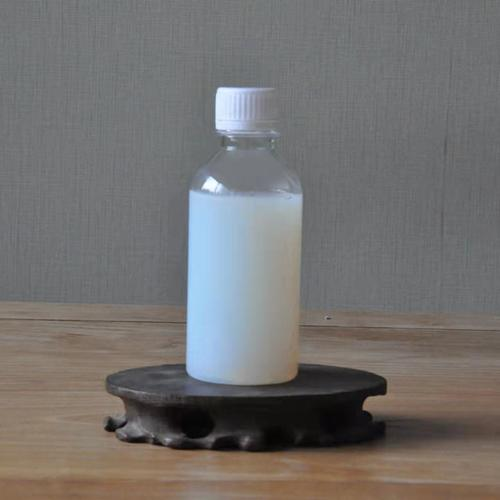 VIEW MOREcolloidal alumina dispersion
 VIEW MOREAlkaline Alumina Sol Used for Coating Material
 VIEW MOREalumina sol for surface insulating coating
 VIEW MOREAlumina Sol Binder for Refractory Castables
 VIEW MOREalumina sol for FCC catalyst binder
 VIEW MOREAlumina Sol for Fire-Resistant Coatings and Fire Extinguishing Formulations
 VIEW MOREcolloidal alumina binder
 VIEW MOREcolloidal alumina suspension