





Top Colloidal Hydrous Alumina Manufacturers for Industry
Top colloidal hydrous alumina manufacturers for industry have a few things in common. They regulate particle size and purity, record every batch, and stand behind customers from sample to bulk purchase. Producers with their own plant may alter solids content, pH, and viscosity for catalytic supports, refractory fibers, coatings, and polishing slurries. I prepared this guide for purchasing managers, process engineers, and OEM teams in the United States who wish to evaluate vendors on facts rather than catalog claims. I describe the information, the selection criteria and the questions below which save you from expensive errors.
What Colloidal Hydrous Alumina Is and Which Data to Request
Definition and Related Terms
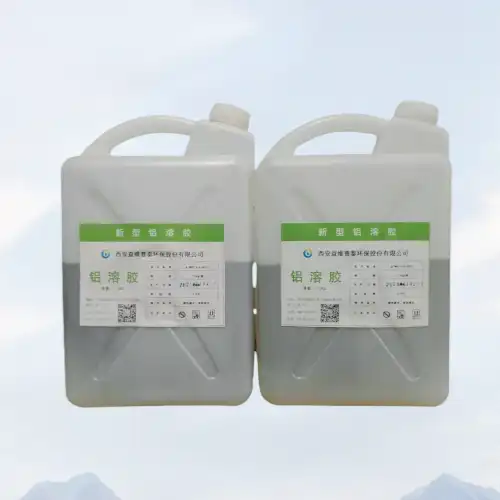
It is composed of aluminum trihydrate or aluminum oxide monohydrate (which may be boehmite or pseudoboehmite) combined with water. Each particle might be anything from 10 to 100 nm in length. Some providers also offer dry powder. Alumina sol, liquid alumina, alumina hydrate, and alumina dispersion are various names for the same material. That's why I always ask for a written confirmation of the quantity of solids, particle size, and chemical phase. They are positively charged on the exterior when in acidic water. They are charged so they may cling to negatively charged ceramic fibers, mineral powders, and paper coatings. As the sol dries, it forms a gel network that keeps the fragments together.
Technical Data to Request Before Ordering
It is often reported that most dispersions have a D50 value in the tens of nanometers. They are also thought to be safe when the pH is between 3 and 5. If the acid has a zeta potential over 30mV, the particles repel each other strongly, and the system remains stable. There should be a limit on too much iron and salt. Sodium in refractories acts as a flux, and iron may poison catalytic sites or modify the intensity of light. If you heat anything, the surface area still has to be large for catalytic carriers. Ask about the solids, the viscosity, how it settles, how it can be mixed back again, how long it will last, and the procedure employed to obtain each outcome. This information does not actually imply anything; it is just a guess. Each grade should include a data sheet.
How It Differs From Hydrated Alumina Powder and Colloidal Silica
It is usually a dry powder of hydrated alumina with larger particles. It is never flat at the nanoscale level; thus, it has to be stretched out and flattened. You may combine it, spray it, or pump it when you get a colloidal sol. Another kind of nano-binder is colloidal silica. The grades usually leave silica in the product and are negatively charged. Acid does not alter the granular and hydrous alumina, but just leaves the alumina behind. This is applicable to high-temperature fibers or alumina-based carriers. When cationic alumina sol and anionic silica sol are combined, they may cling together because they have distinct charges. Choose the binder that will work for the start and finish of your project.
Top Colloidal Hydrous Alumina Manufacturers: Evaluation Criteria
Production Capability and Process Control
If you want to know how the sol is made, call the company and ask them. Colloidal hydrous alumina manufacturers that are strong can talk about their specific production lines, steps for dispersion or precipitation, homogenization equipment, and filling systems. The particles' sizes are checked both while they are being made and when they are done. There are small changes that can be made to how sticky something is and how long it lasts. How many items are in the batch? If your orders get bigger, how can more space be added? Is the process the same for lab amounts, pilot amounts, and bulk volumes? A provider who gives clear replies has probably set up real process control. It is a red flag when the answer is not clear.
Documentation, Traceability, and Customization
What a brochure says is backed up by documents. Ask for an analysis certificate for each lot that lists the amount of Al₂O₃, the solids, the pH, and the amounts of impurities. Get the most recent safety data sheet. A 16-section SDS is required by the OSHA Hazard Communication Standard. Someone who knows how to deal with people in the US should send one right away. A problem at a company can be traced back to a certain production lot in batch tracking. The levels of iron, silicon, and sodium can be confirmed with ICP-MS testing. Some of the things that a manufacturer of unique colloidal hydrous alumina should list are the particle size, content, pH, and viscosity. The company should also explain how it checks each change. When the process changes, you should be told about them before they reach your line.
Factory-Direct Manufacturers Versus Traders, and Regional Factors
A factory-direct producer is in charge of the whole process, so it can keep track of many things, change a grade, and answer hard questions. Traders can offer lower minimum order amounts or stock that is close by, but most of the time, they cannot change the plan. There is not a right or wrong plan. Pick the one that will do the job. There are good and bad things about prices, wait times, and rules in Asia, the US, Europe, and China. Use the full landed cost that was paid for the goods when they arrived instead of the price per kilogram. Tests, shipping, and packaging that keep the soil from freezing should all be part of the price. The Toxic Substances Control Act also says that people in the US must follow certain rules in order to bring in goods from other countries. Then, make a simple matrix that gives each of the following factors a score: strength, documentation, capacity, packing, support, and landing cost.
Industrial Applications of Colloidal Hydrous Alumina
Catalytic Supports and Refractory Fibers
A binder holds the zeolite and clay particles together inside each pellet of fluid catalytic cracking. It needs to be strong enough to last and break down quickly. It also needs to have holes in it so that reactants can get to the active spots. People who want to buy it care most about how clear it is, how much surface area it has, how it reacts to acid, and how stable its temperature is. People who make hard fiber do not work that way. Because organic binders burn off when it gets hot, the fabric is not as strong. An alumina sol that is inorganic stays put and bonds with itself as it heats up. It matters to them how strong the green is, how fast it dries, and how much sodium it has. It gets smaller when boehmite changes from gamma-alumina near 450°C to alpha-alumina above about 1150°C. Make sure your firing plan works by testing it.
Inkjet Coatings and Functional Textiles
Photo-grade paper needs to have ink fixed on top of it in order to work. Negatively charged dye molecules are quickly taken up by the cationic charge of the colloidal hydrous alumina particles in water. That makes the dye stronger against water and less likely to move or bleed. The sol also dries into a porous layer that supports sharp images. Technical textile finishers use thin layers of alumina to make them fire- and static-proof without having to add a thick coating. Formulation rules follow rules that are important here. When you mix the sol with latex or detergents that have a negative charge, you make a mess. Instead, you should use things that are non-ionic or cationic. A thick layer might crack as it dries. Either add a plasticizer like PVA or let the gel cool down a bit to fix this.
Polishing Slurries and Other Uses
Since alumina is hard, it can be used to grind things down, such as making slurries for chemical mechanical planarization. You can tell how good these slurries are by how stable the colloids are. People who want to buy want tight particle control and dispersion data because things bigger than one micron can scratch the surface. A lot of the time, pro ceramics and ceramic finishes have the same needs. People who buy thermal insulation and investment casting should pay attention to things like how smooth the material is, how much it shrinks, and how its strength changes when it gets hot. I think the goal of the application should always come first. Then, tell each supplier what grade and test data will help you reach your objective. The talk stays short and useful this way.
How to Select the Best Colloidal Hydrous Alumina Manufacturer
A Step-by-Step Selection Process
Start by saying what the product is used for and whether it comes in powder or sol form. The next step is to make a list of testable criteria for acceptance. Some of these are pH, viscosity, particle size, solids content, and the maximum amount of impurities that can be present. Choose two to five good makers and ask each one for paperwork and examples that are like the ones you want. Test a small amount of it in the lab first, then a pilot trial, and then test a second batch. When you compare quotes, you should think about price, freight, packaging, duties, testing costs, lead time, and the cost of a lot that was turned down. Before giving the provider the final go-ahead, make sure you know their rules for change control, batch keeping, production capacity, and ability to handle huge amounts of work. Score sheets that are weighted make sure that everyone has an equal chance to win.
Common Purchasing Mistakes
A lot of the time, the cheap quotes cost more in the long run. People who buy colloidal hydrous alumina manufacturers often mix it up with alumina sol or other hydrate products. The particles act badly in the plant because of this. This is also something that many people get wrong: taking "high purity" by itself without numbers. Instead, they should ask for limits in ppm or percent. Things get lost when they are stored wrong. There are small pieces in the sol that stick together when it freezes and form stable flocs. Shelf life is often stated as 6 to 12 months. It either thickens, starts to gel, or sediments form when something goes wrong. The pH also moves toward the isoelectric point. Find out how to mix and stir the ingredients, and make sure the container is compatible. Even if your yield stays the same, you should always do repeat-batch validation.
Supplier Qualification Checklist
There are three parts to this list of things you should do. For technical items, confirm product identity, particle size data with its test method, purity limits, solids, pH, viscosity, stability in suspension, and shelf life. For quality and compliance, confirm a lot-specific COA, an up-to-date SDS, batch tracking, notice of nonconformance, change notification, and safe packaging for transport. When you buy things for your business, make sure you know the MOQ, sample policy, wait time, Incoterms, payment terms, export documents, packaging formats, capacity, and how to get help from experts after the sale. Check with the service provider to see if they provide particle sizes of D10, D50, and D90. If they do, ask them what method they use, like dynamic light scattering under ISO 22412. You should try to find a source that does well in all three groups.
Why Yiwei Fits Buyers Comparing Colloidal Hydrous Alumina Manufacturers
Our Own Factory and Production Equipment
Yiwei has its own factory, and goods are created using the latest tools & procedures. We own the plant; thus, we do everything ourselves, and we don't give instructions to a third party. This control means we can monitor batches, respond directly to inquiries about the process, and adjust parameters if your application requires them. We also provide chemicals and equipment for water treatment, so we understand buyers’ need for clear paperwork and long-term professional advice. If you are a truth-telling colloidal hydrous alumina producer and have technical questions regarding how the process works, you are free to ask us.
Full-Process Quality Control
When we test anything, we test it all the way through. This means that each batch is always the same and of great quality. Thickness, particle behavior, performance — it’s all the same from the first to the final drum. When things are constant, they don’t surprise you as much. We may discuss the test elements that matter most to you, like the quantity of solids, pH, viscosity, particle size, and contaminants present. We can also email you the technical documentation your team needs to sign off. We shall work early from your acceptable limitations.
University Cooperation and Technical Support
A university group allows us to improve our goods and adapt to market demand. This collaboration gives us the science to back up in the face of changing needs, such as if we need to adjust the particle size or the distribution. Once an inquiry is received, the normal route is discussion of the application and suggestion of a grade. Try a few examples first and see how they operate. Then compare specifications and ask for a bulk quote for the complete order. We respond swiftly, so communication is clear throughout. We also provide trial findings that your specialists may compare batch to batch. Tell us your application, where you want it to go, an estimate of the volume, and the specifications you require, and we will offer you a viable proposal.
Conclusion
Aside from the pricing, there are additional aspects that you should look for in colloidal hydrous alumina manufacturers. Look for fit, evidence and consistency. The substance consists of moist, charged nanoscale alumina particles. Performance depends on particle size, clarity, solids content, pH, viscosity, and stability. In terms of customisation, process control and paperwork for each lot, it is simple to see who is excellent at what. Traders may not necessarily have as much information as the factory-direct producers have. Catalyst supports, refractory fibers, inkjet coatings and polishing slurries stress distinct attributes. The first thing that should spring to your mind when you pick is the application aim. Choose 2 to 5 suppliers, test comparable samples, do pilot and repeat-batch tests, compare quotations based on total landed cost. If stored in the appropriate manner and frozen, the order will be worth what it was purchased for after it has been delivered.
FAQ
1. What data should I request from colloidal hydrous alumina manufacturers?
Find out how much Al₂O₃ there is, how much solids there are, the pH, the viscosity, the particle size (D10, D50, D90), the surface area, the limits for sodium, iron, and silicon, how long it will last, and what test method was used to get each number. Ask for a COA that is unique to the lot and an up-to-date SDS.
2. Can I mix it with anionic additives?
Not very often; no. The particles can stick together right away because they are positively charged in acid. Anionic surfactants or latex can trigger immediate coagulation. Pick additives that are non-ionic or cationic, and try out small mixtures first.
3. Does freezing damage the sol?
Yes. Little bits of ice press the pieces together, which makes them stick into permanent flocs. Unless the sol's datasheet says otherwise, keep it between 5°C and 35°C.
4. What should a sample request include?
For what you want the product to do and how pure, small, or spread out you want it to be, please let us know. Also, please tell us about its format, the volume you expect, the final market, how it needs to be packed, and any standards it needs to meet. These details help a supplier recommend a suitable grade instead of a generic one.
Contact Yiwei to Compare Colloidal Hydrous Alumina Manufacturers
Colloidal hydrous alumina manufacturers, engineers, wholesalers, and buying teams that want to compare different companies are welcome to get in touch with Yiwei. Whether you need a trusted supplier for a sample lot or colloidal hydrous alumina for sale in bulk, our own factory, full-process quality control, and university cooperation support your project. You can talk about your specific needs or get a sample. Send an email to sales@ywputai.com with your application, phone number, and location.
References
1. Ullmann's Encyclopedia of Industrial Chemistry, 2012
2. Handbook of Sol-Gel Science and Technology, 2018
3. Handbook of Heterogeneous Catalysis, 2008
4. OSHA Hazard Communication Standard (29 CFR 1910.1200), 2012
5. ISO 22412 Particle Size Analysis: Dynamic Light Scattering, 2017
6. Colloidal Dispersions (Russel, Saville, and Schowalter, Cambridge University Press), 1989