





Is nano aluminum sol catalyst carrier bonder Right for You?
A nano aluminum sol catalyst carrier bonder is right for you when your process needs an inorganic binder that bonds well with alumina, zeolite, or ceramic surfaces and holds up at high temperatures. It fits carrier forming, extrusion, and washcoat work, as long as your slurry tolerates an acidic sol and you can confirm strength targets in testing. It is a weaker fit when your recipe is sensitive to pH or needs an organic binder that burns out cleanly. In this guide, I explain how the material works, how it compares with other binders, and how to test it before scale-up.
What Is a Nano Aluminum Sol Catalyst Carrier Bonder?
A Liquid Inorganic Binder Made of Nanoscale Alumina
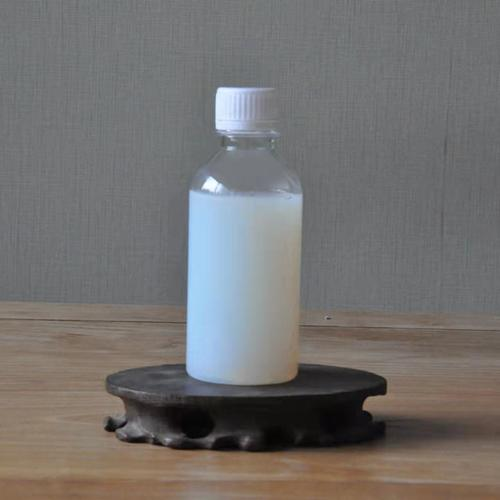
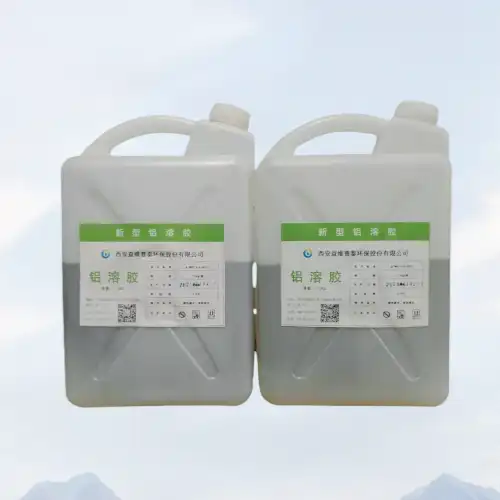
Nano aluminum sol catalyst carrier bonder, which is a stable liquid, is mixed with alumina nanoparticles. In some places, it's also known as alumina sol binder, liquid alumina, or alumina sol. Most of the time, these tiny pieces are boehmite or pseudo-boehmite crystallites. They are 10 to 100 nm in size. Sol is a liquid, so it can move through a mix, while dry alumina powder can't. That is, it can get into the little spaces between the grains. After being fired and dried, these tiny pieces hold other zeolite, clay, alumina, or ceramic pieces together. It's not just a glue; it's also a binder that fills in the gaps at the end.
Key Properties Buyers Should Check
Most of the time, this stuff looks clear to cloudy. Most of the time, its D50 particle size is between 10 and 30 nm, and it has 10% to 25% Al2O3. It's important to be pure because sodium can make acid sites less strong. There shouldn't be more than 0.05% Na2O and 0.02% Fe2O3. Also, things that rust quickly should have very little chloride in the water. Find out the pH, viscosity, density, and how long it will last as well. Getting a technical data sheet and a certificate of analysis is always a good idea before you look at different deals. This is because prices vary by grade.
How the Binding Mechanism Works
The sol changes from a boehmite phase to a gamma-alumina phase as it dries out and gets hotter. Because of the change, Al-O-Al ceramic links can now withstand temperatures above 600°C. Because it has a lot of surface area, it is often used to support a catalyst. With heat, this kind of glue can also add surface area—usually more than 200 m²/g. In some systems, silica links might not be able to open up holes. Alumina structures, on the other hand, tend to stay more open. When the pH is low, the sol's surface has a charge toward it. This makes it stick to zeolites and clay honeycombs, which have a negative charge.
How It Works in Carrier Manufacturing and What Benefits to Expect
From Mixing to Calcination
Mixed materials are coated or impregnated, they are dried slowly, and finally they are heated to a high temperature. In this step, the sol wets the particle surfaces and spreads them out in the slurry. The water evaporates, leaving behind nanoparticles that stick together. The bond is then sealed with heat. For alumina, zeolite, cordierite, silicon carbide, and precious metals to work, you need to make sure that the surface adapts to them all. Zeolite and clay are mixed in a nano aluminum sol catalyst carrier bonder to make an FCC catalyst. The stuff in a fluidized bed needs to be able to keep heavy oil from wearing through while also not letting wear happen.
Practical Benefits for Carriers
These pros are what most buyers look for.
- Better green strength is higher; it is less likely to break when it is taken out of the mold, dried, handled, or packed.
- Inorganic bonding artificial bonds work doesn't change when the temperature is high.
- Good wetting helps coatings stick to ceramic walls and stay put when clay walls are really wet.
- Alumina does not burn out the way organic binders do, so there is less to worry about when the clay is fired in terms of waste and pollution.
- Controlled particle distribution can stop some cracks and shrinkage by stopping the uneven spread of particles.
Gains like these rely on how thick the coating is, how fast it dries, how many solids are in it, how the holes are set up, and how the temperatures change. I think you should check them for heat changes, bending, adhesion, and wear.
Why pH and Storage Control Matter
Most of the time, this kind of sol is acidic and has a pH level between 3 and 5. They mix well with zeolite and other solids that are acidic to neutral. If you mix it with something very alkaline without adding a buffer, it may gather or flocculate. I tell the teams to keep an eye on changes in viscosity, sedimentation, and pH as they store and test the samples. Between 5°C and 35°C, keep the sol in drums made of stainless steel or plastic. Something stops being a liquid for good when it freezes, and it turns into a gel more quickly when it gets hot. The shelf life varies by grade, but most sealed packages stay good for 6 to 12 months.
Nano Aluminum Sol Compared with Other Binders
Versus Silica Sol
You should know that alumina sol and silica sol work better on different kinds of surfaces. You should use things that are based on alumina if you want to use alumina sol. Silica sol, on the other hand, works best in systems that have a lot of silica. Also, alumina sol stays stable in water that is both hot and cold. It turns into stable transition aluminas in hot steam, like when FCC is regenerated. Silica binders, on the other hand, can join with other things. Alumina sol makes the surface area bigger, and silica fillers may also block holes. But not every recipe works best in the same binder. What should come up is the binder, not the process. That's why I believe they should be mixed, dried, and fired the same way.
Versus Alumina Powder and Boehmite
Dry Al2O3 powder needs to be spread out well, because clumps can make spots that aren't strong. It's easy to spread a nano aluminum sol catalyst carrier bonder, and it can get into the spaces between grains. Sols, on the other hand, can gel, so they need more care when they are being held and kept stable. Most of the time, boehmite is the better choice for controlling surface area growth, peptization, or pore structure. The peptization process can be turned around in some sol mixtures, which makes it easier to make loose slurry mixtures. Putting them next to each other is the best way to choose. The only thing that's different about this test is the binder. There are no changes to anything else.
Looking at Cost per Qualified Carrier
Price per kg doesn't always show everything. Your cost per good carrier may go down if you buy a binder that costs more but needs less dose, loses less, or needs less repair. To your numbers, you need to add the costs of testing, moving, mixing, drying, and keeping. It's also important how big the particles are. There are about 10 to 20 nm wide particles that are close to each other. This makes the mesopores smaller. How easy it is for your active sites to get to the pores will tell you what size is best. So that the engineering and buying teams can compare options on the same level, these things should be put on a simple cost sheet.
Is It Suitable for Your Application?
Where It Fits Well
There are three clear ways to use it. In FCC catalyst making, it keeps the mesoporosity and connects zeolite Y and clay. In automotive exhaust washcoats, it helps keep Pt, Pd, and Rh materials on cordierite honeycombs by absorbing heat and vibration, which keeps the materials from flaking. In hydrotreating and hydrocracking extrudates, it keeps the pieces together and makes them smooth. It helps make trilobes or quadralobes that are hard to break up. This keeps the pressure in the reactor bed from dropping. Alumina supports with pores and industrial washcoat systems might also be able to use it. You still need to test each use on your own line.
Cases That Call for Caution
When you use an acidic nano aluminum sol catalyst carrier bonder on a product that reacts strongly to pH or ionic strength, you should be careful. It might not be as stable. Buffered slurries are what you need for alkaline ones. In some recipes, alumina could also be used, and it might be hard to get the viscosity to very low levels. If you need biological flexibility or think there will be burn-out, like when you use pore formers, you might need a different binder. Chloride is one more thing. If your unit is sensitive, ask your provider about types that are low in chloride or chloride-free. It can be bad for hydroprocessing or make rusting more likely.
A Simple Decision Checklist
It is important to keep track of your strength goals, production size, legal requirements, hole structure, and covering method. It will also help to write down your carrier material, covering method, drying, and calcination profile. After that, mark each need as either needed, wanted, or not needed. So, engineering and buying can share a record this way. If you need to improve green strength, work with alumina, bond inorganic materials, or regulate how well coatings stick, a nano aluminum sol catalyst carrier bonder is a good option. You should look at other binders first if you need to be able to deal with pH or organic burn-out. You should not choose based on marketing claims or claims about particle size. Instead, you should follow the data from labs and pilot projects.
Testing and Sourcing Before You Commit
Lab and Pilot Evaluation
Compare the nano aluminum sol catalyst carrier bonder to the binder you're working on or to a goal you set for yourself. A lot of different tests should be done to see how well the material works with heat, abrasion, wetting, penetration, green strength, drying shrinkage, fired strength, coating adhesion, and abrasion resistance. One big thing at a time, like how much water to use, how long to mix, how to dry, or how hot to make the charcoal. You won't be able to tell what changed if you do that. It's also easy to check from one lot to the next with a binder index test. The sol is mixed with a standard powder after it has been baked. Then, all the lots are compared to see if they all have the same crush power.
Quality Control Checks That Matter
Find out how they check each batch. To find out how much solid matter there is and how much Al2O3 is there, EDTA titration and gravimetric measurements are used. It is possible to use ICP-MS to find out how much sodium, iron, and heavy metals are present. Dynamic light scattering is then used to keep the sol in the nano range. You can tell if the chance of gelling is going up by keeping an eye on the pH over time. Sodium is important because it balances out acidic areas. In places where strong metals or iron are found, coke can be made, or side reactions can occur. Get a certificate of analysis, a technical data sheet, and a safety data sheet. Also, find out how long the product will last. Find out which values are normal and which ones are guaranteed.
Choosing a Supplier You Can Work With
A good service gives you more than just a good deal. When you look at a manufacturer, you should ask about their experience, capacity, batch uniformity, export papers, packaging options, wait time, MOQ, and technical response. At Yiwei, our plant has a full-process quality control system that helps us make sure all of our batches of nano aluminum sol catalyst carrier bonder are good. As well as cutting-edge tools and methods, the business has a system. We also work with a university group to make our goods better and better meet the wants of the market. Could you tell me the temperatures you want to use, the type of carrier, the current binder, the pH, the viscosity, and the amount of Al2O3 you want to use? After that, we can talk about whether a regular grade or one that has been changed will work.
Conclusion
The nano aluminum sol catalyst carrier bonder is an inorganic binder that is liquid and made of tiny alumina. It turns from boehmite to gamma-alumina during firing and forms strong Al-O-Al bonds above 600°C. The best things about it are that it lasts a long time, stays stable at high temperatures, is strong in green, and adds surface area. It can be used with alumina, zeolite, FCC matrices, exhaust washcoats, and extrudates that have been treated with water. It can't do certain things, like organic burn-out recipes or units that are sensitive to chloride and pH. There isn't a clear winner between boehmite, silica sol, alumina powder, and alumina sol. Choose one based on the cost per qualified carrier, the type of carrier, and the process steps. Our lab tests and quality checks on each batch give the best answer.
FAQ
1. What is a nano aluminum sol catalyst carrier bonder used for?
It holds together washcoats, porous supports, extrudates, and cases made of ceramic and zeolite. Your recipe is what will make it work or not. It can make the green strength, wetting, and joining at high temperatures better.
2. How should I store it?
Between 5°C and 35°C, keep it sealed in plastic or stainless steel drums. When the colloid freezes, it is damaged for good, and when it gets hot, it gels up faster. Most things last between 6 and 12 months.
3. Does it work with alkaline materials?
Most of the time, the sol is cationic, and the pH is between 3 and 5. Very alkaline substances can cause precipitation, so the pH needs to be changed or a buffer added to reach a healthy level.
4. How does particle size affect pore volume?
Little bits (10–20 nm) pack close to each other, which makes the mesopores smaller. Pick a size that lets active sites stay accessible.
5. Is it better than silica sol?
Not all the time. There is little change when it gets hot, and it works better with systems that use alumina. But silica sol might work better in recipes that need a lot of silica. Try it out.
Talk to Yiwei About Your Nano Aluminum Sol Catalyst Carrier Bonder Needs
With the help of a university team, we keep making our products better. Yiwei also has its own factory, which uses cutting-edge tools and methods and checks the quality at every step of the way. To find a source for a nano aluminum sol catalyst carrier bonder, email sales@ywputai.com with the type of carrier you need, the current binder, the pH, the viscosity, and an idea of how much you need. To learn more. Our team will send you the next steps.
References
1. Handbook of Heterogeneous Catalysis, 2008
2. European Journal of Inorganic Chemistry, "Gamma Alumina as a Support for Catalysts: A Review of Fundamental Aspects," 2005
3. Catalysis Today, "The Surface of Transitional Aluminas: A Critical Review," 2014
4. Sol-Gel Science: The Physics and Chemistry of Sol-Gel Processing, 1990
5. Catalytic Air Pollution Control: Commercial Technology, 2009
6. Fluid Catalytic Cracking Handbook, 2012