






Colloidal Alumina Binder: Benefits and Applications
The colloidal alumina binder is an aqueous dispersion of nano-sized aluminum oxide (Al 2 O 3) particles, which are generally in the form of boehmite or pseudoboehmite phase, with a positive surface charge. It is a high-temperature inorganic adhesive extensively used in advanced ceramics, refractory coatings, and catalyst support manufacture. Unlike organic binders, it does not give off harmful VOCs, but generates hard ceramic bonds on heating using sol-gel chemistry. With up to 99.5% (or better) purity and remaining solid at 1600°C, Al₂O₃ is one of the most favored materials for engineers looking for chemical stability and thermal endurance in one package.
Understanding Colloidal Alumina Binder
If you want to choose the right industrial binder, it's helpful to know what it's made of. When it's hot and dry, alumina sol binder works better than other options because of how it's made.
What It Is Made Of
Colloidal alumina binder is a binder composed of crystals of aluminum oxide suspended in water. These small objects are ten to one hundred nanometers apart. They have a high zeta potential. They have a big positive charge on the exterior. This ensures that they float uniformly and do not settle down too fast. To maintain the low pH, HCl, HNO1 or organic acids such as acetic acid are utilized. pH level should be about 3.0- 4.5.
How the Binding Mechanism Works
The pieces are held together via sol-gel technology. At around 110°C, the particles expel water, and the surface hydroxyl groups of the particles link together to form a gel network that extends between the particles. This is called ‘green strength’. Some sintering is seen when T > 500 C. This means forming ceramic necks between the particles that keep the basic materials together with actual mechanical rigidity. When the alumina phase is heated above 1150°C, it transforms into stable alpha-alumina. Here, the material does the finest job of holding everything together.
Why It Differs from Conventional Binders
Binders such as calcium aluminate cements and phosphate systems need the presence of fluxing agents such as CaO or Na2O to operate. These are a lower risk of failure for the eutectic, and the end combo will cry less. The solution to this challenge was to introduce a pure bonding phase that increases the refractoriness under load (RUL) up to 1700°C without any flash-setting problems. Silica sols, in contrast, decompose beyond 1260°C and have a very strong reaction with basic oxide systems.
Benefits of Using Colloidal Alumina Binder
This material has been used for a long time in business and ceramics and has been examined to see how well it functions. If procurement teams are considering alumina-based binding solutions, then all of the above should be kept in mind. At higher temperatures, the colloidal alumina binder is chemically stable up to 1600°C, which is much above the greatest temperature of the silica sol alternatives, which is around 1100°C. It will not harm the structure when used for the lining of industrial ovens, boilers, and other hot spots.
- High temperature stability. The binder is chemically stable at temperatures beyond 1600C, much above the ~1100C limit of silica sol alternatives. This makes it appropriate for lining industrial furnaces, kilns, and other high-heat situations without affecting the structure.
- Chemical purity: Variants with 99.9% Al2O3 purity are available, which avoids catalytic poisoning in petrochemical and electronics applications where trace contamination is not acceptable.
- No VOC emissions: The bonding is inorganic; therefore, no volatile organic compounds are emitted during curing or burning. It minimizes exposure to hazards in the workplace and promotes environmental compliance.
- Thermal shock resistance: Micro-cracking processes in the porous network, following gelation, absorb energy during fast temperature fluctuations, thereby decreasing the likelihood of catastrophic structural collapse.
- Thixotropic flow behavior: the material is shear-thinning and flows easily under spray or dip coating pressure but keeps its place after application, a practical advantage for coating complicated shapes.
Some are produced with 99.9% pure Al2O0, preventing catalytic poisoning in electronics and petrochemicals, where pollution, even just a little, is not good.
Applications of Colloidal Alumina Binder in Industry
This material is very flexible, so it can be used in a lot of different areas. When buyers know where a product works best, they can better match its specs to the needs of a real-world process.
Advanced Ceramics Manufacturing
The binder helps the alumina ceramics sinter before they are fired. This makes the shapes more stable and stronger. They are nanoscale, which means they are very small. In other words, they can be spread out evenly in the clay. That's why the end part is thick and doesn't have as many holes.
Refractory Coatings and Linings
Alumina-binding sol is often used to join units made of refractory fiber, castables, and furnace linings that are all made from the same piece. This is because silica-based binders form cristobalite in refractory fibers above 1260°C. This means that the composite liner can withstand higher service temperatures.
Catalyst Supports and Electronics
You should know that the zeta potential of colloidal alumina is very high. In other words, it can strongly stick to things that are negatively charged, like ceramic wool or gamma-alumina catalyst carriers. High-purity versions are used in electronics to stop electricity from moving through places where semiconductors are made. Everything would not work right if there is even a little silica dust there.
How to Choose and Use Colloidal Alumina Binder Effectively
Selecting the right grade requires matching the colloidal alumina binder's physical and chemical profile to your specific application. A few clear criteria should guide this decision.
Key Product Parameters to Check
The solids content is often in the range of 10- 30 wt% Al2O3. Higher solids concentration means higher bonding density, but calls for careful viscosity control while mixing. pH (3.0–4.5) and check the crystalline phase: boehmite in the colloidal condition reliably transitions to gamma-alumina at 500°C and alpha-alumina at 1150°C, providing you a predictable temperature performance map.
Handling and Mixing Best Practices
Do not immediately combine colloidal alumina binder with anionic additions, silica sols, or high pH fillers (e.g., magnesium oxide) without pH buffering. On contact, the cationic surface charge will be neutralized, and flocculation in your mixing tank will be instantaneous. Always dilute with deionized or distilled water—tap water includes calcium and magnesium electrolytes that upset the electric double layer of the colloid.
Storage Requirements
Storage temperature must be maintained at all times between 5°C and 35°C. Freezing is an irreversible process: once the water phase is frozen, the colloidal structure is broken down, and the nanoparticles agglomerate to form a hard cake that cannot be re-dispersed. The proper shelf life is only achieved if the cold-chain integrity is maintained during the transportation and warehousing duration.
Procurement Guide: Buying Colloidal Alumina Binder
Sourcing this material for industrial scale requires more than a price comparison. Technical compliance and supplier capability matter significantly.
Verifying Supplier Credentials
Verify that the supplier has a recognized manufacturing facility with documented quality control at every level of manufacture. A reputable producer of colloidal alumina binder will provide batch certificates of analysis for particle size distribution, solids content, pH, and zeta potential. Those suppliers who work directly with university research teams are better placed to give formulation advice for non-standard applications.
Evaluating Pricing and Order Terms
Volume pricing, minimum order quantities, and delivery lead times impact overall procurement cost. Order samples before ordering in bulk and make sure that the packing of the seller will protect the goods from temperature changes in international delivery.
Regulatory and Environmental Compliance
Ensure the product is compliant with appropriate Safety Data Sheet (SDS) standards in compliance with OSHA Hazard Communication Standards (HazCom 2012) and GHS classification. If you are sourcing for export, ensure the product is REACH compliant in the EU or the equivalent in your target market.
Conclusion
“We can test and see that the best way to bond things together in a hot factory is the colloidal alumina binder.” The ingredients are pure. The particles are quite tiny. Does not melt beyond 1600°C. Therefore, it may be utilized to produce refractory coatings, advanced ceramics, and catalytic support. You want this material to constantly perform what you need it to do? Get the right grade, treat it correctly, and deal with a vendor that understands their stuff. Teams that acquire goods will save time since they will have to perform less rework and will always be using the same processes.
FAQ
1. Why does my binder gel immediately when mixed with other additives?
It's an electric shock. There is a positive charge in the colloidal alumina binder. If you don't add a pH buffer and then mix it with silica sols or other things that are negatively charged, the surface charges are quickly lost. The pieces will stick together because of this. Always check to see if all the parts can work together with ions before you mix them.
2. How does alumina binder compare to colloidal silica for refractory use?
The silica binder is less expensive, but it breaks down above 1260°C and lowers the melting point of the mixture. Chemicals must be very pure or the temperature must be above 1300°C for the alumina binder to work. For example, systems that protect semiconductors or turn fuels into chemicals need this.
3. Can I dilute the binder with tap water?
It's not a good idea. Calcium and magnesium salts in tap water mess up the electric double layer that holds the colloid in place. To keep the suspension stable, you should always use pure or deionized water.
4. What is the correct curing procedure?
The first step is to dry the material at 110°C, which gels and forms a green body. The second step is to fire the ceramic above 500°C. This creates sintering, which makes the ceramic strong by forming particle necks.
5. What storage conditions are required?
Keep it somewhere between 5°C and 35°C. Things lose their colloidal structure when they freeze. This means that particles that have gathered together can't be made to spread out again. The temperature must always be kept in check while shipping and storing.
Get Reliable Colloidal Alumina Binder from Yiwei
Adobe colloidal alumina binder sol is made in a factory that Yiwei runs. The plant has all-new assembly lines and a method for checking the quality of the whole process. This makes sure that every batch has the same purity, pH, and particle size. The tech team at our company can help make formulas for unusual uses because they work with university experts. Colloidal alumina binder can be bought in any amount you want, and we'll take care of the rest. To get a sample or price quote, email us at sales@ywputai.com right now.
References
1. Reed, J. S. Principles of Ceramics Processing. Wiley-Interscience, 1995.
2. Brinker, C. J., & Scherer, G. W. Sol-Gel Science: The Physics and Chemistry of Sol-Gel Processing. Academic Press, 1990.
3. Kingery, W. D., Bowen, H. K., & Uhlmann, D. R. Introduction to Ceramics. John Wiley & Sons, 1976.
4. Levin, I., & Brandon, D. "Metastable Alumina Polymorphs: Crystal Structures and Transition Sequences." Journal of the American Ceramic Society, 1998.
5. Callister, W. D., & Rethwisch, D. G. Materials Science and Engineering: An Introduction. Wiley, 2018.
6. ASTM International. ASTM C401: Standard Classification of Alumina and Alumina-Silicate Castable Refractories. ASTM International, 2021.
RECOMMENDATIONS
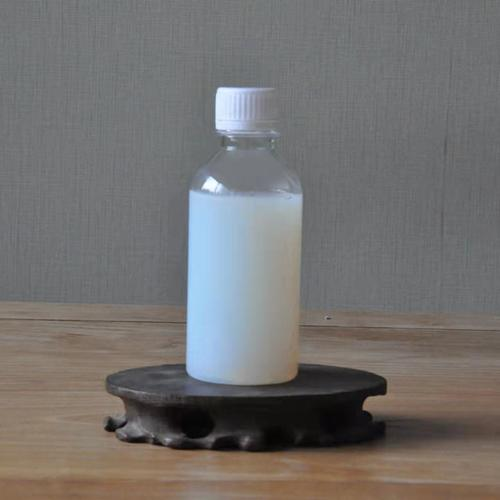 VIEW MOREcolloidal alumina dispersion
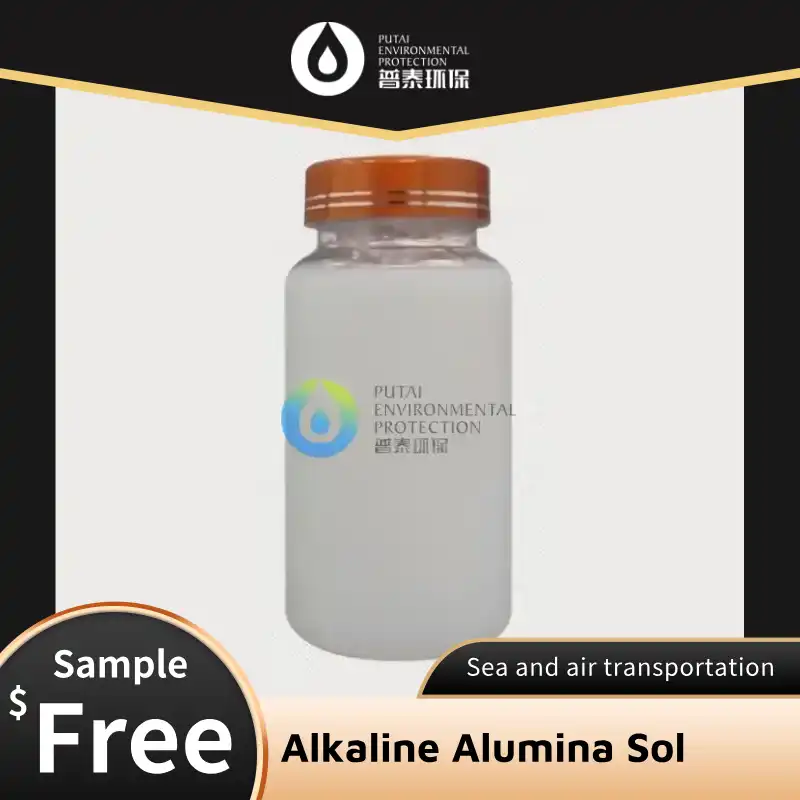 VIEW MOREAlkaline Alumina Sol Used for Coating Material
 VIEW MORENano aluminum sol catalyst carrier bonder
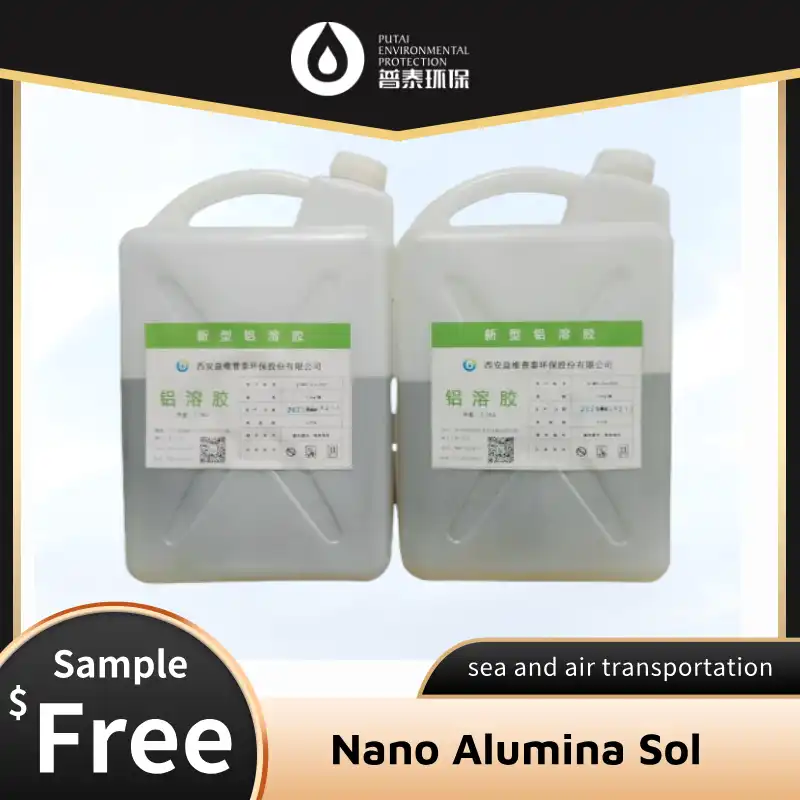 VIEW MOREsol gel alumina coatings
 VIEW MOREcolloidal alumina binder
 VIEW MOREcolloidal alumina suspension
 VIEW MOREAlumina Sol Gel
 VIEW MOREColloidal hydrous alumina