






Colloidal Hydrous Alumina Manufacturers: Quality Guide
If you are sourcing aluminum oxide sol for catalysis, advanced ceramics, or high-performance coatings, this guide is written for you. Choosing among colloidal hydrous alumina manufacturers is not a simple checkbox exercise — particle size, purity, colloidal stability, and after-sales support all determine whether your production line runs smoothly or hits costly delays. This guide walks you through what the material is, how it performs, how to evaluate suppliers, and how to buy in bulk with confidence.
Understanding Colloidal Hydrous Alumina: Key Properties and Production Processes
What Is Colloidal Hydrous Alumina?
Colloidal alumina consists of water-based nanostructured particles of aluminum oxide monohydrate (commonly Boehmite or Pseudoboehmite) that are dispersed and typically between 10 and 100 nanometers in size. It has a significant positive surface charge in acidic locations, and this is distinct from normal alumina powders. The negative charge means that it has significant electrical interactions with negatively charged materials. This makes it one of the most used inorganic binders and surface modifiers in severe industrial environments.
Key Physical and Chemical Parameters
If people wish to purchase in bulk, they should ask for data sheets that contain all of the following:
- D50 Particle Size: 10–50 nm. Narrow dispersion results in great transparency and consistent reactivity across batches
- Zeta potential (>30 mV at pH 4): High positive charge promotes colloidal stability and high attraction for anionic surfaces.
- BET surface area (100-300 m 2 /g after calcination): High surface area is a direct support for catalytic activity.
- Na2O < 0.05% (Sodium content): Excess sodium is a flux, which lowers melting temperatures and degrades refractory performance.
- Stability (pH) 3.0-5.0: Stability is maintained by nitrate or chloride counter-ions. Drift beyond this range threatens precipitation.
- Particle size range (D50) is from 10 to 50 nm. Because of the small dispersion, the substance is transparent and reacts the same way in all batches.
At pH 4, the zeta potential is more than 30 mV. Colloids with a high positive charge are stable and attach firmly to negatively charged surfaces.
A large surface area (100-300 m^2/g after calcination). A lot of surface area makes the response happen quickly.
Na2O < 0.05% Sodium Level: When sodium is too high, the melting points are lower and the refractories do not operate as effectively. The pH level that stabilizes things is between 3 and 5. It is stable with nitrate or chloride counter-ions; precipitation may occur outside of this range.
Production Methods and Their Impact on Quality
Not only are these parameters technical, but each one has a direct link to real production results. A provider shouldn't be on your short list if they can't show you confirmed ICP-MS impurity data or laser diffraction particle size reports.
Applications and Benefits of Colloidal Hydrous Alumina in Industry
Where Is It Used?
Three industries make up most of the demand. This helps petrochemicals work better. Colloidal hydrous alumina manufacturers that is colloidal and hydrous hold zeolite and clay matrices together in fluid catalytic cracking (FCC) units. Because it has a lot of holes, reactants can get to the active sites, and the catalyst pellets stay whole even when they are quickly mixed with liquid. Chemical Mechanical Polishing (CMP) slurries are used to make semiconductors. It is the part that is rough. Micro-scratching can't happen on node architectures smaller than 10 nm because the colloids are stable. When you print on inkjet paper or fabric, the cationic charge sets off the anionic dye molecules right away. This stops the bleeding and makes the materials more resistant to water.
Functional Advantages That Drive Procurement Decisions
These are usually the major reasons why procurement managers turn from alternative binders to colloidal alumina sol:
- Thixotropic behavior: The liquid is thinned down when sheared (easy pumping and spraying), and viscosity is recovered after application, avoiding drooping on vertical surfaces.
- Thermal transformation sequence: Drying to Boehmite, calcination at ~450°C to Gamma-alumina (high surface area), heating above 1,150°C to Alpha-alumina (high hardness and chemical inertness) with binding strength maintained throughout the heating curve.
- Resistance to scratching: The hardness of the alumina phase greatly enhances the scratch resistance of the coating matrices without adding much weight.
Boehmite, when dried, gives Gamma-alumina (which has a lot of surface area). Heat it above 1,150°C, and you obtain alpha-alumina (which is extremely hard and doesn't react with chemicals). The binding strength is uniform across the whole heating curve.
Scratch resistance: Coating matrices are less prone to scratching since the colloidal hydrous alumina manufacturer's phase is quite hard. That is true, yet it makes it heavier.
How to Choose the Best Colloidal Hydrous Alumina Manufacturer — A Decision Support Approach
Define Your Technical Specifications First
If you want to talk to suppliers, write down the particle size range, solid substance percentage, acceptable impurity levels, and pH range you need. When using a catalyst binder, you don't have to follow the same rules as when using a CMP slurry or a paper covering. You can avoid weeks of back-and-forth sampling if you start by making sure that the provider can meet the needs of your application.
Evaluate Quality Certifications and Production Capacity
Suppliers of Colloidal hydrous alumina you can trust should have at least ISO 9001 approval. People who sell to people in North America or Europe should also follow REACH rules. Ask for test reports from a third party instead of data that the person says they have. Also, the ability to make things is important. Large OEMs can't count on a company with just one small plant to meet their needs every three months. Yiwei runs a modern plant that has quality control at every step of the process, from getting the raw materials to sending out the finished product. This makes sure every batch is the same, making Yiwei a reliable choice among colloidal hydrous alumina manufacturers.
Compare Price, Technical Support, and Long-Term Partnership Value
Things can change besides the price per ton. It might cost more in the long run to work with and schedule time with a provider whose prices are a little cheaper but who doesn't offer technical help, re-order options, or formulation advice. Each and every time, Yiwei works with a university study team to make all of their goods better. This means that customers get more than just a list of products; they also get new products all the time.
Procurement Process: How to Buy Colloidal Hydrous Alumina in Bulk
Identifying Credible Wholesale Suppliers
The three most credible sources to identify suppliers are reputable B2B directories, trade exhibitions, and word of mouth from others in the same company. Some things you should do before you purchase colloidal hydrous alumina. Get samples, certificates of analysis (CoA), and references from individuals who have bought and utilized the product.
Understanding Pricing and Minimum Order Quantities
The price of colloidal alumina sol depends upon the amount of solid in the sol, the size of bits desired, and the quantity ordered. Major producers have minimum order quantities (MOQs) for typical grades starting at one metric ton. Custom Formulas have a Higher MOQ. Before you place the order, make sure you agree on the Incoterms (FOB, CIF, or DDP). This means you won't have any surprises on the landed cost.
Managing Orders and After-Sales Support
Three factors that make order management work well are a clear purchase contract, precise delivery tracking, and simple access to technical support after delivery. If your production team is dealing with coating defects, viscosity drift, or unplanned gelling, an application engineer from your supplier should be following up within 24 hours. A good producer of alumina sol will follow up after the sale to make sure your manufacturing continues to run.
Case Studies: Success Stories of Partnering with Leading Alumina Sol Producers
Global OEM Achieves Consistent Catalyst Performance
A catalyst OEM used to have trouble with wear resistance that changed from batch to batch. They had better control over the particle size (D50 < 30 nm, Zeta potential > 35 mV) when they switched to a different source. This cut the amount of catalyst fines made by about 18% and made it longer between catalyst bed service intervals. It wasn't the chemistry that changed the most; it was how the suppliers kept quality in check.
Ceramics Producer Reduces Binder Costs by 12%
A company that makes advanced ceramics moved from using an organic binder system to one that is based on Boehmite and colloidal alumina sol. The step where organic binders were burned out was eliminated by the move. This made the kiln use less energy and heat up faster. The price of the binder per unit dropped by about 12%, and the parts that were bonded together were much more accurately measured.
Conclusion
Colloidal hydrous alumina manufacturers are a key ingredient in many things, including ceramics, films, making electronics, and catalysis. To find the right manufacturer, you need good data that you can check, production that you can count on, and real technical support. When buyers choose to do business with the same seller over and over again, they report better production results and lower total costs because they are building a long-term relationship. With these tips, it will be easy to judge, compare, and buy things without worrying.
FAQ
1. What is the difference between Boehmite sol and colloidal hydrous alumina?
Boehmite sol is a type of colloidal hydrous alumina and is made up of aluminum oxide monohydrate (AlOOH). The term "colloidal hydrous alumina" is more general and also refers to Pseudoboehmite and aluminum trihydrate dispersions. This type of Boehmite sol works best as an industrial binder or coating when it has a high zeta potential and a narrow particle size distribution.
2. How do I verify a manufacturer's quality certifications?
Ask for the real ISO 9001 certificate that has the date it is valid and the name of the company that issued it. Look up the certificate's number in the public registry of the organization that issued it. To follow REACH rules, you should get the Safety Data Sheet (SDS) and proof that the drug has been registered. You can trust a CoA report from an outside source that comes from a recognized lab more than one from your own company.
3. What are typical lead times for bulk orders?
Standard grades from well-known companies usually ship two to four weeks after the order is confirmed. It might take 4–8 weeks for specific types with low salt or particles of a certain size. Freight sent by ocean takes an extra two to six weeks, based on the place where it is going. Make sure your inventory cycle works with this, and talk to your supplier about setting up extra supplies for important production inputs.
4. Does freezing damage the product during shipping?
Yes. When colloidal particles freeze, they change structure in a way that can't be undone. Nanoparticles stick together because ice crystals push them together more strongly than the forces that want them to separate. This is called permanent flocculation. When it's between 5°C and 35°C, you have to store and move things. In cold places, list the tasks that need to be done to keep things at the right temperature.
Partner with Yiwei — Trusted Colloidal Hydrous Alumina Supplier
With factory-direct production, cutting-edge equipment, and formulation knowledge backed by a university, Yiwei brings all of these things to every order. As a colloidal hydrous alumina manufacturer, we make sure that As colloidal hydrous alumina manufacturers, every batch meets your exact requirements with our full-process quality control. It doesn't matter if you need a standard Boehmite sol or a custom-grade colloidal hydrous alumina dispersion. Our technical team is ready to help you with your order from the time you place the sample until it arrives. Send an email to sales@ywputai.com right now to get a price or look through our collection of products.
References
1. Levin, I., & Brandon, D. (1998). Metastable alumina polymorphs: Crystal structures and transition sequences. Journal of the American Ceramic Society, 81(8), 1995–2012.
2. Wefers, K., & Misra, C. (1987). Oxides and Hydroxides of Aluminum (Alcoa Technical Paper No. 19). Alcoa Laboratories.
3. Pierre, A. C. (1998). Introduction to Sol-Gel Processing. Kluwer Academic Publishers.
4. Euzen, P., Raybaud, P., Krokidis, X., Toulhoat, H., Le Loarer, J.-L., Jolivet, J.-P., & Froidefond, C. (2002). Alumina. In Handbook of Porous Solids (Vol. 3). Wiley-VCH.
5. Brinker, C. J., & Scherer, G. W. (1990). Sol-Gel Science: The Physics and Chemistry of Sol-Gel Processing. Academic Press.
6. Morales, M. A., Baros, J. A., & Lima, R. P. (2015). Colloidal stability and surface properties of boehmite nanoparticles for catalytic carrier applications. Applied Surface Science, 346, 439–447.
RECOMMENDATIONS
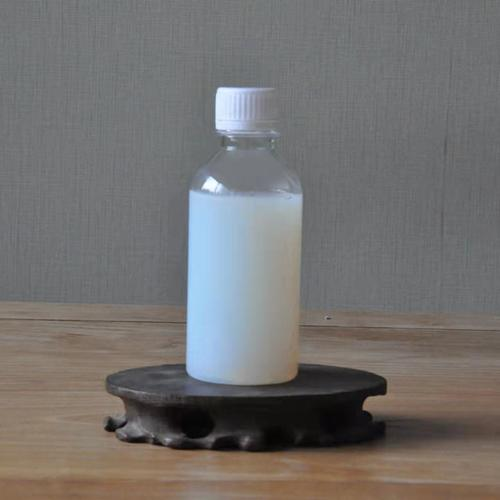 VIEW MOREcolloidal alumina dispersion
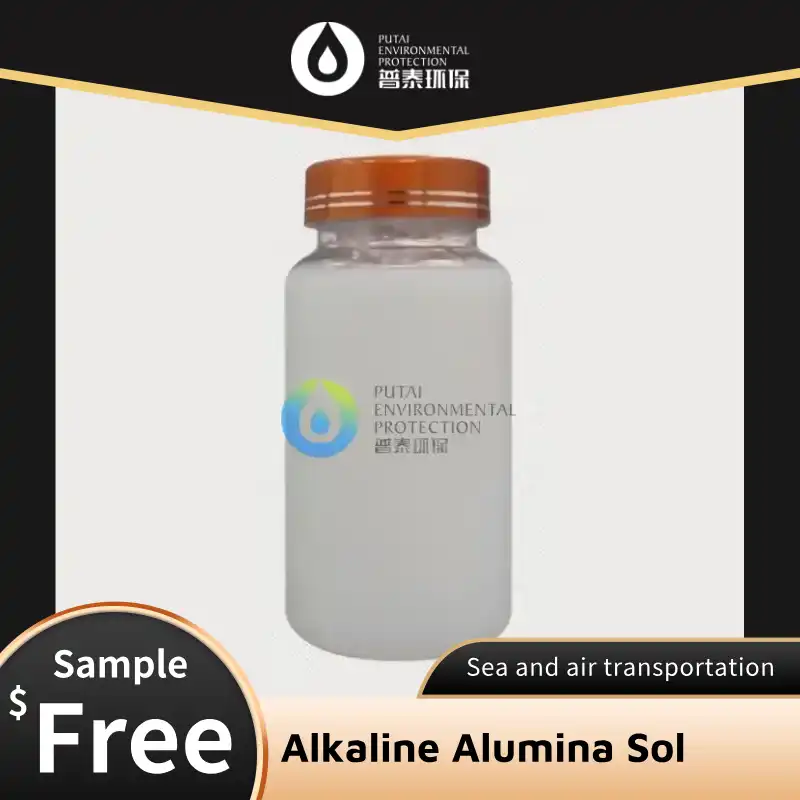 VIEW MOREAlkaline Alumina Sol Used for Coating Material
 VIEW MORENano aluminum sol catalyst carrier bonder
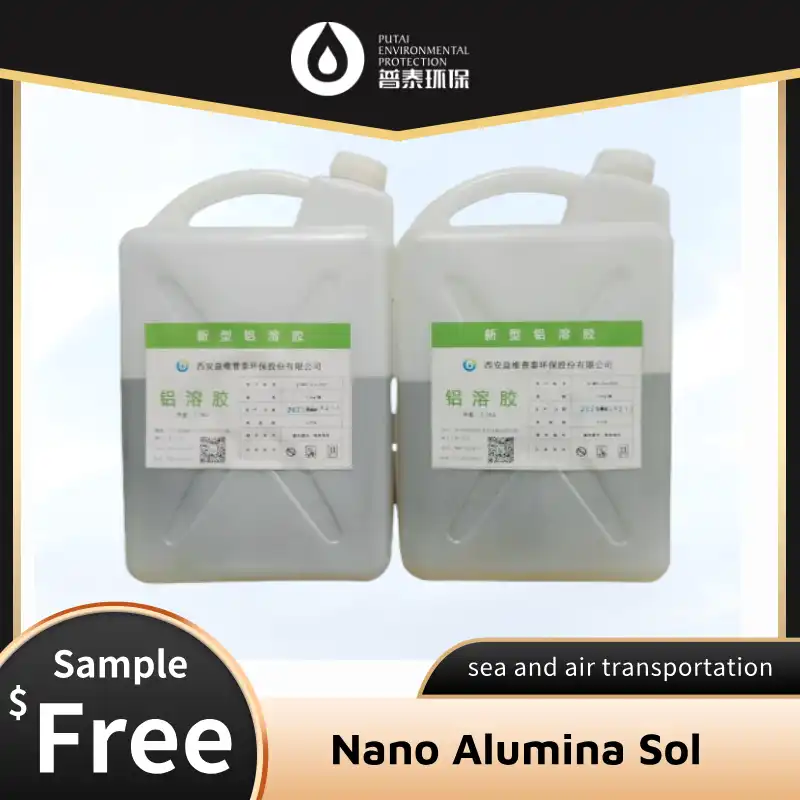 VIEW MOREsol gel alumina coatings
 VIEW MOREalumina synthesis sol-gel
 VIEW MOREcolloidal alumina binder
 VIEW MOREcolloidal alumina suspension
 VIEW MOREColloidal hydrous alumina