






Colloidal Hydrous Alumina: A Guide to Industrial Uses
Colloidal hydrous alumina is an aqueous dispersion of ultra-fine hydrated aluminum oxide particles, typically ranging from 10 to 100 nanometers in size. It belongs to the Boehmite or Pseudoboehmite family of aluminum compounds and carries a strong positive surface charge in acidic media. This property makes it exceptionally reactive with negatively charged substrates. Across water treatment, ceramics, coatings, and semiconductor manufacturing, this material delivers structural integrity, chemical purity, and surface precision that standard alumina powders simply cannot match.
Understanding Colloidal Hydrous Alumina
Chemical Composition and Structure
It is made up of aluminum oxide monohydrate (AlOOH) that has been dispersed in water. At pH 4, the particles usually have a zeta potential of more than +30mV. The sol doesn't melt, and the particles don't stick together. Because it has very little sodium (Na₂O < 0.05%) and iron in it, this substance is chemically pure. Making catalysts and working with semiconductors are two delicate tasks that can be done well with it.
Key Physical Properties
The particles are mostly between 10 and 50 nanometers across, which is a pretty small range. If you heat the BET, its surface area grows to 100 to 300 m²/g. This helps the catalytic process work better. It's also thixotropic, which means it thins out when stretched. This makes it easier to pump and spray. It gets stiff again after being used, though. It's helpful to be able to flow and stay stable in places where a lot of things need to be made.
Manufacturing and Quality Control
Our Yiwei plant has modern tools and a full-process quality control system to make sure that each batch is the same as the last. We always get ideas for how to make things better from college study groups. It works with either nitrate or chloride counter-ions, and it doesn't change when the pH level goes from 3.0 to 5.0. Because of these rules, a product can always work well in a tough workplace setting.
Industrial Applications of Colloidal Hydrous Alumina
Surfaces that are very smooth and stable temperatures are needed in a lot of very important fields. In those fields, this stuff is used. To show how useful it is, you can use it in these main ways:
Coatings and Surface Engineering
It is a clear stiffening agent called colloidal hydrous alumina that is used to make art and safety coatings. It smooths out the surface, makes it less likely to scratch, and helps metal and plastic stick to it better. Because it is cationic, it is put on the surface of inkjet paper to fix dye molecules that are negatively charged right away. This makes it much less likely for the paper to get wet and the ink to run. Picture prints will last longer and look better this way.
Ceramics and Catalyst Manufacturing
When it's very hot, the sol holds the refractory fibers together, even though organic links would normally catch fire. It turns into a hard gel network when it dries. At about 450°C, it changes into gamma-alumina. Above 1500°C, it changes into alpha-alumina. Fluid catalytic cracking (FCC) units are used to refine petrochemicals. Zeolite matrices stay together in these units because they keep their high porosity. This way, reactants can get to the active spots without weakening the material.
Water Treatment and Semiconductor Polishing
Wet alumina compounds help clean raw water sources by getting rid of the color, cloudiness, and solids that float on top of the water. Sloughs that use Chemical Mechanical Polishing (CMP) are used to make electronics. Small pieces of alumina make up the rough part. You can carefully remove things from silicon plates without leaving tiny scratches as long as you keep an eye on the particle hardness and colloidal stability. For chip designs smaller than 10nm, this has to be done.
These uses show why people who buy in bulk in the chemical, electronics, and water infrastructure fields always buy a lot of this stuff.
Comparing Colloidal Hydrous Alumina with Other Alumina Types
The type of alumina used is based on how heat, chemicals, and mechanical forces are used in the job. That's what makes them different.
Colloidal Hydrous Alumina vs. Activated Alumina
This is a kind of aluminum oxide that has been partly dried out and can be solid or not solid at all. Its surface area is 200 to 400 m²/g. It works well to remove water from gas lines and salt from drinking water. When used for coating or CMP, on the other hand, it needs to be stable with colloids or be able to manage nanoparticles. Colloidal hydrous alumina is the best choice for precise surface engineering because it bonds surfaces better and spreads particles more evenly.
Colloidal Hydrous Alumina vs. Anhydrous Alumina
When you heat alumina (Al2O3), it gets hard and dense. It doesn't stick together and doesn't cover much ground. As a fine powder, it is mostly used for building or roughening things up. Because it can't make a stable water-mixed sol, it can't be used in liquid-phase processing. When used wet, to cover surfaces, or to bind catalysts, it's clear that the liquid-soaked form works better.
Colloidal Hydrous Alumina vs. Nano Alumina
The nano alumina powder has particles that are all about the same size. However, they need to be mixed again in a liquid before they can be used. When you spread something out again, this step often adds clumps that damage the surface. This is what CMP methods try to avoid. It stops the spread of particles right away with a certain type of colloidal sol. This makes the top layers more even and the catalyst work better all the time.
Procurement Guide for Industrial Buyers
There are more things to consider than just price when you need a lot of aluminum oxide sol. Just as important are being able to accept something, having proof, and getting help from experts.
Evaluating Supplier Credentials
Customers who buy colloidal hydrous alumina from a reputable company should have quality management records that are ISO-certified and records that show they follow REACH rules for markets outside of Europe. You should ask for a list of the particle sizes, zeta potential, pH, viscosity, and metal impurities on the Certificate of Analysis (COA). It's more likely that everyone will follow the rules if suppliers make it easy to share these papers.
Pricing and Minimum Order Quantities
The price of alumina sol on the market depends on how much is bought, how pure it is, and how much is sold. Al2O3 usually makes up 10% to 30% of the weight. The smallest amount that most companies that make colloidal hydrous alumina will sell in a batch is 200 kg. If you buy more than one metric ton, you can get bulk prices. Before you buy something big, you should always ask for a sample run to test in-house.
Logistics and Storage Requirements
The temperature of alumina sol should be kept between 5°C and 35°C. Things stay together forever when they freeze together. Because of this, colloidal systems are not as stable. Food will last for 6 to 12 months if you store it properly. For long trips to other countries, temperature-controlled boxes are the best way to send things. When you buy liquid hydrous alumina, the company should tell you how to store and package it so that it stays cold.
Ensuring Quality and Reliability in Supply
Supplier Transparency and Communication
People who sell colloidal hydrous alumina can be trusted. You can talk to them about quality issues, production plans, and where to get raw materials. At Yiwei, our team gives straight technical help and news about output. This way, we can always keep our customers in the loop about the supply chain.
Long-Term Partnership Value
Paint and ceramics buyers say that the formulation isn't as consistent when they switch suppliers in the middle of a project. When you work with the same company for a long time, they know what your process needs, and there is less risk and cost. We can change the specs of our goods like businesses do because we work with college study teams.
Future Supply Trends
Around the world, people are slowly becoming more interested in alumina sol that is very pure. This is because they are being used more and more in high-tech materials, electronics packaging, and separators for lithium-ion batteries. In a market that is becoming more competitive, procurement teams should keep an eye on seller capacity and think about ways to do dual-sourcing to make sure they don't have to deal with supply problems.
Conclusion
Several different kinds of colloidal hydrous alumina are not the same as hydrated alumina sol. It can be fired and changed form, so it can be used to make ceramics, semiconductors, coatings, and catalysts. It also has a high surface charge. The people whose job it is to buy things can get the right alumina the first time if they know what makes it different. If a company has a good relationship with its suppliers based on trust, professional know-how, and consistent quality, it can save money, follow the rules, and keep making things.
FAQ
1. What is the typical particle size range for colloidal hydrous alumina?
Particle size in a standard alumina sol falls between 10 and 100 nanometers, with D50 values commonly between 10 and 50nm. This narrow distribution supports transparency in coatings and consistent catalytic activity.
2. Why can't I mix alumina sol with anionic surfactants?
The sol carries a positive (cationic) charge. Contact with anionic substances triggers immediate charge neutralization, causing the particles to coagulate and precipitate. Use only non-ionic or cationic additives in your formulations.
3. What happens if the product cracks during drying?
High nanoparticle loading creates strong capillary forces as water evaporates, which can cause mud-cracking. Adding a plasticizer such as polyvinyl alcohol (PVA) or slowing the drying rate helps relieve internal stress within the gel layer.
4. How do I detect product spoilage?
Watch for a sharp rise in viscosity, visible sedimentation, or a pH shift toward the isoelectric point (around pH 6–8). These signals indicate that the colloidal structure has destabilized and the product should not be used.
5. What certifications should I request from a supplier?
Request ISO 9001 quality management certification, a detailed COA with purity and particle data, and REACH documentation for international shipments. These records verify that the product meets industrial and regulatory requirements.
Partner with Yiwei for Your Colloidal Hydrous Alumina Supply
It is made with strict quality control, factory-direct production, and research and development backed by universities to make sure it works with your process. This is why Yiwei gives it to you. If you need a colloidal hydrous alumina producer for CMP slurries, coating ingredients, or catalyst binders, we can help. Email us at sales@ywputai.com right now to get a sample or talk about bulk prices.
References
1. Wefers, K., & Misra, C. (1987). Oxides and Hydroxides of Aluminum. Alcoa Technical Paper No. 19. Alcoa Laboratories.
2. Knaebel, K. S. (1995). Adsorbent Selection. In R. D. Noble & S. A. Terry (Eds.), Membrane Separations Technology. Elsevier Science.
3. Brinker, C. J., & Scherer, G. W. (1990). Sol-Gel Science: The Physics and Chemistry of Sol-Gel Processing. Academic Press.
4. Oberlander, R. K. (1984). Aluminas for Catalysts: Their Preparation and Properties. Applied Industrial Catalysis, 3, 63–112. Academic Press.
5. Lide, D. R. (Ed.). (2005). CRC Handbook of Chemistry and Physics (86th ed.). CRC Press.
6. Mishra, B. K., & Murty, C. V. R. (2001). Characterization of Boehmite Alumina Sols and Their Use in Ceramic Processing. Journal of the European Ceramic Society, 21(11), 1385–1394.
RECOMMENDATIONS
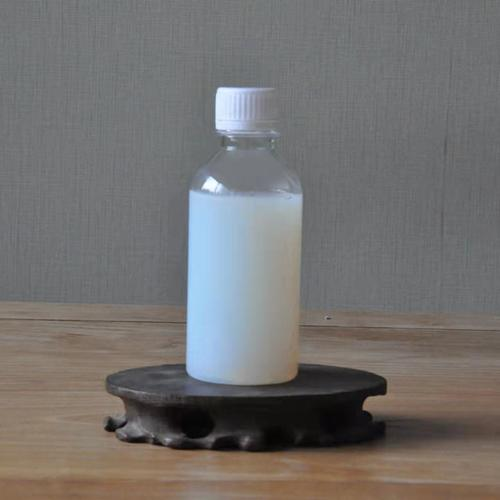 VIEW MOREcolloidal alumina dispersion
 VIEW MOREAlkaline Alumina Sol Used for Coating Material
 VIEW MORENano aluminum sol catalyst carrier bonder
 VIEW MOREsol gel alumina coatings
 VIEW MOREcolloidal alumina binder
 VIEW MOREcolloidal alumina suspension
 VIEW MOREAlumina Sol Gel
 VIEW MOREColloidal hydrous alumina