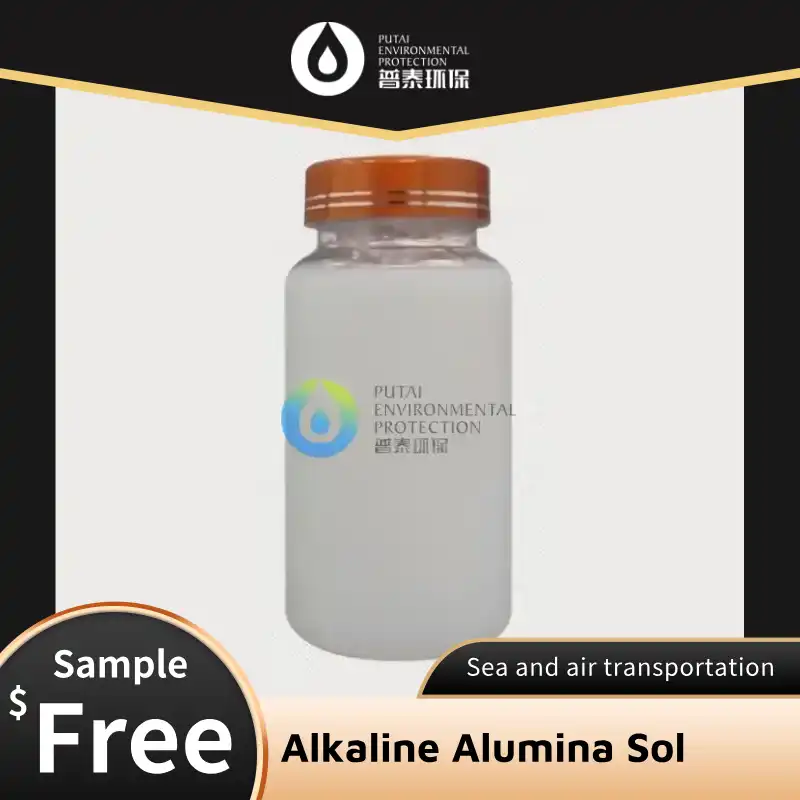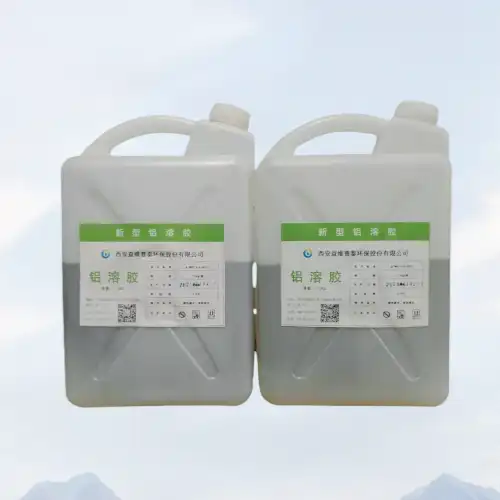






Nano aluminum sol catalyst carrier bonder Applications
Nano aluminum sol catalyst carrier bonder is a specialized inorganic adhesive made from colloidal aluminum oxide nanoparticles (typically 10–100 nm) dispersed in an aqueous medium. It works as both a structural binder and a functional component within catalyst supports, forming strong ceramic-grade Al-O-Al bonds after calcination. Industries ranging from petrochemical refining to automotive emission control rely on this material to hold active catalytic components together without blocking pore access. Its high surface area, positive zeta potential, and thermal resistance make it a preferred choice for demanding B2B catalyst manufacturing environments worldwide.
Understanding Nano Aluminum Sol Catalyst Carrier Binder
If you want to choose a catalyst binder for your process, it helps to know how nano-scale alumina sol is different from older, macro-scale binder materials.
What It Actually Is
The glue is made up of boehmite or pseudo-boehmite crystals that are very small and rise on top of water. These nanoparticles have a lot of surface energy, which is different from most ceramic binders that don't do anything when they're between catalyst particles. A stable, porous matrix that keeps active parts together, like zeolites or molecular sieves, can be made with that energy. Reactants can still move easily through the support structure, though.
Key Physical and Chemical Specs
The end product usually has a uniform particle size distribution (D50: 10–30 nm) and can be clear or cloudy. The amount of Al₂O₂ should be between 10 and 25 percent, and the amounts of Na₂O and Fe₂O₂ should be less than 0.05% and 0.02%, respectively. If you dry and heat the boehmite phase, it turns into gamma-alumina. This makes bonds that can stand up to temperatures above 600°C and usually adds more than 200 m³/g of surface area.
Why It Outperforms Macro-Scale Binders
The holes of catalysts are blocked by most common binders, which makes mass transfer less effective. The nano alumina sol particles make structures stronger without decreasing their catalytic activity because they pass through tiny holes before joining. The material sticks well to negatively charged surfaces like cordierite ceramics and zeolite frameworks because of the positive zeta potential.
Industrial Applications of Nano Alumina Sol Binder
We can use the nano aluminum sol catalyst carrier bonder in many tough places because it has both mechanical strength and open pores. I see this product being used for these main things most of the time on the market.
There are three main types of applications, which are:
The glue in high-attrition fluidized bed reactors holds the zeolite Y and clay matrix together. This is how fluid catalytic cracking (FCC) catalysts are made. It keeps the mesoporosity that the hard shell needs to crack under heavy oil while giving it the strength to fight wear. It would cost a lot more to run big refineries if there wasn't a good binder to hold everything together.
- Fluid Catalytic Cracking (FCC) Catalyst Manufacturing: In high-attrition fluidized bed reactors, the binder holds zeolite Y and clay matrix together. It provides the hard-shell integrity needed to resist abrasion, while preserving the mesoporosity required for heavy oil cracking. Without a high-performing binder here, attrition losses would increase operating costs significantly in large-scale refinery settings.
- Automotive Exhaust Washcoats (Three-Way Catalysts): The binder adheres platinum-, palladium-, and rhodium-based catalytic materials onto cordierite ceramic honeycombs. It withstands repeated thermal shock from vehicle start-stop cycles, preventing coating delamination. This directly supports compliance with Euro 6 and U.S. EPA emission standards, which are among the strictest in the world for exhaust pollutants.
- Hydrotreating and Hydrocracking Catalyst Extrudates: In high-pressure hydrogen environments, the binder acts as a peptizing agent during extrusion of alumina or silica-alumina pastes into trilobe or quadralobe shapes. It keeps the extrudates from crumbling under reactor bed pressure, reducing pressure drop and prolonging catalyst bed life.
This is what "Automotive Exhaust Washcoats (Three-Way Catalysts)" are made of: cordierite ceramic honeycombs that are stuck together with platinum, palladium, and rhodium-based catalysts. The layer doesn't come off because it can handle the repeated temperature changes that happen when you start and stop the car. For some of the strictest emission rules in the world, like Euro 6 and U.S. EPA, this helps make sure that the rules are followed.
For Hydrotreating and Hydrocracking: The glue helps the alumina or silica-alumina pastes get pushed out into trilobe or quadralobe shapes where there is a lot of hydrogen pressure. It keeps the extrudates from breaking apart when the reactor bed's pressure drops. This lowers the pressure drop and makes the catalyst bed last longer.
Advantages Over Traditional Catalyst Binder Solutions
If you change the binder from silica sol or macro-alumina to nano-alumina sol, you can see changes in all three dimensions.
Thermal and Mechanical Stability
Sometimes, very hot steam is used to regenerate FCC, and this changes the nano-alumina sol catalyst carrier bond into stable transition nano aluminum sol catalyst carrier bonders. Otherwise, silica-based adhesives might sinter or not work well with other catalyst parts. The bonds that are made can stand up to temperatures above 600°C and keep their shape even when vibrations and pressure change.
Lower Total Operational Cost
It is directly linked to how often the trigger needs to be changed that its life span is longer. When catalysts are changed less often, costs go down during that time. If you are in charge of buying a lot of things, like for a refinery, an industrial facility, or a water treatment plant, those savings add up quickly over the course of a multi-year deal.
Environmental and Regulatory Compliance
Types with little or no chloride can be used for sensitive hydroprocessing tasks. It is possible for chloride to damage both the catalyst and the reactor tubes. The recipe doesn't make a lot of waste, and the way it's made follows all international rules for chemical safety.
Selecting the Right Product for Your Operation
For you to choose the correct alumina sol binder, you need to make sure that the specs match your process. One number can't be used for everything.
Match Particle Size to Pore Architecture
When particles are 10–20 nm or smaller, they make the mesopores smaller and pack them closer together inside the support. The pores are a bit bigger for nanoparticles that are bigger. If your catalyst's design depends on being able to get to big molecules, a nano grade that is bigger might work better. For every output lot, a good service provider should give you Dynamic Light Scattering (DLS) data on particle size.
Assess Supplier Quality Control Standards
It is important to keep an eye on the quality of this type of binder by measuring its viscosity, using gravimetric analysis to find out how much solid is in it, using ICP-MS to look for impurities, and seeing how stable its pH is over time. You can be sure that the bonding performance won't change in a way you don't expect during production if your supplier does a binder index test. This test involves heating the sol, mixing it with a standard powder, and testing its crush strength.
Consider pH Compatibility with Your Support Material
The pH range for most nano alumina sol binders is between 3 and 5. Helpers that are acidic to neutral, like zeolites, work well with them. When strongly alkaline materials are mixed, they start to clump together right away unless steps are taken to lower the pH during the preparation process. If you make sure of this connectivity early on, you won't have to make costly changes later on.
Future Direction of Alumina Sol Binder Technology
Every year, improvements in manufacturing make particles more uniform and help them connect better. Alkoxide hydrolysis and nitrate-based processes get rid of all the salt in the product and are now being looked into as more eco-friendly ways to make things. These better kinds can be used in more delicate situations, like in medicines, food-grade catalysis, and electrochemical systems.
The market for catalyst support materials around the world is steadily growing. This is because of stricter emission rules in North America and the Asia-Pacific region, as well as more infrastructure being built to process hydrogen. Companies that form long-term relationships with certified makers will be better able to keep their processes stable as rules get tighter.
Conclusion
Nano aluminum sol catalyst carrier bonders are a new kind of glue that keeps catalyst parts together without blocking the holes that make the catalyst work. This substance is used in FCC units, car washcoats, and water treatment media because it is stable at high temperatures, has a strong structure, and is pure enough to meet government standards. The alumina sol route has good performance data and is becoming more popular in the industry. It can be used to replace a silica sol binder that isn't working well or as a new binder for a catalyst line. A lot of people who buy something don't check to see if the product specs meet their needs. This step sets the stage for long-term outcomes.
FAQ
1. How does alumina sol compare to silica sol for high-temperature applications?
Nano alumina sol offers better hydrothermal stability. Under high-temperature steam, it converts to stable transition aluminas, while silica binders risk sintering. For FCC or steam-reforming applications, alumina sol is the more durable choice.
2. What are the correct storage conditions?
Store in stainless steel or plastic-lined drums at 5°C–35°C. Freezing breaks the colloidal structure irreversibly. Proper sealing gives a shelf life of 6–12 months.
3. Can this binder be used with alkaline supports?
The typical pH range is 3–5 (cationic). Mixing directly with strongly alkaline materials causes precipitation. pH buffering steps are required for compatibility with alkaline support systems.
4. How does particle size affect final catalyst pore volume?
Particles in the 10–20 nm range pack densely and form finer mesopores. This increases specific surface area but may restrict access for larger molecules. Selecting the right particle size requires knowing your target pore diameter.
5. Are low-chloride grades available?
Yes. Grades derived from alkoxide hydrolysis or nitrate processes are available for hydroprocess applications where chloride creates corrosion or poisoning risks.
Partner with Yiwei for Trusted Nano Aluminum Sol Catalyst Carrier Bonder Supply
Our plant at Yiwei makes nano aluminum sol catalyst carrier bonder. It is well-stocked and has a quality control system that checks the whole process to make sure that every batch is the same. Our team works with partners in university studies to make our products work better all the time. We are a direct manufacturer of nano aluminum sol catalyst carrier bonders. We offer expert help, a range of order sizes, and fast shipping all over the world. Send us an email at sales@ywputai.com to get prices and details that fit your needs.
References
1. Euzen, P., Raybaud, P., Krokidis, X., Toulhoat, H., Le Loarer, J. L., Jolivet, J. P., & Froidefond, C. Alumina. Handbook of Porous Solids. Wiley-VCH, 2002.
2. Trimm, D. L., & Stanislaus, A. "The control of pore size in alumina catalyst supports." Applied Catalysis, 1986.
3. Schreier, M., & Regalbuto, J. R. "A fundamental study of Pt tetraammine impregnation of silica and alumina." Journal of Catalysis, 2004.
4. Seki, H., & Wakamatsu, T. "Colloidal alumina binders for automotive catalytic converters." SAE Technical Paper Series, 2001.
5. Corma, A. "Inorganic solid acids and their use in acid-catalyzed hydrocarbon reactions." Chemical Reviews, 1995.
6. Rase, H. F. Handbook of Commercial Catalysts: Heterogeneous Catalysts. CRC Press, 2000.