





Colloidal Hydrous Alumina Manufacturers for Custom Solutions
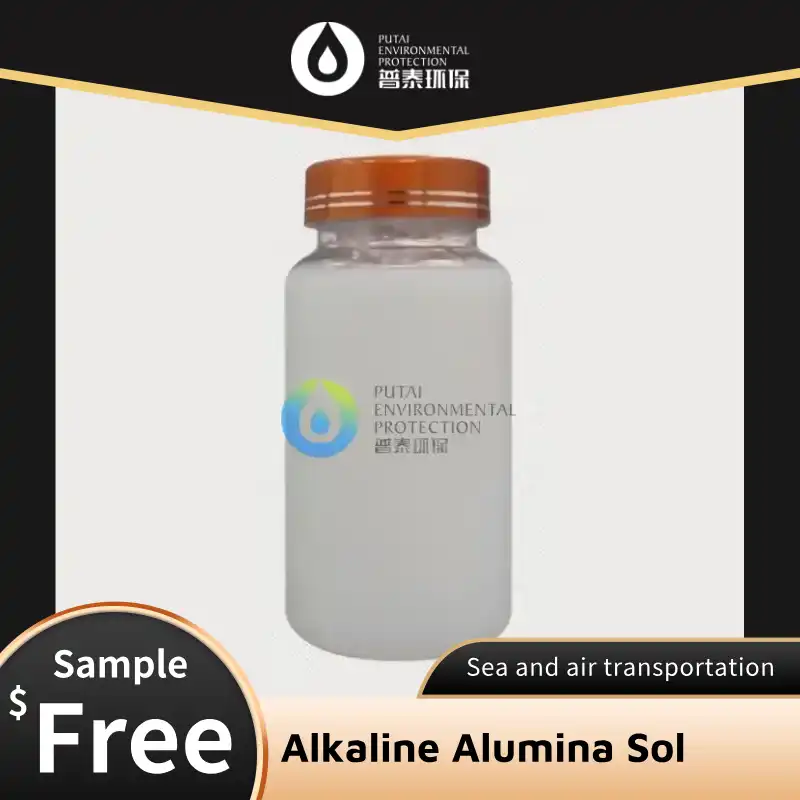
When sourcing specialty inorganic chemicals, working with experienced colloidal hydrous alumina manufacturers makes a measurable difference in product performance and supply reliability. Colloidal hydrous alumina — a nanostructured aqueous dispersion of aluminum oxide monohydrate — features particle sizes typically between 10 and 100 nanometers, a high positive surface charge (zeta potential> 30 mV at pH 4), and a BET surface area of 100–300 m²/g after calcination. These properties make it valuable across water treatment, catalysis, paper coatings, and electronics. This guide covers everything procurement professionals need — from material properties to supplier selection.
Understanding Colloidal Hydrous Alumina: Properties and Industrial Applications
What It Actually Is
It is the steady, thixotropic sol of particles of Boehmite or Pseudoboehmite mixed with water. A colloidal hydrous is the name for it. This alumina powder is unique because it has a cationic charge on the surface in acidic conditions (pH 3–5). If something is negatively charged, it sticks very well to it. Chemicals can't work quickly with finer grades, but this grade can because most of its particles are between 10 and 50 nm. Seeing with the naked eye is very easy.
Key Physical and Chemical Parameters
Before you give a grade, you should know how to measure success. This is the list of the most important technical requirements that all suppliers of alumina sol should make sure they meet:
There are tests that measure particle size (D50), and they show that it is between 10 and 50 nm. This is important to keep the stuff in the medium and make it clear.
If the pH is 4, the zeta potential is usually more than +30mV. This means that the colloids will stay stable while they are being moved and stored. The refractory should have less than 0.05% Na2O and little iron. Too much sodium acts as a flux and makes it work less well.
Above 1150°C, it changes into Alpha-alumina, and at around 450°C, it changes into Gamma-alumina. Each phase is stiffer and has a different shape and surface area.
- Particle size (D50): 10–50nm, confirmed via dynamic light scattering (DLS) — critical for transparency and substrate adhesion.
- Zeta potential: Typically> +30 mV at pH 4, indicating strong colloidal stability during storage and transit.
- Purity: Na₂O content below 0.05% and low Fe levels — excess sodium acts as a flux and degrades refractory performance.
- Thermal behavior: Converts to Gamma-alumina at ~450°C and Alpha-alumina above 1150°C, each phase offering distinct hardness and surface area profiles.
If you leave these numbers alone, the next step will work better with them. If the coating, the catalyst, or the filter don't work right, one or more of the settings may not be set correctly. After the fact, it costs a lot of money to figure all of this out.
Industrial Applications Worth Knowing
Al hydroxide sol is useful for many business-to-business (B2B) tasks. Because of this, it keeps zeolite matrices together in FCC units in petrochemical plants. Being porous makes it easy to get to places where catalysts are working. It also keeps these places from getting damaged. Slurries used in chemical mechanical polishing (CMP) remove extra material from silicon chips without leaving behind tiny scratches. The rough part of the slurries does this. The colors stay on the surface of inkjet paper because it has a cationic charge. This makes the paper less likely to bleed and more resistant to water.
Custom Manufacturing of Colloidal Hydrous Alumina: Process and Benefits
How Customization Works
Most of the time, a regular colloidal hydrous alumina manufacturer's solution from the store should work fine. But for some jobs, you will need a formulation that was made just for that job. You can change grades that are made to order for
It was shown that adding a certain amount of solids (Al₂O₀%) and heating it to 1000°C changes the stoichiometry of formulas in covering and binding systems in a direct way.
- Solid content (Al₂O₃ %): Verified by gravimetric calcination at 1000°C — directly affects formulation stoichiometry in coating and binder systems.
- Rheology profile: Shear-thinning behavior engineered for specific delivery methods — spray drying, roll coating, or injection — without premature gelation or nozzle clogging.
- Plasticizer compatibility: For high-load applications prone to mud-cracking during drying, PVA or similar non-ionic additives are incorporated to relax capillary stress.
Non-ionic chemicals, such as PVA, are used to lower capillary stress in materials that are under a lot of stress and might crack when they dry, which is important for colloidal hydrous alumina manufacturers. This makes plasticizers work with the materials.
Certifications and Quality Assurance
Manufacturers can get a better handle on the process, make less waste, and come up with new recipes faster when they use custom grades instead of standard materials.
Criteria for Selecting Reliable Colloidal Hydrous Alumina Manufacturers
Certifications That Actually Matter
A business that has ISO 9001 makes sure that their process rules are always the same. Heavy metal levels will need to be proven in the market in order for users in North America and Europe to trust it in the future. People who buy should also ask for Certificates of Analysis (CoA) for each batch. These show the thickness, pH, amount of solids, particle size distribution, and important impurity levels.
Evaluating Production Capacity and Technical Support
How well a provider can meet your needs will depend on how many goods they can make. As you look for suppliers of aluminum oxide sol, make sure you find out about the reactor's size, the amount of material it makes every month, and how consistent the batches are with each other. Know more than just how much space they have; find out how they handle tech issues as well. Working with a manufacturer that can help with application engineering is much more useful than just sending products.
Building Long-Term Procurement Relationships
The best business-to-business (B2B) ties are ones that last more than one deal. If you want to buy something, look for a business that lets you order samples first, is open about their products, and responds quickly to questions after the sale. Before you buy from someone, you should think about more than just the price. How stable the supply is should also be a big deal. When the raw materials change, this is especially true for processes that need to be revalidated, which costs a lot of money.
Pricing, Ordering, and Procurement Tips for Bulk Colloidal Hydrous Alumina
What Drives the Price Per Kilogram
What is the price of liquid colloidal hydrous alumina manufacturer's solution? For smaller particles, you have to do more work. It also depends on the purity grade, the solid content, and whether the recipe is standard or not. When an order is more than a certain minimum quantity, prices that are based on volume are usually used. If someone asks for a sample lot from colloidal hydrous alumina manufacturers before buying a lot, they can see how well a product works without putting their own money at risk.
Logistics and Supply Chain Considerations
Any alumina that is both colloidal and water-filled needs to be kept between 5°C and 35°C. Frozen particles lose their structure forever when they are pushed past their resistance barrier. When people book freight, they should make sure that temperature tracking is part of the deal. To send things by sea, this is very important. To keep the supply going, export paperwork, lead times, and storage options should all be confirmed before the quote stage.
Practical Negotiation Guidance
When you sign a bulk contract, you should talk about when the goods will be delivered, what kind of containers will be used (IBC totes, drums, or flexitanks), and how much the pH level can change when the goods are received. If procurement teams have both a sales contact and a technical liaison contact on the seller side, they can get replies faster when questions about specs come up during production.
Why Choose Our Colloidal Hydrous Alumina Solutions for Your Business Needs
Our Manufacturing Foundation
Our own chemical plant has up-to-date reactors, automatic process controls, and quality checks at every step of the ways it works. Because we don't have to pay tolls to a third party, we have direct control over the solid material, the purity, and the range of particle sizes. Every batch has to pass our tests before it can leave our building.
University-Backed Formulation Development
A smart group of people works with us to test new cooking ideas and make sure they work better. They also try to guess what the market will want before it becomes standard in the business. Because we work together, our alumina hydrosol products get the best of what we know from business and academia. This is important when you need something that is just on the edge of what normal things can do.
Flexibility for Diverse Industries
Some of the things we sell are functional coatings, catalyst binder systems, water treatment solutions, and polishing slurries made for electronics. We give you detailed directions, model programs, and talks on how to make your own formulas to help you get qualified. You can find out about our products and how to use them at ywputai.com.
Conclusion
To get the best colloidal hydrous alumina manufacturer solution, you should check out more than just price per unit. It's also important to look at the technical features, how consistently the product is made, how well it meets regulatory standards, and how well it can provide long-term support. There can be big changes in what happens next even if the particle size, clarity, or pH of colloidal hydrous alumina does not change much. People who buy things always do better when they see the process as a technical relationship instead of a trade. You can be sure that Yiwei will meet those standards as one of the reliable colloidal hydrous alumina manufacturers thanks to its factory-direct model, R&D funded by universities, and full-process quality system.
FAQ
1. Can colloidal hydrous alumina be mixed with anionic surfactants?
This substance quickly sticks together with negatively charged ones because it is cationic, which means it has a positive charge at an acidic pH. As additions, things that are either non-ionic or cationic will work. Too often, the whole batch is thrown away when this mistake is made in the recipe.
2. What happens if the product freezes during shipping?
The ice crystals push the particles together when the sol freezes, which breaks the colloid's electrostatic attraction. This ends the separation for good. Letting it thaw won't fix it. Things that are being moved or stored should always be kept between 5°C and 35°C.
3. How does calcination temperature affect the alumina phase?
Boehmite is made from the dried gel. 450°C is used to heat some things to make gamma-alumina. It has a lot of surface area and can speed up reactions. Alumina turns into it when the temperature goes above 1150°C. Alpha-alumina has less surface area, but it is harder and doesn't react with acids as much. The choice of phase should be based on what the end use calls for.
4. What is the typical shelf life?
If you keep it right, it will last for six to twelve months. The viscosity rises, the phases separate, or the pH moves toward the isoelectric point when there is spoilage. Most arriving tests will show all of these. Making sure of quality.
Partner With Yiwei for Custom Colloidal Hydrous Alumina Supply
Every order from Yiwei comes straight from the factory, where strict quality controls and formulation knowledge are used to make sure the best product for each customer. Colloidal hydrous alumina is used in water treatment, industry, and specialty chemicals. You can count on us to give you stable, well-documented goods when we make and sell them. You can talk about what you need for a meal, get a taste, or learn how colloidal hydrous alumina manufacturers handle bulk purchasing right now. Our tech team will get back to you quickly if you email us at sales@ywputai.com.
References
1. Wefers, K., & Misra, C. (1987). Oxides and Hydroxides of Aluminum. Alcoa Technical Paper No. 19, Alcoa Laboratories.
2. Levin, I., & Brandon, D. (1998). Metastable alumina polymorphs: Crystal structures and transition sequences. Journal of the American Ceramic Society, 81(8), 1995–2012.
3. Richardson, J. T. (1989). Principles of Catalyst Development. Plenum Press.
4. Brinker, C. J., & Scherer, G. W. (1990). Sol-Gel Science: The Physics and Chemistry of Sol-Gel Processing. Academic Press.
5. Elimelech, M., Gregory, J., Jia, X., & Williams, R. A. (1995). Particle Deposition and Aggregation: Measurement, Modelling and Simulation. Butterworth-Heinemann.
6. Tanabe, K., & Hölderich, W. F. (1999). Industrial application of solid acid–base catalysts. Applied Catalysis A: General, 181(2), 399–434.