






How to Select Colloidal Hydrous Alumina for Ceramics?
To select colloidal hydrous alumina for ceramics, start with your application. Then match particle size, pH, solids content, purity, and dispersion stability to your process. Confirm the grade in your own slurry, drying, and firing tests, not only on paper or in a brochure. Check the supplier's Technical Data Sheet, Safety Data Sheet, and Certificate of Analysis. Compare cost per kilogram of active alumina instead of price per drum. A grade that fits your body, binder system, and kiln schedule reduces cracking, sedimentation, rework, and rejected batches.
Colloidal hydrous alumina is a nanostructured aqueous dispersion of boehmite or pseudoboehmite, with particles typically between 10 and 100 nanometers. It carries a positive charge in acidic media and works as an inorganic binder that stays in the part after organic binders burn off. That makes it useful in technical ceramics, refractories, investment casting, coatings, and catalytic supports. Choosing by price alone can create hidden costs through sedimentation, cracking, and rework. I wrote this guide for ceramic engineers and US procurement teams.
Define the Application and Read the Specifications
Start With the Ceramic Application
It tells the stuff where it comes from and what it needs to do to get the grade. To make pottery pieces stick together better and stronger, colloidal hydrous alumina is frequently used as a substitute glue. Most of the time, refractory castables need to be glued together with a little water and a lot of heat. So that shells can be cast in investment, the slurry must stay stable and not crack. But coatings and catalytic supports need to be clean, have a lot of surface area, and be able to form films. The organic binders burn off when it's fired. An alumina phase that is stronger turns into an alumina binder that stays put. Write down your start date, end date, and kiln schedule before you ask for quotes. This means that providers can give a good score instead of a normal one.
Read the Core Technical Specifications
You can compare flaws, particle size distribution, pH, bulk content, viscosity, density, and how they respond to heat, among other things. Particles in most types of colloidal matter stay the same size (10–100 nanometers) as long as the pH level is between 3 and 5. When it comes to chemicals or electricity, clay that doesn't have much iron or salt in it is clean. Find out how the test is done, what the acceptable range is, and how the numbers are changed from one batch to the next. This number by itself doesn't tell you much. How much does one kilogram of active alumina cost? Do that. You should also ask about drying and boiling, since they can change the finished part by making it dry, shrink, or get holes in it.
Compare With Boehmite, Alumina Sol, and Powders
Providers use these names in a broad way. Al(OH)₂ comes in two different forms: trihydrate and colloidal hydrous alumina. When it comes to size, trihydrate is bigger than pseudoboehmite or boehmite. Again, activated alumina is not the same. It is made by burning alumina that has been mixed with water. Its main job is to take things in. You should ask each seller about the pH, phase structure, particle size, and surface area. It's easy to give doses when you use liquid dispersions, and there is less dust. When you ship powders, they take up less space, but your plant needs to make sure they are spread out properly. How far you want to ship it, the tools you have, and the room you have will help you choose a form.
Build a Selection Process and Match Grades to Applications
Set Targets and Rank Your Criteria
You should start with goals that you can measure, like how pure it is, how many holes it has, how strong it is, and how well it sticks to heat. Next, write down the needs that can't be changed, like a pH range or a maximum level of sodium. Sort the technical, tactical, and business factors by how important they are on a list. First, look at the marks for the real recipe that made the short list. After that, check it out, let it dry, and then fire it. To find out its worth, you can look at how much it costs to own something. Dosage, freight, storage, process yield, rejects, and technical support are some of the things that can change how much something really costs. If only one kiln load is turned down, a low price might not be worth it.
Match Grades to Binders and Refractories
Ceramic bonds need to be slowly made stronger in the green state. They must also stick well and dry in a way that can be planned. Even when it's hot and there isn't much water, they need to be able to stay together well. They also need to know how to use the binder system that is already in place. It can stick together when it comes into contact with rubber or drugs that break up negatively charged particles because it has a positive charge in acidic places. Before you add to your plan, make sure you fully understand all of its parts. When nanoparticle sols lose their water, strong capillary forces can make them crack. You can add a polymer like PVA or dry the item more slowly to ease that stress. The best choice will be found through tests.
Match Grades to Casting, Coatings, and Catalytic Supports
The shell should be strong, the coating should be even, the slurry should stay stable, and the shape of the piece shouldn't break easily. As ceramics and coatings get better, they need to be able to stick to surfaces, form films, be smooth, and not react with chemicals. When it comes to catalytic supports, purity, surface area, pore structure, peptization, and calcination response are more important factors. Crushed gamma-alumina can have a surface area of 100 to 300 m²/g, depending on the grade. That's around 1150°C. It gets a lot smaller and turns into hard alpha-alumina when you heat it up. Make sure you choose the right grade based on how hot your item will be fired. Also, before you sign off on it, make sure it works right.
Verify Dispersion, Storage, and Shelf Life
Prepare the Dispersion Correctly
Even a good grade will fail if something goes wrong with the mixing. To add things, mix them in, and check the pH, do what your provider tells you to do. As you slowly add the ceramic powders, keep an eye on the viscosity, uniformity, and settling. Colloidal hydrous alumina behaves in a way that is simple to pump and spray and prevents it from slumping when it is not in motion. To cover and cast something when it's in this state, but the rate of shear changes how thick it is. Don't change the way you mix the stuff while the tests are going on. To make it fair, you should compare each batch and write down how you measure.
Test Stability Before You Commit
A simple stability tool needs to be used on every sample. Look at the sludge that was saved to see if the phases have settled down and become separate. After that, check how fast you can mix the things that have come back together and see if the pH and density have changed. When the pH gets closer to the isoelectric point, things become stickier, or you can see sediment. This means the food is no longer good. Most marks can be kept for 6 to 12 months. See the grade sheet for the exact number. Check the weather too, if your plant will be outside for a long time or in the winter. So, pumping and mixing should be tried out in a small area first, then they should be used in a big one.
Plan Storage, Packaging, and Shipping
When a colloidal blend freezes, it might not be solid again. The pieces stick together because of the ice. The word for this is flocculation. Keep the items between 5°C and 35°C, and make sure the boxes stay closed to protect the items. Before you send the order to the US, make sure you know what kind of drum or IBC it is, how to stop leaks, the rules for shipping, and the paperwork for export. When it comes to winter freight, we need to be extra careful because a cold truck or building can damage a package. To find out how to store the item correctly, read the sticker and Safety Data Sheet. Also, find out from the seller how the item is kept safe in the box.
Assess Suppliers and Compare Commercial Terms
Check Documentation and Production Capability
You should get a Technical Data Sheet, a Safety Data Sheet, a Certificate of Analysis, and instructions on how to store your goods and keep track of your batches from a good company. Find out how much money they can make, where they get their goods, how they handle problems from customers, and how they make sure the quality is good. At Yiwei, we have our own plant. It has the newest technology and tools, and it has a full-process quality control system that helps us make sure that all of our goods are of the same high quality. A university team also helps us make sure that our goods are always better and meet customer wants. No matter which supplier you pick, these sheets should always be put next to samples from the same production lots you want to buy.
Compare Effective Cost, Not Drum Price
You should learn how much a kilogram of active alumina costs. It may look like a low-solids drink is cheap, but it costs more to ship and give. Fees for tests, tolls, shipping, freight, and services should all cost money. Before you say "yes," make sure you know the minimum order quantity (MOQ), the production wait time, how to plan for repeat orders, what to do in an emergency, and the terms for the yearly volume. Say grade A costs less than twice as much as grade B but can hold twice as many things. That is, grade A costs less per active kilogram, and that's before you pay less for shipping. First, put in a small order to see how the market works. Then, when you're ready, put in a big order.
Consider Custom Formulation and Support
There are times when the pH, viscosity, impurity limits, particle size distribution, or packing must be just right. This is when a custom recipe might come in handy, and OEM deals could be good for people who want to make their own brand of goods. Ask the seller if they can change the grade and what kind of tech support they provide after the sale. A data sheet can't tell you everything you need to know about a plant to fix cracks or changes in viscosity. You need help right away. When someone buys from Yiwei, our team talks with them about the specifics of the job and gives them grades based on whether they need lab work or a lot of work.
Avoid Common Mistakes and Finish With a Checklist
Mistakes That Cost Buyers Money
People might buy something when they compare prices without thinking about how well it works with pH, guessing too much about the particle size, skipping test runs, or taking papers that aren't full. This is what you should learn about in a science journal: alumina sol, boehmite dispersion, and pseudoboehmite. The three most important things are particle size, surface chemistry, and dosage design. In real life, things might not always mix, pump, cool, or shoot the way they do in the lab. Write down the qualification process and make sure everyone takes the same test. This way, sellers have less technical risk and a clear record.
Validate in a Pilot Run
A pilot run connects bench tests to production. Make sure you do things the right way to get the juice, mix the plants, and shoot them. As you work with the slurry, keep an eye on its green strength, the cracks that appear when it dries, its shrinkage in the fire, and its yield. Quality standards should be set for future packages in terms of things like pH, solids content, and how they look in general. This is how you can find drift early. You should keep one piece from each group. One good sample is not enough to meet your goals. You need more than one set of data to do that. That really proves the batch is steady.
Use This Final Decision Checklist
Take a look at these three criteria. The grade must meet your needs for impurities, particle size, pH, solids content, and makeup if you want to make the product stable, dry it out, or heat it up. You have to be able to store, check, pack, and figure out how long something lasts. As a business owner, you should check the supply level, the time it takes to process an order, the cost of the active material, the expert answer, and the export papers. What grade does the best job for ceramics in terms of conformity, process stability, total cost of ownership, and source dependability? What score do all of these things get?
Conclusion
You should make sure that the ceramics process works well with the colloidal hydrous alumina you choose. For every job, it's different. It matters how strong the binders are when they're still wet and how long it takes to dry. For refractories, it matters how well they stick together at high temperatures. For casting, it matters how stable the shell is. And for catalytic supports, it matters how pure they are and how much surface area they have. Some of the things you need to know are the particle size, pH, solids content, and sodium level. It's not enough to believe that words like alumina sol, boehmite, and pseudoboehmite are right. So that it stays safe, keep the temperature between 5°C and 35°C and make sure they don't freeze. A better picture is shown by the price per kg of active alumina, which is backed up by full proof and a test. When you record the process, you don't have to throw away as many batches that break or settle.
FAQ
1. What is the difference between colloidal hydrous alumina and boehmite?
Boehmite is an aluminum oxide hydroxide that has been dried out. Most of the time, colloidal hydrous alumina is boehmite or pseudoboehmite that has been spread out very thinly in water. Each seller has a different name, so read the sheet.
2. What pH range should I expect?
When the pH is between 3.0 and 5.0, most scores don't change. Make sure these chemicals can mix with each other first because they can make things clot.
3. How should I store it?
If you keep it between 5°C and 35°C, it won't freeze. Look at the number for your grade to see how long it lasts.
4. Which documents should I request?
Get samples, the Technical Data Sheet, the Safety Data Sheet, and the Certificate of Analysis before you buy a lot.
Request a Colloidal Hydrous Alumina Recommendation From Yiwei
Yiwei, our staff, will help you choose a grade that works for you. Tell us what you plan to do with the clay. We make and sell colloidal hydrous alumina in our own plant, which has up-to-date equipment. We also make sure the whole process is done well and work with a university on research projects. We can give you a TDS, SDS, COA, samples, prices, MOQ, wait time, and terms for shipping. Email sales@ywputai.com to get a sample or a quote for lab or bulk amounts.
References
1. Principles of Ceramics Processing (2nd ed.), 1995
2. Sol-Gel Science: The Physics and Chemistry of Sol-Gel Processing, 1990
3. Alumina Chemicals: Science and Technology Handbook, 1990
4. Oxides and Hydroxides of Aluminum (Alcoa Technical Paper No. 19), 1987
5. Journal of the American Ceramic Society, "Metastable Alumina Polymorphs: Crystal Structures and Transition Sequences," 1998
6. Introduction to Sol-Gel Processing, 1998
RECOMMENDATIONS
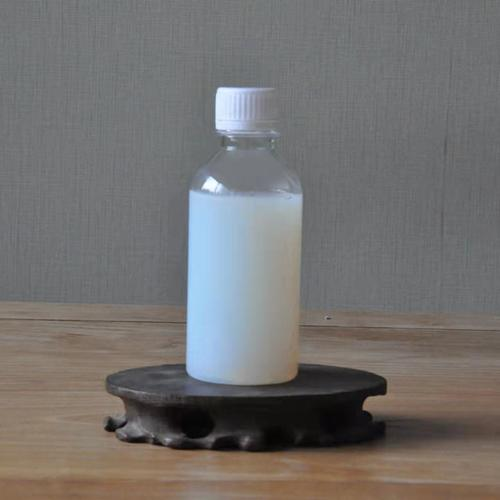 VIEW MOREcolloidal alumina dispersion
 VIEW MOREAlkaline Alumina Sol Used for Coating Material
 VIEW MORENano aluminum sol catalyst carrier bonder
 VIEW MOREalumina sol for surface insulating coating
 VIEW MOREsol gel alumina coatings
 VIEW MOREcolloidal alumina binder
 VIEW MOREcolloidal alumina suspension
 VIEW MOREColloidal hydrous alumina