






How Does nano aluminum sol catalyst carrier bonder Work?
A nano aluminum sol catalyst carrier bonder works by flowing into the gaps between carrier particles, then turning into a solid alumina network once you dry and calcine it. The sol contains alumina particles so small that they spread across contact points and join powders, ceramic surfaces, or washcoat layers. After heating, the material forms strong aluminum–oxygen bonds that hold the structure together at high temperatures. A good binder adds strength without sealing the pores that reactants need to reach. Below, I explain the mechanism, key properties, uses, comparisons, selection steps, and buying tips.
What Is a Nano Aluminum Sol Catalyst Carrier Binder?
Definition and Composition
This stable liquid holds alumina particles or alumina particles that have been mixed with water. It might be called liquid alumina sol or nano alumina sol as well. Crystallites that are 10 to 100 nm wide are most likely boehmite or pseudo-boehmite. Alumina powders, ceramic bases, fibers, zeolite mixtures, and washcoat layers stay together when catalysts are being made thanks to this inorganic nano aluminum sol catalyst carrier bonder. For example, people who want to buy something might type "catalyst carrier bonder," but engineers more often type "binder." But they both mean the same thing. Eco-friendly glues burn off when it gets hot. They stay in the structure and become part of the porous support.
Typical Physical and Chemical Parameters
A lot of the time, the product information talks about a liquid that is clear to pale. Most of the time, 10% to 25% Al2O3 is in the sol, and the D50 particle size ranges from 10 to 30 nm. That makes it easier for the sol to get into the pores. A catalyst needs to be clean because any dirt or dust can make it less effective at its job. It should have less than 0.05% Na2O and less than 0.02% Fe2O3. There needs to be very little salt in reactor tanks so that they don't rust. For many grades, their pH is between 3 and 5. You should always look at the technical data sheet for the item in question because the exact scores depend on the grade.
Why Alumina Binders Fit Ceramic Supports
Most carriers and alumina binders are made up of the same chemicals. The glue and the support are both made of the same main material, so silica doesn't need to be added to either of them. The sol particles also have a positive zeta potential, which helps them stick to things that are negatively charged, like clay honeycombs and zeolites. When the stuff is hot, the binder can add surface area (often more than 200 m³/g) instead of adding hard stuff to fill in the gaps. Factory water and air are also cleaned with alumina supports. This science is important for a lot more than just fixing and improving cars.
How Does Nano Aluminum Sol Work as a Catalyst Carrier Binder?
Wetting and Dispersion
Wetting the cloth is the first thing that needs to be done. The nano aluminum sol catalyst carrier bonder can be sprayed on a ground, mixed with powder, or used to cover a honeycomb. After that, the sol covers the outside of the particle and fills in any holes or cracks. Even holes that are only tens of nanometers wide can't be filled in by bigger binder particles. Alumina particles, on the other hand, can. Where two carrier grains meet, they stick together. This is where you get strength. How things mix with water depends on their pH, how thick or thin they are, and how clean the base is. The link isn't strong if there is oil or dust on top of it.
Drying and Gelation
The sol needs to be left to dry after it has been put down. When the water is gone, the mixture turns into a glue, which brings the things together. Capillary forces pull it toward the points where the grains meet. This way, the binder will get to the right place. It's important how fast it dries. If too much water is lost too quickly, the coating may crack or peel over time. It takes longer and is done in steps this way. The cover stays in place as the gel shrinks. Since heat can't break the bond yet, be careful with dried parts right now to keep from having to throw them away later.
Calcination and Final Bond
Heat changes the gel into a clay link as it dries. If you heat the boehmite phase, it changes into gamma-alumina. Heating above 600°C can't break the strong bonds between the Al and O. It needs to stick together just enough to be strong and help the coating stick, but it also needs to have enough pores for fluid to move through. Active sites can get blocked if there is too much binder. If there isn't enough binding, pellets can get weak and dirty. This scale is used to set the fluidized bed's wear resistance for making FCC catalysts. What this means is that the pressure drop in honeycomb washcoats changes. That's why I never guess how much binder I have; I always test it.
Applications and Comparison with Other Binders
Where Manufacturers Use It
Nano aluminum sol catalyst carrier binder is used in several steps by builders. When FCC is made, the zeolite Y and clay matrix stay put. For heavy oils to be broken up, this keeps the mesoporosity that stops wear. This is why the platinum, palladium, and rhodium layers stay on top of the cordierite honeycombs. It helps them stick and stand up to heat and shaking. This keeps the pieces from getting split up. It helps the paste form trilobe or quadralobe shapes that stay together in high-pressure hydrogen when it is mixed with water or broken up. This is done by making the paste bubble and stick together. You can mix it, spread it out, dip it, brush it on, and soak it in something.
Alumina Sol vs. Silica Sol and Alumina Cement
Alumina sol works better in places where there is already a lot of alumina because it doesn't add silica. Silica can sinter, or join with other parts in the hot gas of FCC renewal, but when it gets really hot, it stays stiffer. Sol cement and alumina cement are the two main types of refractory walls. When you use sol, it spreads out more evenly, which is better for thin coatings. Because pseudoboehmite changes as it dries and cools, it might be useful for other steps in the making process. To make sure that each test is fair, the carrier, the amount of glue, the covering method, and the cooking plan must all be the same. Then you need to see how well the materials wear, stick, touch, and react with each other. Price per kg doesn't always tell you everything.
Matching Binder to Process Needs
The binder needs to be able to work with different shapes. It should be stable and not too thick or too thin so that it can be sprayed or dipped. The rheology of FCC slurries that are sprayed dry needs to be stable so that pumps can work well and particles dry evenly. Sol needs to be added to the alumina paste before it can be spread out the right way. It's also important to have a lot of acidity. Some helpers, like zeolites, work well with a cationic acidic sol. On the other hand, if very alkaline materials are not balanced, they can cause flocculation right away. Things that are 10–20 nm wide and close to each other are there. So I match the particle size to how the final carrier needs the pores to be set up. This makes the mesopores smaller.
How to Select, Test, and Troubleshoot
Selection Criteria
First, you have to choose the carrier, substrate, method of application, and the whole process of making it with the nano aluminum sol catalyst carrier bonder. Then you should make plans for how much solid there will be, the particle size, the pH, how sticky and dense it will be, how long it will last, and how it will be packed. It is best to get samples, scientific data sheets, and records of analysis from sellers so that you can keep track of each lot. Dynamic light scattering can be used to make sure the particles haven't stuck together, and an EDTA titration can be used to measure solids and Al2O3. An ICP-MS can be used to measure sodium, iron, and heavy metals. A binder index test is one way to find out how similar two sets of work are. To do this, heat the sol and a regular powder together and then crush them.
Evaluation Workflow
A planned study has less risk. Setting goals for bond strength, adhesion, resistance to wear and tear, temperature stability, pore retention, pressure drop, and catalytic activity is the first thing that needs to be done. Second, have your real provider try out different marks. Take notes on how they settle, spread, thicken, cover the whole surface, and dry. Third, test the machines that will make the product by putting small amounts of it on them to see how the right amounts and temperatures work together. Finally, don't accept the glue until it has been chemically, physically, and mechanically tested. To do this, the temperature needs to be changed, and honeycombs need to be looked for in the channels. Then, ask the seller what needs to be done for checks, packing, shelf life, and making sure certain conditions are met. Make sure that small wins in the lab don't turn into high costs at the plant by following this order.
Fixing Common Processing Problems
Things like low strength, low catalytic activity, cracking, delamination, and poor dispersion happen a lot of the time. The chemicals don't mix, the coatings dry too quickly, the surfaces are dirty, or there isn't enough drying time. These are the main reasons why things go wrong. To fix something, you can add more solids, change the amount, control how much is watered down, or let it dry more slowly. Adding more glue isn't always a good idea because it can close up pores and hide things that are working. Also, things need to be kept. Between 5°C and 35°C, keep the sol in drums made of stainless steel or plastic. The colloid breaks when it freezes and can't be fixed. Heat speeds up the gelling process.
Buying in Bulk and Working with a Manufacturer
Preparing a Clear Request for Quotation
A clear ask for the nano aluminum sol catalyst carrier bonder will save time for everyone. Write down the carrier material, what it will be used for, the goal solids content, pH, viscosity, particle size, and the amount that you think it will hold each month or each year. Also write down how it will be packed, where it will go, and any forms that can be filled out. Find out how to store it, how long it will last, if it can be exported, how different batches can be, and if you can get help from a professional. Check out the whole price, not just the price per drum. Changes in freight, packing, storage, waste, failure rates, and the amount of active solids are just a few of the things that can affect the real cost per finished carrier. Make sure you know the minimum order amounts, wait times, annual capacity, and ways to keep changes under control for OEM, private-label, and distributor programs.
What a Dependable Manufacturer Provides
Being the same all the time starts in the factory. There is a full-process quality control system in Yiwei's factory that makes sure all batches are of the same high quality. The factory also uses cutting-edge tools and methods. When someone wants to buy something, they should look at what's in it, how sticky it is, how long it lasts, and how easy it is to find the lot they bought. Technical support that is helpful can do anything from making slurries and coatings to figuring out what went wrong and giving tips on how to heat and dry things. As the market changes, they also help us keep making our goods better to meet those needs. People from other countries who want to buy something should be able to see shipping papers, data sheets, records of analysis, safety data sheets, and information on how to store the goods.
From Sample to Bulk Supply
Not a single number on a piece of paper. The method and the agency should help you figure out what grade to give. Some jobs that need to be sensitive may need grades that have little to no chlorine in them. Tell us what you need before we talk. Samples are the first thing that you need to get on the right track. After the pilot test, everyone agrees on the main supply's specs and delivery times. When everyone is always on the same page, nothing comes as a surprise. Long-term, you can reach your quality goals if you keep an eye on production. Early on, your team will be able to tell when the strength, stickiness, or hole qualities change.
Conclusion
You need to wet, mix, dry, and heat the nano aluminum sol catalyst carrier bonder in order to make it. Very small pieces of alumina stick together to form a gel when they touch. The links stay strong as they change from boehmite to gamma-alumina above 600°C. What makes something work well? In this case, it's the amount of solids, the pH, the density, and the amount of iron and salt. Because it has more alumina, the sol works better in thin layers and systems that have a lot of it. But you should check out all of these books in the same way. Carefully chosen items that are kept in the right way and bought with clear instructions are less likely to break, crack, or get clogged with pores. Remember that the holes must be big enough and the glue must be strong enough. This can only be done with tests.
FAQ
1. How does the thermal stability of this binder compare with silica sol?
It is more stable in water and heat most of the time. In the hot steam of FCC renewal, it changes into stable transition aluminas. On the other hand, quartz can be mixed with other parts of the mixture.
2. Can I use it with alkaline supports?
Because their pH is between 3 and 5, most grades are acidic. This means that they work well with zeolites or other nutrients that are acidic or neutral. If the pH isn't changed and balanced first, things that are very alkaline can stick together right away.
3. How should I store it?
Between 5°C and 35°C, you should use drums made of rubber or stainless steel. When the colloid freezes, it breaks in a way that can't be fixed. Heat speeds up the gelling process. If you seal something, you can keep it for 6 to 12 months.
4. Is chloride content a concern?
That's right, salt can hurt or rust things. A grade with little to no chloride is best for careful hydroprocessing work.
Request a Nano Aluminum Sol Catalyst Binder Recommendation
Are you ready to compare the grades? Yiwei needs to know what kind of carrier material you want to use, how much solids, pH, particle size, and annual amount you want to send. Yiwei is a nano aluminum sol catalyst carrier bonder supplier with its own factory, full-process quality control, and university-supported product development. If you go to email sales@ywputai.com, you can get samples and technical documents.
References
1. Handbook of Heterogeneous Catalysis, Wiley-VCH, 2008
2. Catalyst Supports and Supported Catalysts, Butterworths, 1987
3. Fluid Catalytic Cracking Handbook, Butterworth-Heinemann, 2012
4. Sol-Gel Science: The Physics and Chemistry of Sol-Gel Processing, Academic Press, 1990
5. Structured Catalysts and Reactors, CRC Press, 2006
6. The Control of Pore Size in Alumina Catalyst Supports: A Review, Applied Catalysis, 1986
RECOMMENDATIONS
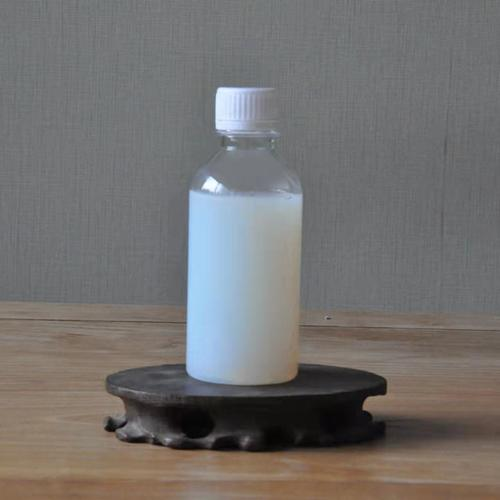 VIEW MOREcolloidal alumina dispersion
 VIEW MOREAlkaline Alumina Sol Used for Coating Material
 VIEW MOREalumina sol for surface insulating coating
 VIEW MOREsol gel alumina coatings
 VIEW MOREcolloidal alumina solution
 VIEW MOREcolloidal alumina binder
 VIEW MOREcolloidal alumina suspension
 VIEW MORENano aluminum sol catalyst carrier bonder