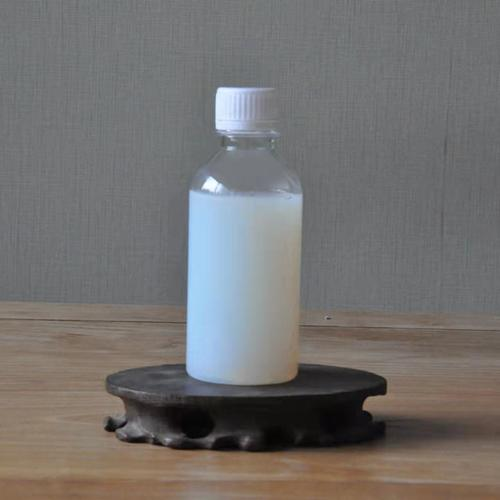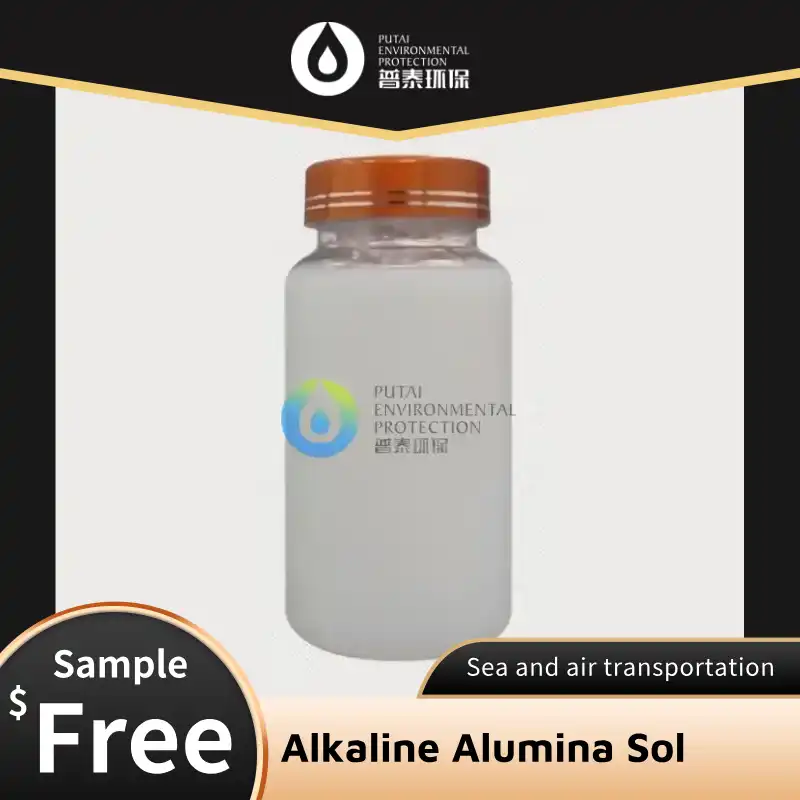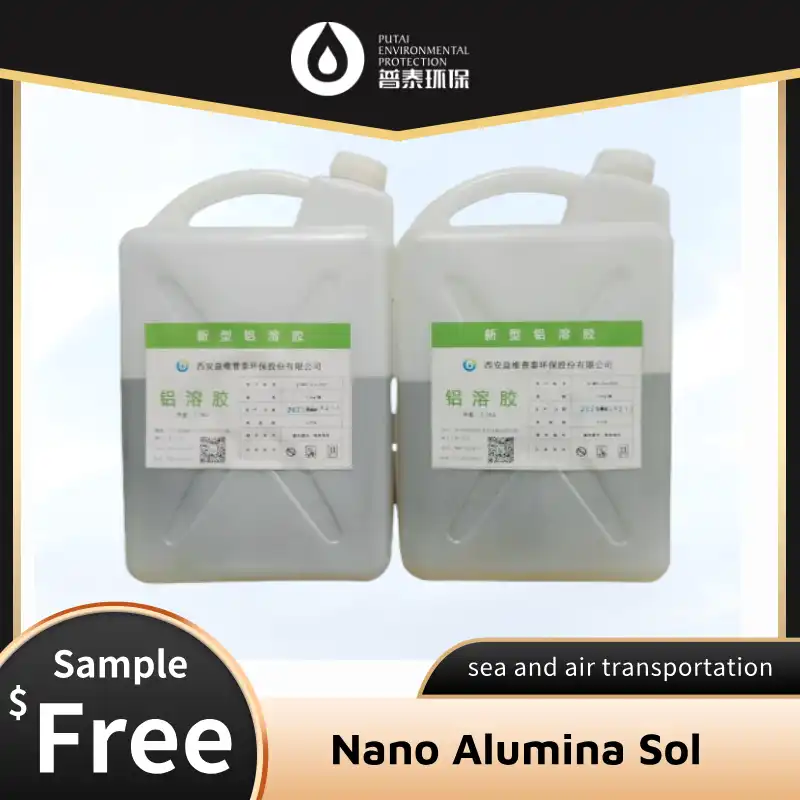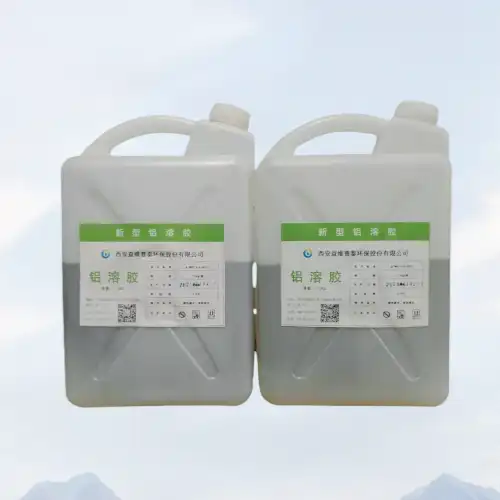






How Does alkaline alumina sol used for coating material Work?
Alkaline alumina sol used for coating material is a stable colloidal dispersion of nano-sized alumina particles — typically boehmite or gamma-phase — suspended in a basic aqueous medium at pH 8.0–11.0. When applied to a substrate, the sol undergoes controlled drying and thermal curing, during which the alumina particles cross-link into a dense, rigid inorganic network. This process produces a hard, adherent film that delivers scratch resistance, thermal stability up to high service temperatures, and strong adhesion to glass, ceramics, and metals — making it a dependable choice for functional industrial coatings.
Understanding Alkaline Alumina Sol and Its Role in Coating Materials
What Sets It Apart from Acidic Alumina Sol
Soils that are acidic add protons to the solution when the pH is low to keep the particles solid. There is a lot of negative zeta potential for the alkaline type in basic media. Because of electrostatic repulsion, particles can't stick together. The sol can be mixed directly with alkaline binder systems like potassium silicates or silica sols, so the coating batches don't get ruined by "pH shock" flocculation. The charge stays steady, which is why this works.
Core Property Profile
The way this material is made has much to do with how well the layer works. The dry film is clear and has a lot of surface area that can be connected when the particle size (D50) is between 10 and 50 nm. For thin-film casting to work best, the viscosity should be low, at least 50 mPa·s at 25 °C. It's 7–8 Mohs hard when it's dry, which is a lot harder than most organic topcoats.
Film Formation and Mechanical Performance
Now that the water phase is gone, the alumina nanoparticles are moving toward each other. When heated and then cooled, they stick together to make one fake film. Because the formulators can change the solid content (10–30 wt%) and the temperature at which the coating cures, they can fine-tune how thick and hard it is. The film is very water-loving, which makes it easy for metal surfaces to get wet. In this way, visual surfaces don't get foggy.
The Alkaline Alumina Sol Coating Process Explained
Application Methods Worth Knowing
There shouldn't be any oils or ions on the surface that could weaken the sol at the contact. The surface should be clean and dry. Things that dry quickly can stick together, giving the product a cloudy look that QA teams don't like. That's why drying should be done slowly after use. Curing usually takes place between 150 °C and 500 °C, but this can change based on how hard the final product needs to be and how well it can handle the heat.
Storage, Handling, and Shelf Life
When the sol freezes, the water phase gets hard, and the liquid structure breaks down for good. Try to stay out of strong sunlight and cool places (5 to 35 °C). A good alkaline alumina sol used for coating material will stay solid for 6 to 12 months if it is stored correctly. If you want to plan your shopping, this shelf life is good for times when product normally turns over every three months. To keep the batch stable, it's best to switch who comes in first and who goes out first.
Performance Comparison: Alkaline Alumina Sol vs Traditional and Alternative Coatings
Adhesion and Durability Benchmarks
Being acidic makes alumina sol coatings stick less well to negatively charged surfaces like glass, alumina ceramics, and oxidized metals. Being alkaline makes alumina sol coatings stick better to these surfaces. The chemistry of the particle surfaces works better with these kinds of surfaces. A test with salt spray (ASTM B117) shows that at temperatures above 200 °C, fake alumina plates last longer than most topcoats made of acrylic or epoxy. This is because when the temperature goes up, organic binders break down.
Cost and Lifecycle Value
Organic coatings don't cost as much per kilogram up front as this stuff does. But the total cost changes based on how often coatings need to be done, how long they take to dry, and how many are turned down. This is what business-to-business buyers usually think about when they choose what to buy:
Longer breaks between services: The harder inorganic film doesn't need to be put on as often in rough or hot places. It is easier to fix mistakes when the chemistry of gelation is controlled than when the pH is high and the sols are acidic in production lines. In other words, there are lower reject rates.
The water-based recipe doesn't have to pay solvent pollution fees and makes it easy to file with the government. This lowers the cost of following VOC rules.
- Extended service intervals — the harder inorganic film requires less frequent reapplication in abrasive or high-temperature service.
- Lower reject rates — controlled gelation chemistry reduces application defects compared to acidic sols in alkaline-pH production lines.
- Reduced VOC compliance costs — the water-based formulation avoids solvent emission fees and simplifies regulatory filings.
Due to these economic factors, alkaline alumina sol used for coating material is a good long-term investment for manufacturers. This is especially true when cheap line shutdowns are caused by coating failure.
Environmental and Regulatory Profile
Since this is mostly water, it doesn't give off many volatile organic compounds (VOCs) when it's used. Electricity can be made with high-purity grades that have low chloride levels and controlled sodium levels (often less than 100 ppm Na⁺). Some grades that are in line with FDA 21 CFR can be used as barriers around food, but most industry grades are not food-safe by default.
Practical Applications and Industry Use Cases
Battery Separators and Electronics
Some lithium-ion batteries use alkaline alumina sol to seal the polyethylene or polypropylene dividers. This is because it is an inorganic binder. This is because of the alumina particle layer. The divider doesn't shrink when the temperature is high. This is a known way for battery cells to stay safe. The metal collectors don't rust because the glue is alkaline. This can happen with an acidic binder.
Investment Casting and Refractories
When it's very hot, the sol keeps the shell together so that the investment casting is clean. It makes hybrid binder systems that are tougher and more flexible than silica alone when mixed with colloidal silica. That way, the shell doesn't break while it's being cleaned. This method has been used successfully in the past to make very accurate blades for airplane turbines.
Optical Coatings and CMP Slurries
Nano-dispersed alumina can be used to cover optical lenses with a hard layer that doesn't reflect light and lets a lot of light pass through. You can polish only sapphire and silicon wafers with particles that are a controlled size range (D50 = about 20 nm ± 5 nm, as shown by dynamic light scattering). They can do what they need to do without scratching the surface.
How to Choose and Source the Best Alkaline Alumina Sol Coating Material
Key Supplier Qualification Criteria
Some service providers don't make good enough products. To make sure a business buys alkaline alumina sol, these quality checks are the most important:
- Particle size consistency — DLS analysis confirming D50 within the stated range per batch.
- Ionic impurity control — ICP-MS data showing Na⁺ below 100 ppm for electronics-grade material.
- Colloidal stability certificate — accelerated aging test results confirming no gelation after 6 months.
- Solid content accuracy — gravimetric data (drying at 120 °C) consistent within ±0.5 wt% batch to batch.
Stable particle size: The DLS study shows that the D50 number for each batch is in the range that was given. It is clear from an ICP-MS that the amount of Na+ in material used in electronics is less than 100 parts per million. A "colloidal stability certificate" is proof that the substance won't gel after 6 months, as shown by tests that age it quickly. The amount of solids is right; gravimetric data (dried at 120 °C) stays within ±0.5 wt% from one batch to the next.
Procurement Process and Lead Times
Some businesses need these details to buy things from other businesses. They should be on the technical data sheet of any product made by a company you can trust.
Partnering with a Factory-Backed Supplier
When someone buys alkaline alumina sol coating material from a company for the first time, they usually ask for a research sample first. Only then do they place a large order. Check the sample to see if it goes well with the mix you're making. To do this, run a pot-life/viscosity evolution test with the binder you've chosen. Business wait times from well-known suppliers are usually between two and four weeks when you place a large order.
Conclusion
Alkaline alumina sol used for coating material sol is used for coating material because it creates a solid nanoparticle solution that hardens and forms an inorganic film that sticks to itself after it cools down and sets. It doesn't change when it gets acidic and works with a lot of different coating methods. It's simple to see how well a coating works because it has a high zeta potential, small particles, and a low viscosity. Many tough fields, from optical films to battery separators, have used this stuff and had good results with it. To make sure the final product is always the same, it is best to find a seller with professional help, strict quality control, and batch data that can be monitored.
FAQ
1. Can I mix alkaline alumina sol with acidic acrylic emulsions?
Generally, no. Combining an alkaline sol with an acidic resin causes immediate pH shock, neutralizing surface charges and triggering irreversible gelation. All blending components should carry a compatible pH above 7.
2. What is the primary advantage over silica sol?
Alkaline alumina sol delivers higher hardness and abrasion resistance in the cured film compared to pure silica. It also imparts distinct surface chemistry — often amphoteric depending on final cure conditions — which suits substrates where silica provides insufficient mechanical performance.
3. Why does a coating appear hazy after drying?
Haze typically results from particle agglomeration during excessively fast drying, or from destabilization caused by high-ionic-strength salts in the formulation. Slowing the drying rate and reviewing additive compatibility usually resolves this.
4. Is this material suitable for food-contact applications?
Standard industrial grades are not food-safe. High-purity grades formulated to meet FDA 21 CFR requirements exist for specific barrier coating applications — always confirm grade specification with your supplier before selecting for food-contact use.
5. How does freezing affect the product?
Freezing collapses the colloidal structure irreversibly. Store the material between 5 °C and 35 °C at all times. Shelf life under correct storage conditions is 6–12 months.
Partner with Yiwei for Your Alkaline Alumina Sol Supply Needs
Yiwei makes alkaline alumina sol, which is used for alkaline alumina sol used for coating material, with the tools and quality control method he currently employs. Each step in the making process is checked to make sure it's correct. Our team always works with partners from universities to improve our goods. You can get a sample or price by emailing sales@ywputai.com right now. When you get a lot of it or try a new way to coat something, this is always true.
References
1. Brinker, C. J., & Scherer, G. W. Sol-Gel Science: The Physics and Chemistry of Sol-Gel Processing. Academic Press, 1990.
2. Pierre, A. C. Introduction to Sol-Gel Processing. Springer, 1998.
3. Lange, F. F. "Powder Processing Science and Technology for Increased Reliability." Journal of the American Ceramic Society, 1989.
4. Verwey, E. J. W., & Overbeek, J. T. G. Theory of the Stability of Lyophobic Colloids. Elsevier, 1948.
5. Kuznetsova, L. I., et al. "Alumina Sol as a Binder for Investment Casting Shell Molds." Refractories and Industrial Ceramics, 2005.
6. Zhang, S. S. "A Review of the Separators of Liquid Electrolyte Li-Ion Batteries." Journal of Power Sources, 2007.